MA Student Invited To Present At The MARCH Mental Health Network For Singing And Mental Health
Thursday 14th November 2019
Voice Study Centre
We are delighted to announce that Emily Foulkes, our first MA Voice Pedagogy bursary student has been invited to present at the MARCH Mental Health Network at Snape Maltings for Singing and Mental Health.
She has explored and reflected on a programme of one to one singing to promote positive mental health and well-being in children.
Emily recently gained a Distinction in her Diploma in Trauma and Mental Health Informed practice.
Following this, she was asked to apply to become a trainer with Trauma Informed Schools UK (TISUK).
As a result of her study undertaken with us, Emily is now on a steering group for the Sing Up Foundation, supporting their work on singing for adolescent mental health, and is now involved in the national special interest group for Singing and Mental Health.
Emily has also been invited to deliver a workshop at the Centre for Child Mental Health in London later in 2020 as a result of her research and work.
Congratulations, Emily!
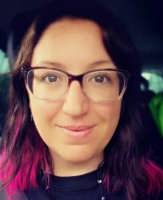
Emily Foulkes
Emily gained a Distinction in her Master’s in Voice Pedagogy, specialising in Singing for Mental Health, Pain Management, and Trauma-Informed Practice...
Recent Posts
After The Session
After The Session: A (Very) Brief Course in Linguistics! with Miranda Guettlein
Voice Study Centre
Wednesday 18th November 2026A recap of our introductory linguistics course for voice teachers, speech practitioners, actors and dialect coaches, led by Miranda Guettlein, linguist, dialect coach and editor of the Voice and Speech Review.
Read More...
After The Session
After The Session: Neurodivergence and Critical Disability Theory with Dr David Cane
Voice Study Centre
Monday 9th November 2026A recap of our session with Dr David Cane, Senior Lecturer on the Voice Study Centre MA in Voice Pedagogy, on disability and neurodivergence within the voice teaching studio. When we talk about disability and neurodivergence in voice teaching, the first thing that comes to mind is often a single question: what do I do if a disabled or neurodivergent student walks into my studio? In this session, Dr David Cane invited us to think much bigger. The teacher might be disabled or neurodivergent. So might a choir director or a colleague. The songs we teach may depict or use disability as a metaphor. Even the foundational texts of voice pedagogy carry assumptions about bodies and voices. This was a densely theoretical tour, and David was open about that. His argument was that the most important work is not a checklist of practical tips, but a rethink of what we believe teaching is for. Here are the main threads.
Read More...
After The Session
After The Session: The Vocal Health Challenges for Actors and Singers with Leda Scearce
Voice Study Centre
Wednesday 4th November 2026A recap of our two-part course with Leda Scearce, singing voice specialist and speech-language pathologist at Duke Voice Care Center in North Carolina. Over two afternoons, Leda Scearce took our community on a deep dive into the voice as a high-performance instrument. A former professional opera singer who taught at several universities before retraining as a speech-language pathologist, Leda now works with singers and other performers who have voice injuries. Her message across both days was clear: singers and actors are vocal athletes, and voice teachers are on the front lines of their vocal health. Here are the highlights from both sessions. Please note that this is a summary of a teaching session, not medical advice. If you or a student have a voice concern, see a qualified voice specialist.
Read More...