Singing in the Brain
Thursday 20th August 2020, 10:00 AM - Thursday 27th August 2020 3:00 PM (London Time)
This 5 hour series on Singing in the Brain will be structured as follows:
- THE BASICS: anatomy and physiology of the the singer-brain
- EVOLUTION and VOCAL LEARNING: a paradigm for practice
- MOTOR LEARNING THEORY: understanding the applications for a unique system
- EMOTIONS: what are they? how do we use them (or not use them) in singing?
- CURRENT RESEARCH: applying new ideas to vocal pedagogy
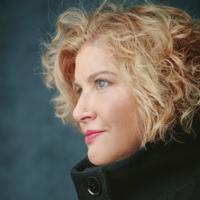
Heidi Moss Erickson
Heidi Moss, is a Bay Area performer, educator, and scientist. Noted for her “rich and radiant soprano” (Edward Oriz, Sacramento Bee) has performed on national and international stages...
Sorry, this is an archived short course...
We have plenty of upcoming short courses coming soon. See details of some of them below or look at the full list of short courses.


Wednesday 18th November 2026
5:00 PM - 7:00 PM
(London Time)
Expiratory Pressure Regulation for Power, Pitch and Vocal Health

Barbara Tanze
How does the pressure beneath your vocal folds affect your sound? And how can you learn to regulate it efficiently and make sense of what it means to “support your voice”? Join Barbara Tanze for this practical short course exploring the role of expiratory pressure regulation in singing and its relationship to vocal power, pitch control, efficiency and vocal health. Learn how singers can develop a more precise understanding of the interaction between respiratory activity, subglottic pressure and vocal fold function!
Thursday 19th November 2026
5:00 PM - 6:00 PM
(London Time)
MA Voice Pedagogy: Online Information Session & Q&A

Debbie Winter
Considering our MA Voice Pedagogy? Join our Director for a focused online presentation and discussion to explore the course, ask questions, and discover whether postgraduate study at Voice Study Centre is right for you.

Tuesday 24th November 2026
5:00 PM - 7:00 PM
(London Time)
The Lemma Dilemma: Teaching Voice and Speech through a Linguistic Lens!

Ashleigh Reade
For voice and speech teachers, the importance of “the thought” is almost a given. Text comes to life when it is fueled by an external stimulus; we breathe in response to an image, a concept, a need we wish to express, then transmit that to our listener on the voice. In psycholinguistic models of speech processing and production, the lemma is the mental representation of a concept that contains both semantic and syntactic meaning, linking an idea to the sounds needed to express the idea. Join Ashleigh Reade as explores how to bridge the gap between actor and text, examining how psycholinguistics can support our voice and speech teaching.