After The Session: Feldenkrais Method® - its application in speech and song! with Marina Gilman
Monday 2nd November 2026
Voice Study Centre
A recap of our session with Marina Gilman, Guild Certified Feldenkrais Practitioner, singing teacher, performer and licensed speech pathologist specialising in voice.
How do we change vocal habits we don't know we have? That was the question at the heart of our latest session with Marina Gilman, and her answer was equal parts science, storytelling and gentle movement. Rather than lecturing from the front, Marina had the whole room (and everyone watching online) moving, sensing and humming along from their chairs.
If you joined us, here is a reminder of what we explored. If you missed it, here is a taste of why this method has so many voice teachers talking.
What is the Feldenkrais Method®?
The Feldenkrais Method is a form of somatic education developed by Moshe Feldenkrais, a physicist, engineer, judo master and keen footballer. While recovering from a knee injury, he slipped on a banana peel and was astonished to find that his injured knee responded normally, protecting him from a fall before he had consciously done anything. His nervous system had acted without his awareness, and he realised that we don't know what we don't know.
Over time he developed more than a thousand movement explorations, taught in two formats: group Awareness Through Movement lessons (usually 45 to 60 minutes, often on the floor) and one-to-one hands-on Functional Integration. The emphasis is on function rather than ideal structure: not becoming a perfect body, but making the body you have work as well as it can. A hallmark of a well-organised person, in Feldenkrais's view, is reversibility, the ability to stop or change any movement at any moment with ease.
Motor learning vs. somatic learning
Marina drew a clear distinction between the two:
- Motor learning (think the gym, or a typical vocalise) is goal-oriented. Repetitions focus on the "how", and speed and effort often increase.
- Somatic learning has no end goal. Movements are slow, small and attentive, with no right or wrong, only easier and more effortful ways of doing things. The question is always "how does it feel?"
The principle of less is more sits at the centre of this. Reducing effort, size and speed helps the nervous system notice differences and find new, more efficient pathways.
Marina demonstrated the contrast with a quick experiment: a few brisk, energetic arm raises, then a slow, attentive shoulder lift and lower on one side, then the arm raises again. Many participants noticed the difference in how their arms and shoulders felt afterwards.
Language matters
One of the most thought-provoking parts of the session was about the words we use in the studio. Traditional voice teaching often uses directive language ("raise your soft palate", "breathe low", "feel the vibrations"). Feldenkrais lessons use open-ended, non-goal-oriented language instead: let's see what happens if you try it this way. How is that for you? Is it different?
Two stories brought this to life:
- A student whose resonance sat far back in her throat became frustrated by cues to "place it forward". When Marina finally said, in sheer frustration, "sing it back", her tone became free and resonant. The language of back and forward simply didn't map onto her own sensation.
- A student with synaesthesia, who experienced sound as colours and shapes, fell silent when Marina played a five-note pattern. Once she understood, Marina asked for "a blue square" or "a green triangle", and the student could sing.
The takeaway: let students describe sensations in their own words, then feed those words back to them. Offer your own experience as just that ("this is how it feels to me"), because your words may not resonate with someone else.
Marina also encouraged teachers to leave a little space between vocalise repetitions for reflection, to vary each repetition (louder, softer, with meaning, with subtext), and even to occasionally try it "wrong". Wrong sometimes turns out to be very right.
We are a closed system
Marina introduced the correlation principle: the body is a unified, functionally integrated whole, so no part can move without every other part adjusting. A tense tongue or shoulder might be the end point of a pattern that begins elsewhere, such as in balance, the hips or the breath. Working on the symptom may give some relief, but the underlying pattern remains until you find where the chain really starts.
She also explained how our internal body map can differ from our self-image, with a very relatable example of attempting a cartwheel at 25 with the body image of a 12-year-old.
Learning to see what is easy to miss
Marina asked us to watch for what Feldenkrais called "the elusive obvious", the small gestures and quirks we tend to overlook. She described four types:
- Unnecessary preparatory movements: such as shifting into a "performance posture" the moment the teacher's hand reaches the piano, when the student could simply start from where they are.
- Parasitic movements: movements that contribute nothing, like raised eyebrows or a wiggling jaw.
- Diversionary movements: movements that replace something that should be happening, like lifting the shoulders in place of a full breath.
- Clothing anatomy: watching how a student's clothes drape and wrinkle as they breathe and sing, which can hint at collapsing or gripping in the torso.
Using constraints to change habits
Voice teachers already use constraints all the time: lip trills, straw phonation and lip bubbles all narrow the system so the body can find a more efficient solution. Marina suggested thinking about posture and movement in the same way. Leaning forward can help a singer who grips their abdominals to let go. Gently restricting a movement can show a student what they were really doing. Even everyday constraints, such as braces, a boot after a broken foot or a tight costume, can reshape how we move and sing.
Three case studies
Sarah: the jaw that wouldn't open
A high school singer held tension in her jaw, despite no physical impediment and plenty of jaw exercises. When Marina asked her to point to where her jaw opens, she pointed in front of the joint. Years of wearing braces with elastic bands had literally embodied that spot as her "hinge". Using the eyes to guide the head up and away from an anchored lower jaw gave her a new sense that head and jaw can move independently.
Susan: performance posture
Susan, a talented young singer, changed posture as soon as it was time to sing, pushing her head forward and wiggling her pelvis. With her head against a wall and Marina's hands steadying her pelvis, she could no longer hold the pattern, released her abdominals and found a remarkably free voice. The lesson for the group was a pelvic roll on a chair, rocking back and forward and combining it with the eyes looking up and down. It was repeated standing, with hands on knees, which shows how a change of constraint changes the whole experience.
John: breathing with raised shoulders
John, a musical theatre performer, lifted his shoulders on every inhalation. Marina asked him to hold his shoulders up and keep breathing, which forced him to find movement elsewhere in the trunk. Participants tried it too, and noticed new space in their ribs when the shoulders were released. Marina's tip: if a constraint doesn't help, try the opposite, such as hugging yourself in a curl so the breath has to find the back of the ribs.
How the eyes organise the body
One of the biggest surprises for many participants was how much the eyes influence breathing, voice and posture. Marina asked everyone to stare hard at a point, then widen their focus using their peripheral vision, and notice the difference in breath and voice. Her advice for performers: it's fine to look over the heads of the audience, but keep a soft, wide focus and the audience in your peripheral vision, rather than fixing on a single spot.
The session ended with a short experiment combining eye and tongue movements, which Marina offered as a teaser for further exploration. Participants reported greater range of motion in the neck and a deepening of release, and several said they'd love more eye work.
Questions from the room
Participants asked how imagining a movement compares with doing it. Marina explained that visualisation is part of the method, because the nervous system fires even when the muscles don't, and it can be especially useful with mobility restrictions or lots of tension. Another participant asked how to help a student who struggles to find a strong chest-voice sensation. Marina suggested exploring positions, movement with and without voice, and the student's own vocabulary, and checking whether the issue lies elsewhere in the body.
Take-home points
- Everything is connected. A small movement anywhere resonates somewhere else, so look beyond where the symptom shows up.
- Less is more. Use language about energy, not force, and start slow and small.
- Think functionally. Knowing the anatomy helps, but how the parts work together matters more.
- We don't know what we don't know. Invite exploration, allow "wrong", and add constraints to uncover new options.
- Watch the eyes, and the little quirks. They often hold the key.
- Stay safe. There is no right or wrong, only safe and unsafe. If it hurts, don't do it.
Resources mentioned
- Body and Voice: Somatic Re-education by Marina Gilman (in print since 2014, with a major revision planned)
- Singing with Your Whole Self (2nd edition) by Samuel Nelson and Elizabeth Blades, which includes Feldenkrais lessons
- The Feldenkrais Guild of North America, whose website lists practitioners (many work outside voice, but the lessons still benefit singers)
- Marina's articles on the method, including pieces in the NATS journal, which will be shared with her slides
Watch it back
A recording of the session and Marina's slides and resource list will be sent to everyone who booked. Slow down, get curious, and keep exploring.
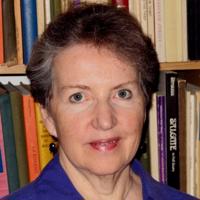
Marina Gilman
Marina Gilman holds a Bachelor of Science Degree from Indiana University, Master of Music degree from Ithaca College, and a Masters of Art in Communication Disorders...
Recent Posts

After The Session
After The Session: Pop Pedagogy - an Overview with Kim Chandler
Voice Study Centre
Wednesday 28th October 2026A recap of our recent session with Kim Chandler, broadcast live from a recording studio in Marbella, southern Spain. When a session singer, industry vocal coach and academic walks into one room, you get a very particular kind of masterclass. Kim brought all three hats to our latest short course, a two-hour "whistle-stop tour" of the 15 areas she believes a pop-specific vocal pedagogy should cover. Fittingly, she taught it from the very room where the vocals for Kung Fu Fighting in Kung Fu Panda 3 were recorded.
Read More...
Student Interviews
Negotiating Authenticity: Tre Cooper Explores Cross-Genre Singing and Stylistic Decision-Making
Voice Study Centre
Friday 23rd October 2026What does it mean for a singer to sound authentic when performing in a genre outside their usual style? And how can voice teachers help singers develop stylistic versatility without losing their individual artistic identity?
Read More...
After The Session
After The Session: Practical Magic*: The Art & Science of Balancing Voices with SOVTs and VFEs with Melanie Tapson
Voice Study Centre
Thursday 22nd October 2026What makes a vocal exercise effective? Is it the tool itself, the way we use it, or our understanding of what happens when we put it into practice? In Practical Magic: The Art & Science of Balancing Voices with SOVTs and VFEs, voice teacher and professional singer Melanie Tapson explored the science behind two widely used approaches to voice training: Semi-Occluded Vocal Tract Exercises (SOVTs) and Vocal Function Exercises (VFEs). Combining scientific explanations with practical demonstrations and interactive activities, the session examined how these techniques can support vocal efficiency, stamina and sustainable voice use.
Read More...