After The Session: Pop Pedagogy - an Overview with Kim Chandler
Wednesday 28th October 2026
Voice Study Centre
Who is Kim?
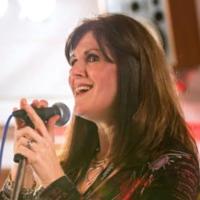
Kim has been a session singer for 36 years and a CCM/pop specialist vocal coach for 31. Half of that time has been spent in what she calls athletic rebuild coaching, working alongside ENT doctors, laryngologists and speech and language therapists with singers in medical trouble. A former university lecturer and past President of the British Voice Association, she now coaches elite touring and recording artists, including Brit Award and Mercury Prize winner Sam Fender.
The 15 areas grew out of her master's thesis in 2001, which asked a simple question: what would a curriculum designed specifically for pop singers contain? It was later expanded into a chapter in Teaching Singing in the 21st Century and distilled into an A2 poster that teachers can pin to their studio wall.
Kim was clear that the 15 areas are in no order of priority, and that the session was a smorgasbord rather than a deep dive: posture, breathing and support, tone and registration, diction, rhythm and phrasing, pitch, harmony, range, agility, musicianship, interpretation, performance, amplification and technology, and vocal health.
The highlights
Posture and alignment: mind the mic
Pop singers almost always have a microphone, so mic height is a posture issue. Kim shared how long it took to persuade Sam Fender to set his mic stand to full height before his Glastonbury headline set in 2022, and how freely he sang once he did. Pop posture also needs to be fluid and adaptable, because pop singers move.
Breathing and support: the quick mouth inhale
Kim was upfront that this is an area where nobody agrees, and invited disagreement. Her own approach for pop is a silent, quick, recoil inhale through the mouth (nasal breathing is great for life, but too slow for up-tempo material), gentle transverse abdominal engagement through the phrase, and regular top-up breaths planned at musically and lyrically sensible points. She also made the case for learning to waste air deliberately, because breathy tone is an artistic tool in pop.
Tone and registration: M1 rules, M2 stays fed
Using the four-mechanism model (M0 to M3), Kim noted that pop repertoire is M1 dominant, but that M2 should still be exercised to keep the voice muscularly balanced. The pop toolkit also includes twang, falsetto flips, breathy tone and, increasingly, a whole spectrum of distortion. Her advice for singers who can only sing breathy: build clear, efficient phonation first, then reinstate breathiness as a choice rather than a default. Classical singers crossing over often find breathy tone the hardest thing to allow, and also the most "pop" thing they can learn.
Diction: lean on the front of the word
In pop, you emphasise the first consonants of the important words, not the endings (in "what you want", lean on the W, not the T). Vowels stay conversational and authentic to the singer until they head into belt territory, where they need to open for acoustic reasons. Most pop singers also sing with a "Mid-Atlantic" accent, which is why you often can't tell where a singer is from just by listening.
Rhythm and phrasing: pop is rhythmic music
In Danish, pop is literally called "rhythmic music". Kim urged teachers to expose singers to time signatures beyond 4/4, to use grooves and backing tracks in exercises, to use body percussion and beatboxing, and to explore pushed, on-the-beat and back phrasing (Amy Winehouse being the queen of the last).
Vibrato: optional, and very light
Pop vibrato sits at the lightest end of the Western spectrum. Kim calls it "pop shimmer", and plenty of huge pop and rock careers (Liam Gallagher, Sting, Chris Martin) are built on straight tone. She led us through an on/off vibrato exercise using hand signals, and suggested planning which syllables carry vibrato rather than leaving it to chance.
Pitch: why are all our exercises in major?
Kim's soapbox moment. When she analysed the UK Top 40 over the years, roughly one third of songs were major and two thirds minor, yet most vocal exercises are overwhelmingly major. Her fix is easy: let the singer choose major, minor or "neither" (no thirds) for each exercise, and bring in pentatonics, hexatonics and modes such as Dorian and Mixolydian.
Harmony: the ear wins
Even lead singers live in a harmonic landscape. Pop harmony is learned by ear and experiment, and Kim recommends learning a chordal instrument, learning to hold your own part, and arranging your own backing vocals.
Range: no soprano, no tenor
There is no SATB in pop, so please don't ask a pop singer if they're a soprano. Kim aims for a roughly three-octave exercising range using sirens and wide arpeggios, but the working range of most pop melodies is about two octaves. Customise the key for every song, even for artists' biggest hits. As she put it, audiences don't have perfect pitch, and they just want the hit done really well.
Agility and musicianship
Harvesting riffs from real songs gives endless, repertoire-relevant agility exercises. On musicianship, Kim argued that singers are musicians, should train their ears as much as their voices, and should study pop theory rather than classical grades. Sight reading, she said, shouldn't be forced on singers who don't need it.
Interpretation: ghost notes
Melodic ghost notes, the scoops, bends and tiny embellishments, are the most common embellishment in pop, and what makes a melody feel "dressed". The notated opening of Beyoncé's Love on Top bears little resemblance to what she actually sings. Lyric-driven performance and repertoire that suits the singer matter most.
Performance, technology and vocal health
Movement, gesture, filming yourself back, studio versus stage differences and managing performance anxiety (box breathing, as suggested by BAPAM) all sit under performance. Singers also need to understand mics and monitoring, because if you can't hear yourself, tuning and timing suffer. And vocal health underpins everything: without a reliable instrument, there's no art.
Questions from the room
Our online audience asked some great questions along the way, including how to handle singers who rely on breathy tone, how to help classical singers move into pop, and whether a student with no natural vibrato should worry.
Resources mentioned
- Teaching Singing in the 21st Century (Springer, 2014), with Kim's chapter 4
- The “Chandler Curriculum Poster for training Pop Singers” (Compton Publishing, 2022)
- If in Doubt, Breathe Out!: Breathing and Support Based on the Accent Method by Ron Morris and Linda Hutchison (Compton Publishing, 2015)
- Kim's "Funky 'n Fun" vocal exercise series: 94 MP3 exercises with backing tracks
- Daniel Zangger Borch's riff-based exercises, and Natalie Weiss's Breaking Down the Riffs on YouTube
Kim Chandler
Kim Chandler (MMus BMusEd) is a renowned contemporary vocal coach & session singer. She runs a busy private studio in Marbella, Spain, where she coaches an elite clientele of stadium band singers, including BRIT award winners & GRAMMY nominees, artists from a range of genres, professional singers and vocal coaches online.
Recent Posts
After The Session
After The Session: Neurodivergence and Critical Disability Theory with Dr David Cane
Voice Study Centre
Monday 9th November 2026A recap of our session with Dr David Cane, Senior Lecturer on the Voice Study Centre MA in Voice Pedagogy, on disability and neurodivergence within the voice teaching studio. When we talk about disability and neurodivergence in voice teaching, the first thing that comes to mind is often a single question: what do I do if a disabled or neurodivergent student walks into my studio? In this session, Dr David Cane invited us to think much bigger. The teacher might be disabled or neurodivergent. So might a choir director or a colleague. The songs we teach may depict or use disability as a metaphor. Even the foundational texts of voice pedagogy carry assumptions about bodies and voices. This was a densely theoretical tour, and David was open about that. His argument was that the most important work is not a checklist of practical tips, but a rethink of what we believe teaching is for. Here are the main threads.
Read More...
After The Session
After The Session: The Vocal Health Challenges for Actors and Singers with Leda Scearce
Voice Study Centre
Wednesday 4th November 2026A recap of our two-part course with Leda Scearce, singing voice specialist and speech-language pathologist at Duke Voice Care Center in North Carolina. Over two afternoons, Leda Scearce took our community on a deep dive into the voice as a high-performance instrument. A former professional opera singer who taught at several universities before retraining as a speech-language pathologist, Leda now works with singers and other performers who have voice injuries. Her message across both days was clear: singers and actors are vocal athletes, and voice teachers are on the front lines of their vocal health. Here are the highlights from both sessions. Please note that this is a summary of a teaching session, not medical advice. If you or a student have a voice concern, see a qualified voice specialist.
Read More...
After The Session
After The Session: Feldenkrais Method® - its application in speech and song! with Marina Gilman
Voice Study Centre
Monday 2nd November 2026A recap of our session with Marina Gilman, Guild Certified Feldenkrais Practitioner, singing teacher, performer and licensed speech pathologist specialising in voice. How do we change vocal habits we don't know we have? That was the question at the heart of our latest session with Marina Gilman, and her answer was equal parts science, storytelling and gentle movement. Rather than lecturing from the front, Marina had the whole room (and everyone watching online) moving, sensing and humming along from their chairs. If you joined us, here is a reminder of what we explored. If you missed it, here is a taste of why this method has so many voice teachers talking.
Read More...