After The Session: The Vocal Health Challenges for Actors and Singers with Leda Scearce
Wednesday 4th November 2026
Voice Study Centre
A recap of our two-part course with Leda Scearce, singing voice specialist and speech-language pathologist at Duke Voice Care Center in North Carolina.
Over two afternoons, Leda Scearce took our community on a deep dive into the voice as a high-performance instrument. A former professional opera singer who taught at several universities before retraining as a speech-language pathologist, Leda now works with singers and other performers who have voice injuries. Her message across both days was clear: singers and actors are vocal athletes, and voice teachers are on the front lines of their vocal health.
Here are the highlights from both sessions. Please note that this is a summary of a teaching session, not medical advice. If you or a student have a voice concern, see a qualified voice specialist.
Day One: Vocal athletes and the vocal health team
What sports medicine can teach voice
Leda began with a keynote she heard from a sports medicine doctor, which prompted a question: why don't vocal athletes have the same kind of support that athletes do? Drawing on a comparison by laryngologist Dr Reena Gupta, she contrasted the two worlds:
- Proactive vs. reactive: athletes have regular assessments, while performers typically see a doctor only when there is a problem.
- Training and care aligned: in sport, training and healthcare work together. In voice, medical care focuses narrowly on the vocal folds, with less investment in training and habilitation.
- Early intervention: the smallest performance changes in sport are addressed quickly. Singers often push through until they lose their voice.
- Specialist vs. generalist: athletes see specialists who understand their sport, while singers often end up in urgent care or with a generalist.
- Whole-athlete support: the sports team includes mental health providers, trainers and recovery specialists, whereas vocal injuries can still carry blame ("you did something wrong").
The pressure on actors and singers
Leda outlined the very different demands of stage, screen, voiceover, opera, musical theatre (often eight shows a week), touring, recording, worship settings and classroom music teaching. On top of the vocal load, performers face chronic stress, irregular schedules, financial pressure, limited healthcare access and a culture of "the show must go on." Because a singer's identity is so closely tied to their voice, a problem can feel like an identity crisis.
Her suggestions for teachers: normalise fatigue and limits, encourage vocal pacing and boundaries, model healthy vocal behaviour and refer when something seems wrong.
Who is on the vocal health team?
Leda compared the training pathways of a sports medicine team (doctors, psychologists, nutritionists, physical therapists, athletic trainers and more, many with certifications overseen by accrediting bodies) with the vocal health team: the voice trainer, laryngologist, voice-specialised speech pathologist and, ideally, a clinical singing voice specialist. A few points stood out:
- Voice is a small part of speech pathology training, and there is no official credential for specialising in it.
- The title "singing voice specialist" isn't conferred by any official body, so backgrounds vary.
- There's no formal credential for teaching singing or acting either, which makes it hard for the public to judge qualifications.
- Increasingly, clinicians are dual-trained as singing teachers and speech pathologists, which Leda described as a hybrid profession.
Why don't we have the sports model?
Leda explored the barriers: the voice is a tiny, complex, interdependent system that is hard to measure; singing is art as well as skill, with few standard metrics; funding for the arts is a fraction of what sport receives; there are cultural myths that science would harm artistry; training pathways are fragmented; and performing careers go from gig to gig rather than with a consistent team.
Some ways forward: an annual vocal "physical", seeing a specialised voice team rather than a generalist, getting checked quickly when something changes, and investing in training and rehabilitation.
Teachers on the front lines
Because you hear your students every week, you are often the first person to notice a change. Leda listed red flags to watch for:
- A change in vocal quality (hoarse, breathy, strained or gravelly)
- A change in pitch range, such as losing high notes or a hole in the middle
- A change in effort, or vocal fatigue beyond the normal
- Pain with voice use
- Voice breaks or cracks beyond typical development
- A delay in the onset of the sound
Her rule of thumb: any of these lasting more than two weeks should be referred to a medical voice team. If a change is mild and explained by context (a cold, a night of shouting at a game), monitor, adjust the load and keep an eye on it.
Case studies: Adam and Shannon
Participants discussed two students. Adam, a busy undergraduate with an a cappella group, church choir, a restaurant job, fraternity pledging, poor hydration and frequent throat clearing, was a case for education, prioritising and vocal pacing. Shannon, a music teacher whose voice tires by midweek, hurts when speaking and singing, and loses notes above C5, showed enough red flags to warrant a prompt specialist referral. Our participants' instincts, from building understanding and reflecting on priorities to referring when symptoms persist, were exactly the kind of thinking Leda was encouraging.
Language matters: say "phonotrauma"
Leda asked everyone to drop the term "vocal abuse". It blames the person, undermines trust and self-efficacy, and is inaccurate. We don't call a footballer with a torn ACL a "knee abuser", or someone with carpal tunnel a "hand abuser". Voice injuries are repetitive stress injuries. An alternative suggested in the session is phonotrauma.
What a good voice evaluation includes
When choosing a clinic to refer to, Leda suggested checking for:
- A complete medical and voice history, including a singing or acting voice history
- A head and neck exam by a laryngologist
- Video stroboscopy, which shows the vocal folds vibrating in slow motion (if a clinic doesn't offer it, keep calling)
- Acoustic and aerodynamic testing and a perceptual evaluation of speaking and singing voice
- Quality-of-life measures
In voice therapy, look for work on vocal hygiene, pacing and efficient voice use, counselling, and bridging back to performance. A reasonable question to ask a speech pathologist is what proportion of their caseload is voice patients. Leda also encouraged teachers to attend evaluations and therapy sessions where possible, because they know the singer far better than a clinician who sees them for a handful of visits.
Day Two: Pedagogy and vocal health
Training must suit the style
Leda reminded us that decades of classical tradition shaped some persistent myths, such as "belting will ruin your voice". Any style can be sung healthily with the right, style-specific training, and sometimes the right move is referring a student to a teacher with the expertise they need. Teachers also need to be sceptical consumers of information: check who wrote it, what evidence supports it, how certain the claim is, and whether another explanation exists. Peer-reviewed journals, academic voice centres and reputable medical sources beat random searches and social media.
Vocal hygiene: myths and facts
Leda reviewed what current research says, always encouraging a non-judgmental approach so students feel safe sharing their habits.
- Hydration: poor hydration affects the voice, but there is no clear evidence for an exact amount. About 64 ounces (2 litres) a day, or half your body weight in ounces, is a reasonable and achievable starting point. There's no evidence that water temperature matters, no evidence that alkaline water helps reflux, and no voice-specific research yet on hydration multipliers.
- Caffeine: reasonable amounts are fine, because the body adapts to the diuretic effect. Just balance it with water, and watch for effects on anxiety, reflux or heart conditions.
- Dairy: the idea that dairy increases mucus is a myth. The sensation may be real, though, because milk is viscous, and individual preferences should be respected.
- Steam and nebulised saline: can help surface hydration. Use sterile prepared saline and be careful with hot water, since steam inhalers can cause burns.
- Throat sprays and lozenges: no evidence they help, so check the ingredients. Avoid alcohol, numbing agents and menthol or eucalyptus, which can irritate. Gentler ingredients include glycerin, slippery elm and pectin.
- Alcohol: not well studied for voice, but it affects hydration, coordination, judgment and reflux. Leda shared a rock singer's trick of carrying a beer bottle full of water.
- Smoking, cannabis and vaping: anything repeatedly inhaled into the airway is a concern for the voice. Newer research suggests vaping isn't benign, and the propylene glycol in e-liquids is also used in stage fog.
Medical conditions and the voice
Leda stressed that she's not a medical doctor and that teachers should frame things carefully.
- Reflux: real, but overdiagnosed and overtreated as a cause of voice problems. Studies show that blaming reflux can delay getting to the real diagnosis by months or years. "Silent reflux" with no symptoms is questionable, and reflux can't be diagnosed by looking at the throat. If someone does have reflux, it should be treated, and medication timing matters, so ask a doctor or pharmacist.
- Allergies and sinus problems: oral decongestants and antihistamines are drying. Leda's clinic often favours nasal steroid sprays (used daily) or nasal antihistamine sprays, and short-term nasal decongestant sprays only for about three days. Allergy testing and immunotherapy can be options for stubborn cases.
- Colds and flu: prevention matters most (handwashing, masks when appropriate, vaccinations). Throat clearing and coughing traumatise the vocal folds, and throat clearing creates a cycle that takes weeks of conscious effort to break. A virus should resolve in seven to ten days, so get checked beyond that.
- The swelling test: a quick check using a soft, staccato descending pattern, going up by half steps until the top note won't speak. Establish your ceiling when your voice is healthy, then compare. If the ceiling drops by a third or more, take extra care. For male voices, you can measure both the chest or mixed ceiling and the falsetto ceiling.
- Steroids: can be effective for acute laryngitis, but should only be taken after a laryngologist has examined the vocal folds, and repeated use may be masking another problem.
- Long COVID: can affect voice, breathing, stamina and cognition, and stamina may lag behind vocal quality in recovery.
Vocal pacing
This section was a favourite with participants. Leda challenged some common ideas:
- Whispering isn't a rest, and often adds strain.
- Complete voice rest is reserved for specific situations, such as after vocal fold surgery or a vocal hemorrhage, and shouldn't go on too long because of deconditioning. Vocal pacing is usually the better solution.
Vocal pacing means managing the amount, type and intensity of voice use. Leda suggested thinking of it as a vocal clock or budget, with practical steps such as:
- Listing and ranking vocal activities, and keeping a voice journal
- Pausing before saying yes to new commitments
- Colour-coding a calendar by vocal intensity (full voice, marking, mouthing)
- Using personal mantras, like "I'm saying yes to my voice" or "think like an eight-show week"
- Delegating and consolidating voice use (section leaders, group lessons, pre-recorded explanations)
- Using amplification in classrooms and avoiding speaking in noisy environments
Teaching students how to practise
Leda urged teachers to spend time on practice planning. A warm-up should take about 10 to 15 minutes, which is different from technical practice. She also encouraged "vocal freebies", such as silent mental practice, mouthing words, sustaining unvoiced sounds like "s" or "sh", singing through a song on an SOVT, and spot practice instead of endless run-throughs. She shared an example practice chart in which a student works on five songs at different stages using different practice types, covering more repertoire with less vocal load.
She also covered pacing strategies for rehearsals, recording sessions (breaks, alternating vocal and instrumental tracks), performances (set breaks, a backup set list, transposing) and actors, plus recovery exercises such as SOVTs, resonant voice and gentle massage.
Questions from the room
Participants asked about whether to continue a lesson with a student who has a history of nodules (Leda advised referral, gentle exploration with SOVTs and a close watch on range and quality), male voices and the swelling test, how to persuade reluctant colleagues and parents (use the sports analogy, lead by example and consider inviting outside speakers) and how to handle student shame about fatigue. Leda also encouraged teachers to build relationships with local ENTs and voice clinics.
Three things to remember
- Singers and actors are vocal athletes. Athletes get hurt, and we need to help them avoid injury and get the best outcome when it happens.
- You are on the front lines of vocal health. You may be the first person to notice a problem, so your information needs to be accurate, current and evidence-based.
- You have the power to change how voices are trained and cared for, one studio at a time.
Resources mentioned
- The Weston and Schneider open-access paper on vocal health education, with its extensive bibliography
- Meyer and Sher's Journal of Voice paper on how to evaluate scientific papers
- NATS science-based pedagogy workshops, the Pan-American Vocology Association, the Voice Foundation, the New York Singing Teachers' Association, ACDA, the Journal of Singing and the Journal of Voice
- Leda's vocal pacing handouts and full reference list, shared with participants
Watch it back
Recordings of both sessions and Leda's slides and handouts are available to everyone who booked. Look after your voices, and keep learning.
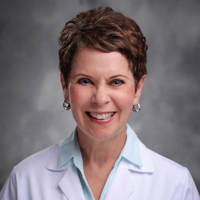
Leda Scearce
Soprano Leda Scearce has been featured in leading roles with the National Opera Company, Hawaii Opera Theatre, Long Leaf Opera Festival, Triangle Opera...
Recent Posts
After The Session
After The Session: Neurodivergence and Critical Disability Theory with Dr David Cane
Voice Study Centre
Monday 9th November 2026A recap of our session with Dr David Cane, Senior Lecturer on the Voice Study Centre MA in Voice Pedagogy, on disability and neurodivergence within the voice teaching studio. When we talk about disability and neurodivergence in voice teaching, the first thing that comes to mind is often a single question: what do I do if a disabled or neurodivergent student walks into my studio? In this session, Dr David Cane invited us to think much bigger. The teacher might be disabled or neurodivergent. So might a choir director or a colleague. The songs we teach may depict or use disability as a metaphor. Even the foundational texts of voice pedagogy carry assumptions about bodies and voices. This was a densely theoretical tour, and David was open about that. His argument was that the most important work is not a checklist of practical tips, but a rethink of what we believe teaching is for. Here are the main threads.
Read More...
After The Session
After The Session: Feldenkrais Method® - its application in speech and song! with Marina Gilman
Voice Study Centre
Monday 2nd November 2026A recap of our session with Marina Gilman, Guild Certified Feldenkrais Practitioner, singing teacher, performer and licensed speech pathologist specialising in voice. How do we change vocal habits we don't know we have? That was the question at the heart of our latest session with Marina Gilman, and her answer was equal parts science, storytelling and gentle movement. Rather than lecturing from the front, Marina had the whole room (and everyone watching online) moving, sensing and humming along from their chairs. If you joined us, here is a reminder of what we explored. If you missed it, here is a taste of why this method has so many voice teachers talking.
Read More...
After The Session
After The Session: Pop Pedagogy - an Overview with Kim Chandler
Voice Study Centre
Wednesday 28th October 2026A recap of our recent session with Kim Chandler, broadcast live from a recording studio in Marbella, southern Spain. When a session singer, industry vocal coach and academic walks into one room, you get a very particular kind of masterclass. Kim brought all three hats to our latest short course, a two-hour "whistle-stop tour" of the 15 areas she believes a pop-specific vocal pedagogy should cover. Fittingly, she taught it from the very room where the vocals for Kung Fu Fighting in Kung Fu Panda 3 were recorded.
Read More...