After The Session: A (Very) Brief Course in Linguistics! with Miranda Guettlein
Wednesday 18th November 2026
Voice Study Centre
A recap of our introductory linguistics course for voice teachers, speech practitioners, actors and dialect coaches, led by Miranda Guettlein, linguist, dialect coach and editor of the Voice and Speech Review.
Most voice and speech practitioners know the International Phonetic Alphabet well. In this session, Miranda Guettlein argued that the IPA is only one corner of a much bigger toolkit, and showed how a broader understanding of linguistics can change the way we teach, coach and analyse text. In just two hours, she took us from the basics of how language works to practical ways of using semantic theory in the rehearsal room.
An unusual path to dialect coaching
Miranda opened by explaining how she came to this work. Most dialect coaches begin as actors who turn out to be good with accents. She began as a linguistics student with an interest in phonetics, phonology and second language acquisition (especially how adults learn new languages), who didn't want to work in a clinical setting. Dialect coaching felt like a playful cousin of speech therapy that used the same knowledge for theatre.
She quickly found it was far from frivolous. Working in Colorado, where audiences and actors often have little contact with people who sound different from themselves, she found much of her job was explaining the link between accent and identity, and why telling a story in an authentic accent matters even if, as directors sometimes say, "no one will know the difference". She also found herself answering questions about character and script analysis using linguistic theory rather than acting methodology. Because everyone is an expert user of language, actors tended to "get" these ideas quickly.
What is linguistics?
Linguistics is the study of language, not of languages. Miranda's point: people often assume a linguist speaks lots of languages, but linguistics is about how language works and how humans use it to communicate. (Spanish helpfully has two words: idioma for a specific language, and lenguaje for language as a concept.)
Key ideas from her definition of language:
- Innate and instinctive: our brains are set up to acquire language on a specific timeline, with critical periods that begin before birth and run until around puberty. Newborns already show a preference for the prosody of their mother's language. Babies also need real human interaction. They don't learn language from recordings or television alone.
- Uniquely human in its precision and abstraction: we can describe things someone has never seen, talk about intangible ideas like love and power, and imagine things that don't exist.
- Encoded in transmissible signals: sound waves for spoken language, hand movements for signed languages, and visual symbols for writing.
- Spoken and signed language are acquired naturally, while reading and writing must be taught. Many language communities have no written form, and that doesn't make their language any less complex.
The six subfields
Miranda broke linguistics into six subfields, from the smallest unit to the largest:
- Phonetics: the production (articulatory), physical signal (acoustic) and perception (auditory) of sounds.
- Phonology: how sounds combine and interact. A phone is a single sound. A phoneme is a sound that carries meaning in a particular language. In English, "pat" and "bat" differ by one phoneme, whereas allophones are distinct sounds that don't change meaning (for example, the tapped and non-tapped "t" in "matter" in some accents).
- Morphology: grammar at the word level. A morpheme is the smallest unit of meaning, so "dog" has one and "dogs" has two.
- Syntax: grammar at the phrase or sentence level, such as word order.
- Semantics: the meaning of the signal itself.
- Pragmatics: what humans do with language beyond the words themselves.
The subfields interact, and the further along the list you go, the blurrier the lines become.
Descriptive vs. prescriptive: how should actors use language?
In linguistics, "grammar" means the descriptive rules of how language actually works, not rules about how it should work. Miranda noted that the roots of accent training, such as elocution lessons and standard accents for broadcast, were prescriptive. Modern accent work is more descriptive, but actors are still often trained to be louder and clearer than real speakers, and to make scripted lines sound spontaneous.
Her argument: if the goal is to tell stories that audiences relate to, language should be used the way humans actually use it. Audiences are made up of language users who sense when something is off, so natural, predictable language use sets a baseline, and any deviation signals something worth noticing without a note in the text.
Language, survival and identity
Miranda explained that language likely emerged in East Africa around 150,000 years ago, and every human group ever documented has the same language faculty. In early human history, someone who sounded different was a cue for competition and potential danger. That instinct hasn't entirely disappeared, and people from marginalised communities may still experience a prestige accent as a signal of risk. Code-switching, altering how we speak to stay safe or blend in, comes from the same need.
For storytellers, this means that accurate language use matters when a story is about power structures, different language groups meeting or generations in conflict. Audiences can sense when language doesn't match the world of the story.
Tool 1: The cooperative principle and Gricean maxims
If language is a cooperative task, speakers and listeners generally assume that each is trying to be understood. Building on H. P. Grice's cooperative principle, Miranda described four maxims:
- Quality: say what is true and supported by evidence.
- Quantity: say as much as needed, no more and no less.
- Relevance: stay on topic.
- Manner: be clear, orderly and unambiguous.
People break these maxims in two ways. When you violate a maxim, you're trying to hide it, such as lying, leaving out information, answering the question you wish you'd been asked (Miranda calls it "the politician thing"), or hiding behind jargon ("the doctor thing"). When you flout a maxim, you break it openly so the listener can work out the intended meaning, as with metaphor, poetry, idiom or a deliberately long description.
Miranda uses this as a script analysis tool, especially for murder mysteries or scenes where characters aren't being straight. She suggests asking questions such as:
- Does the character beat around the bush, or repeat things to reinforce a cover story?
- Do they omit details without technically lying?
- Do their word choices change (simpler words with trusted people, jargon when lying)?
- Does sentence length change (long and storytelling when relaxed, short and direct when interrogated)?
- Do they shift tense, use passive voice, or hedge ("I think", "I heard")?
- How do they lie to different people, and how careful are they with their language?
Her finding: much of the information actors want to convey is already in the text. Younger or less experienced actors often try to make a lie more obvious with a physical tell or a changed voice, when it's already in how they vary their language.
Tool 2: Meaning and metaphor
Drawing on George Lakoff, Miranda explained that meaning isn't just a dictionary definition (which only describes words using other words). We understand abstract ideas through metaphors linked to physical, observable experience. Time is described in terms of space and movement ("how long do we have left?", "on the hour"). Communication is described as sending: the conduit metaphor ("putting ideas into words", "message received", "an empty threat").
She also explained three ways words come to share forms or related meanings: homonyms (unrelated meanings, like "bear" the animal and "bear" a burden), polysemy (a meaning extended by metaphor, like "prime" meaning first, then best) and metonymy (a meaning drawn from a part or component, like "iron" the appliance from the metal).
The theatre application: characters may use different metaphors for the same idea, such as one partner seeing marriage as a partnership and another as an escape, and that gap can be the source of conflict. Metaphors can also be repeated to link ideas, as when "up" is used for both virtue and power, which can make an audience suspicious or create dramatic irony.
Thought, language and the myth of linguistic determinism
Miranda addressed the popular idea that the language we speak determines the thoughts we can have (linguistic determinism, often linked to the Sapir-Whorf hypothesis). The strong version has largely been disproven. Experiences like forgetting a word mid-sentence, borrowing words like schadenfreude, or summarising something in different words show that thought and language are distinct. The milder idea, linguistic relativity, that the words we use can influence how we think, is so commonsensical it barely needs to be a theory. She recalled author S. L. Huang's remark that the big claims of linguistic determinism are nonsensical, while the small claims are common sense.
Written vs. spoken language
Writing is only around 5,000 years old, compared with perhaps 150,000 years for speech. Because writing can be codified, it has been used to define what is "correct", and it changes far more slowly than spoken language, which is one reason English spelling is so far from phonetic. Writing is excellent for communicating across space and time and for refining thoughts, but it isn't inherently superior to speech.
For actors, there's an extra step: the performer becomes the conduit between the writer's thought and the audience. When a script is non-negotiable, the job is to create a reality in which the written words feel like the natural way to say it.
Practical tools for connecting with text
- Look at how paralinguistic features are represented. Punctuation tells you something, but a full stop isn't necessarily the end of a breath. If punctuation or phonetic spelling becomes a barrier rather than a tool (for example, misspelled dialect that leads actors to over-articulate or sound less fluent), try rewriting the passage in standard spelling, even without punctuation, so the actor can find natural pauses, then return to the original text.
- Use improvisation early in rehearsal. When an actor paraphrases, adds or changes a word, they're often expressing the meaning in their own head. Letting them improvise through a scene before locking in the exact words can help them connect with intention and relationship. Then, reintroduce the exact text and ask what each of the writer's word choices changes, such as a different metaphor that might explain another character's reaction.
- Do some metalinguistic analysis. Look for metaphor, and for how characters use language to shape their relationships and goals.
Questions from the room
A participant who is a German speaker asked how punctuation works in English, and how it differs between older and modern texts. Miranda explained that punctuation began as a notation system for prosodic features such as breath, pause and grouping, but became codified as a set of "correct" rules. People still use punctuation creatively to mark breaths and pauses in their own scripts. As a journal editor, she aims to respect an author's voice while still following house style. Another participant said the discussion of linguistic determinism and relativism connected to their own thinking about emotion and word association. Miranda agreed that it's valuable to separate what's true from what's merely tempting in the myths about language.
Recommended reading
- Steven Pinker, The Language Instinct (1994), which Miranda highly recommends as an accessible introduction that preserves the magic of language
- Steven Pinker, The Stuff of Thought (2007)
- George Lakoff and Mark Johnson, Metaphors We Live By (1980)
- S. L. Huang, The Language of Liars (a science fiction novel mentioned in the session)
Watch it back
A recording of the session will be available to everyone who booked. If you have questions after the session, Miranda's contact details are available on the course page of our website.
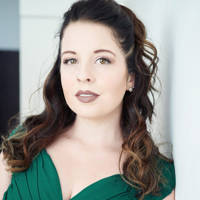
Miranda Guettlein
Miranda Guettlein is a linguist, dialect coach, and teacher based in Fort Collins, Colorado. She is a Knight-Thompson Speechwork certified trainer (2022), VASTA member, and the current editor-in-chief of the Voice and Speech Review (published by Taylor and Francis). She taught voice, speech, and accents at the University of Northern Colorado from 2022 to 2024, where she worked with students in the acting, musical theatre, theatre education, and technical theatre tracks and coached accents for their mainstage productions
Recent Posts
After The Session
After The Session: Neurodivergence and Critical Disability Theory with Dr David Cane
Voice Study Centre
Monday 9th November 2026A recap of our session with Dr David Cane, Senior Lecturer on the Voice Study Centre MA in Voice Pedagogy, on disability and neurodivergence within the voice teaching studio. When we talk about disability and neurodivergence in voice teaching, the first thing that comes to mind is often a single question: what do I do if a disabled or neurodivergent student walks into my studio? In this session, Dr David Cane invited us to think much bigger. The teacher might be disabled or neurodivergent. So might a choir director or a colleague. The songs we teach may depict or use disability as a metaphor. Even the foundational texts of voice pedagogy carry assumptions about bodies and voices. This was a densely theoretical tour, and David was open about that. His argument was that the most important work is not a checklist of practical tips, but a rethink of what we believe teaching is for. Here are the main threads.
Read More...
After The Session
After The Session: The Vocal Health Challenges for Actors and Singers with Leda Scearce
Voice Study Centre
Wednesday 4th November 2026A recap of our two-part course with Leda Scearce, singing voice specialist and speech-language pathologist at Duke Voice Care Center in North Carolina. Over two afternoons, Leda Scearce took our community on a deep dive into the voice as a high-performance instrument. A former professional opera singer who taught at several universities before retraining as a speech-language pathologist, Leda now works with singers and other performers who have voice injuries. Her message across both days was clear: singers and actors are vocal athletes, and voice teachers are on the front lines of their vocal health. Here are the highlights from both sessions. Please note that this is a summary of a teaching session, not medical advice. If you or a student have a voice concern, see a qualified voice specialist.
Read More...
After The Session
After The Session: Feldenkrais Method® - its application in speech and song! with Marina Gilman
Voice Study Centre
Monday 2nd November 2026A recap of our session with Marina Gilman, Guild Certified Feldenkrais Practitioner, singing teacher, performer and licensed speech pathologist specialising in voice. How do we change vocal habits we don't know we have? That was the question at the heart of our latest session with Marina Gilman, and her answer was equal parts science, storytelling and gentle movement. Rather than lecturing from the front, Marina had the whole room (and everyone watching online) moving, sensing and humming along from their chairs. If you joined us, here is a reminder of what we explored. If you missed it, here is a taste of why this method has so many voice teachers talking.
Read More...