After The Session: Reconsidering Traditional Tactics - Respiration, Placement, SOVTEs, and the Master-Apprentice Model with Brian Manternach
Wednesday 20th September 2023
Voice Study Centre
Associate professor, research associate and private voice teacher Brian Manternach split his two-hour course into four different areas of focus and aimed to offer new perspectives on some traditional techniques.
Respiration Revisited
The first half of the session fell under the title ‘Respiration Revisited’. Brian posed the question ‘Are current breathing techniques inspired or have they expired? He shared a historical quote from Giovanni Lamperti – “The foundation of all vocal study lies in the control of the breath” – as a grand statement for contextualising traditional approaches to breath. Meanwhile, some quotes from baritone George Gagnidze claimed breath to be “70% or 80% of everything” and showed how traditional exercises and approaches have been passed down from generation to generation, therefore we don’t question anything as it has been prevalent for so long.
Breathing ‘dos and don’ts’ and technical terms were explored before Brian argued that there are so many more elements to singing than breath (e.g. resonance, phonation, emotion, even cognition) and so the 70%/80% quote above is very poorly weighted. He went on to note that, while singing, all these elements are working in tandem and so changing one of them will change all of the others too i.e. it is an interactive, non-linear system. The concepts of Boyle’s Law and the Bernoulli Principle were also discussed.
Dr Kari Ragan was referenced as she points out that “there is no singular correct breathing method for singing” in her book A Systematic Approach to Voice. This is because breath management strategies vary from individual to individual. Additional quotes from Leda Scearce, Thomas Hixon (via Matthew Edwards and Ingo Titze), Jennifer Cowgill and more were also shared to indicate how factors such as body type, physicality and lung volume can have a bearing on what is the right breathing technique for the individual.
Finding the Right Place for ‘Placement’
This section of the course started with a definition of ‘placement’ as “prevalent, but subjective” (Hoch, 2014) as it is mainly sensation-based and sensations differ from person to person. This was demonstrated further through a selection of quotes from professional singers that indicated varying responses and feelings towards the term.
Next, Brian referenced Scott McCoy’s work on ‘forced resonance’ vs ‘free resonance’. Forced resonance refers to vibrations we feel in certain areas of the body e.g. chest, head and mask that can impact the way we perceive our voices, but not the resulting sound the audience hears. Free resonance refers to sound travelling through the open spaces of the vocal tract that does reach outside listeners – this is what gives each person their individual vocal quality. In other words, sensations through forced resonance may be beneficial to some singers but are not universally felt from person to person.
But is forced resonance an action or a result? Brian shared stories from his private studio and some practical examples to elaborate on this further and argue that ‘placement’ should refer to placing attention, not sound.
Using Semi-Occluded Vocal Tract Exercises (SOVTEs) as a Vocal Tract ‘Reset’ in Singing
Brian attributed this part of the course to a presentation he co-presented at the 2022 International Physiology and Acoustics of Singing Conference. He began by defining a SOVTE and demonstrated practical ways to occlude the vocal tract. He then featured several studies showing SOVTEs’ impact on phonation and the shape of the vocal tract. It was stated that different genres/styles of singing require different combinations of vocal tract shapes, and that a variety of vocal tract shaping combinations can be used by singers for a variety of purposes.
Referring to a particular study he was involved in with Titze et al (‘Vocalization with semi-occluded airways is favourable for optimizing sound production’), Brian explored this notion further. Since increasing the supraglottal air pressure by partially occluding the vocal tract can passively expand the airway, then we hypothesise that this expansion serves as a vocal tract ‘reset’, alleviating any habitual or unintended constrictions. Therefore, this allows for greater wide-narrow contrasts when singers selectively narrow specific sections of the vocal tract (as needed for specific genres/styles).
But which SOVTEs to use? Brian emphasised that which one may be the most beneficial varies by individual and their chosen genre/style but detailed his favourite one when intentionally using the SOVTE as a vocal tract ‘reset’. This is called ‘singing like a blowfish’ and can be found in the Rosenberg and LeBorgne book The Vocal Athlete, among other places.
Reconsidering the ‘Master-Apprentice Model’
To conclude his course, Brian challenged the traditional tactic of ‘teacher-centred pedagogy’, characterised by the teacher defining goals, repertoire, etc. and frequent use of negative feedback – this is a topic that has been recently written about in the Journal of Singing (October 2023). He referred to several studies that have shown that feedback focusing on positive outcomes improves learning, increases the student’s perception of competence (confidence) and decreases their level of anxiety. The goal-setter must be the student and ‘self-motivation is the most effective motivation’.
Next, Dr Kari Ragan’s ‘Evidenced-Based Voice Pedagogy’ framework was referenced as this combines voice teacher expertise and experience with student goals and perspectives. A further study from Clemmons (2007), as noted by William Sauerland (2022), concluded that established rapport through one-to-one lessons boosts student learning outcomes. Meanwhile, it has been suggested that the “master-apprentice model is falling out of favour, especially in CCM” (Benson, 2020) and that students will go elsewhere if teachers aren’t student-focused. This section was rounded off by looking at two alternative teaching models – ‘Student-Centered Teaching’ and ‘Compassionate Music Teaching’.
Recent Posts
After The Session
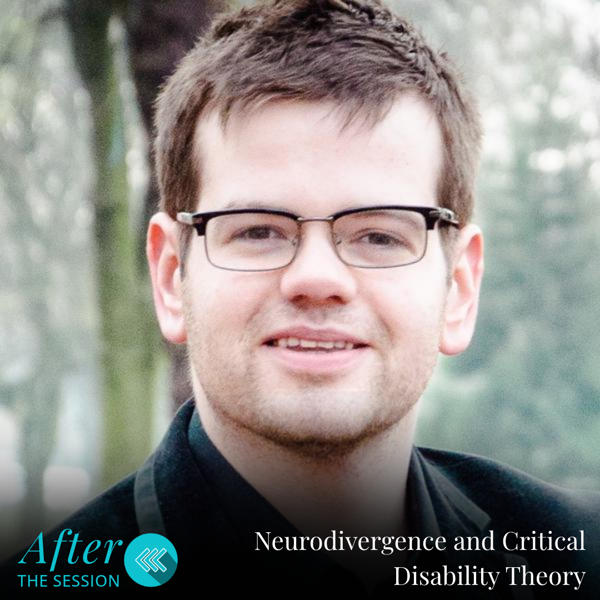
After The Session: Neurodivergence and Critical Disability Theory with Dr David Cane
Voice Study Centre
Monday 9th November 2026A recap of our session with Dr David Cane, Senior Lecturer on the Voice Study Centre MA in Voice Pedagogy, on disability and neurodivergence within the voice teaching studio. When we talk about disability and neurodivergence in voice teaching, the first thing that comes to mind is often a single question: what do I do if a disabled or neurodivergent student walks into my studio? In this session, Dr David Cane invited us to think much bigger. The teacher might be disabled or neurodivergent. So might a choir director or a colleague. The songs we teach may depict or use disability as a metaphor. Even the foundational texts of voice pedagogy carry assumptions about bodies and voices. This was a densely theoretical tour, and David was open about that. His argument was that the most important work is not a checklist of practical tips, but a rethink of what we believe teaching is for. Here are the main threads.
Read More...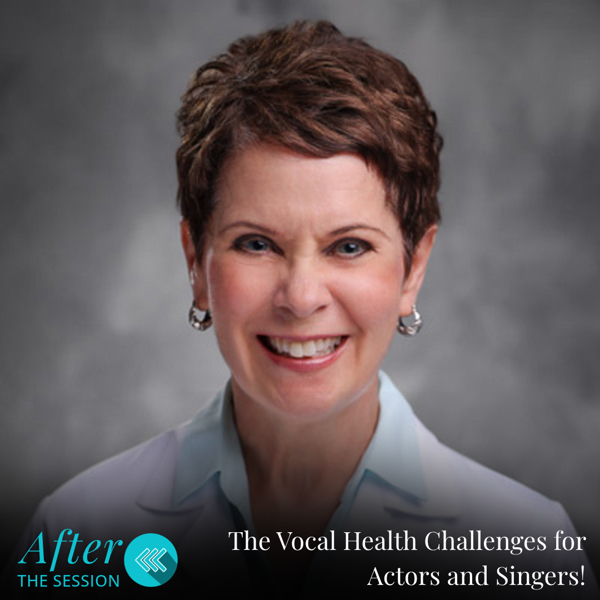
After The Session
After The Session: The Vocal Health Challenges for Actors and Singers with Leda Scearce
Voice Study Centre
Wednesday 4th November 2026A recap of our two-part course with Leda Scearce, singing voice specialist and speech-language pathologist at Duke Voice Care Center in North Carolina. Over two afternoons, Leda Scearce took our community on a deep dive into the voice as a high-performance instrument. A former professional opera singer who taught at several universities before retraining as a speech-language pathologist, Leda now works with singers and other performers who have voice injuries. Her message across both days was clear: singers and actors are vocal athletes, and voice teachers are on the front lines of their vocal health. Here are the highlights from both sessions. Please note that this is a summary of a teaching session, not medical advice. If you or a student have a voice concern, see a qualified voice specialist.
Read More...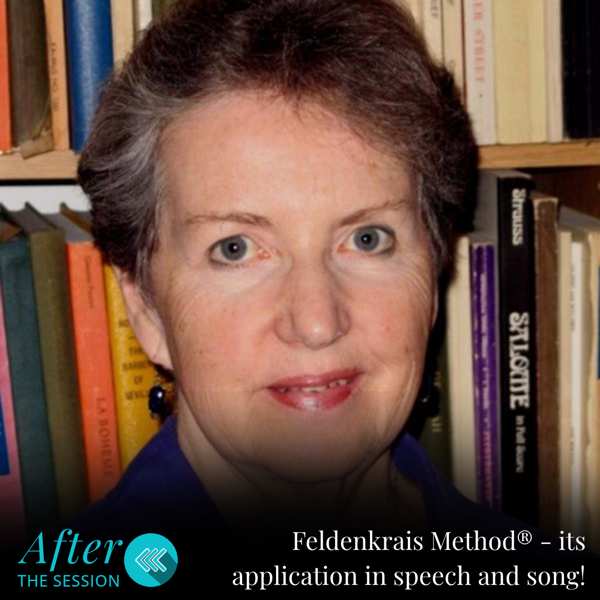
After The Session
After The Session: Feldenkrais Method® - its application in speech and song! with Marina Gilman
Voice Study Centre
Monday 2nd November 2026A recap of our session with Marina Gilman, Guild Certified Feldenkrais Practitioner, singing teacher, performer and licensed speech pathologist specialising in voice. How do we change vocal habits we don't know we have? That was the question at the heart of our latest session with Marina Gilman, and her answer was equal parts science, storytelling and gentle movement. Rather than lecturing from the front, Marina had the whole room (and everyone watching online) moving, sensing and humming along from their chairs. If you joined us, here is a reminder of what we explored. If you missed it, here is a taste of why this method has so many voice teachers talking.
Read More...