After The Session: Trauma-Informed Voice Care with Dr Geneva Mayne
Wednesday 16th August 2023
Voice Study Centre
Dr Geneva Mayne’s course on ‘Trauma-Informed Voice Care’ was inspired both by her own background (diagnosed with muscle tension dysphonia in 2016) and by her research (on associations between trauma, discrimination and voice disorders) carried out during her doctoral studies in speech-language pathology at Kean University.
The course was centred around the ‘Four Assumptions of Trauma-Informed Care’, as defined by the Substance Abuse and Mental Health Services Administration (SAMHSA). These are realising the prevalence of trauma; recognising how trauma affects individuals in a program, organisation or system; responding to trauma by integrating knowledge into policies, procedures and practices; and resisting re-traumatisation.
Realising the prevalence of trauma
Dr Mayne started by talking through Social Determinants of Health (SDOH) – conditions in the environment where people are born, live, learn, work, play, worship and age. Examples include access to health services, poverty, environmental conditions such as contaminated water, sexism, racism and many more. These are important as they determine the extent to which different individuals have the physical, social and personal resources to achieve (voice) goals and deal with changes in circumstances. ‘Early life stress’ and ‘discrimination’ were highlighted as being key to Geneva’s research project. Early life stress equates to Adverse Childhood Experiences (ACEs) i.e. potentially traumatic events occurring before the age of 18 such as neglect, abuse, bullying or mental illness.
Some stats were then shared which showed the true prevalence of trauma: in certain studies, 61% of subjects reported at least one ACE and 1 in 6 reported four or more ACEs, while women and racial/ethnic minority groups were found to be at a greater risk of ACEs. ACEs can increase the risk of disease and early death; current studies show that there is an increased risk of developing voice disorders too.
Recognising how trauma affects individuals
This section of the course started with a SAMHSA definition of trauma and it was explained how ‘experience’ is important in trauma i.e. not everyone who experiences adverse events experiences trauma. Adverse effects of trauma were explored; these include difficulty coping with stress, difficulty controlling emotions, and challenges with trust within relationships.
How does this tie in with voice? Geneva shared some data from different research studies indicating that trauma is a psychosocial risk factor in patients with functional voice disorders (FVD), while around a quarter of patients with voice disorders showed higher than normal levels of stress. There were also significantly higher stress and childhood trauma scores in ‘laryngoresponders’ than in ‘non-laryngoresponders’.
Next, Dr Mayne’s own doctoral research study – The Relationship Between Social Determinants of Health and Voice Disorders – was explored in detail, including its aims, methods, materials and findings. The ‘Trauma Symptoms Discrimination Scale’ was discussed as a method of self-reporting. The overall conclusion was that there was a significant relationship between self-reported trauma symptoms and self-reported voice handicap in patients with voice disorders, but no significant association between self-reported voice handicap and exposure to childhood adversity. The findings support the need for trauma-informed voice care.
Responding to trauma
Geneva noted that we can respond to trauma in different ways – through policies, procedures or practices. Policies should eliminate or reduce the adverse effects of SDOHs impacting patients and clients with voice disorders. Procedures could include asking for permission before starting an examination, reinforcing education in trauma-informed approaches through continuing education, or a trauma screening offering a safe sharing environment. Practices should help clients/patients to notice and challenge unhelpful thoughts and include factors that protect against toxic stress.
Resisting re-traumatisation
Dr Mayne talked through SAMHSA’s ‘6 Key Principles of Trauma-Informed Care’ which are important in creating safe environments to resist re-traumatisation. These are: Safety, Trustworthiness & Transparency, Peer Support, Collaboration & Mutuality, Empowerment, Voice & Choice and Cultural, Historical & Gender Issues. She also outlined the importance of being knowledgeable on generational/historical trauma (things people are ‘born into’).
The role of the PTSD Checklist as a useful tool was discussed, as well as the SLP’s Scope of Practice. This includes empowering clients to make informed decisions, educating them about voice disorders, providing individuals and families with self-advocacy skills, and referring to other professionals if relevant. It is important for the SLP to improve their Scope of Competence through continuing professional development (CPD), education and mentorship.
The course ended with a look at some useful website links relating to trauma and voice.
Recent Posts
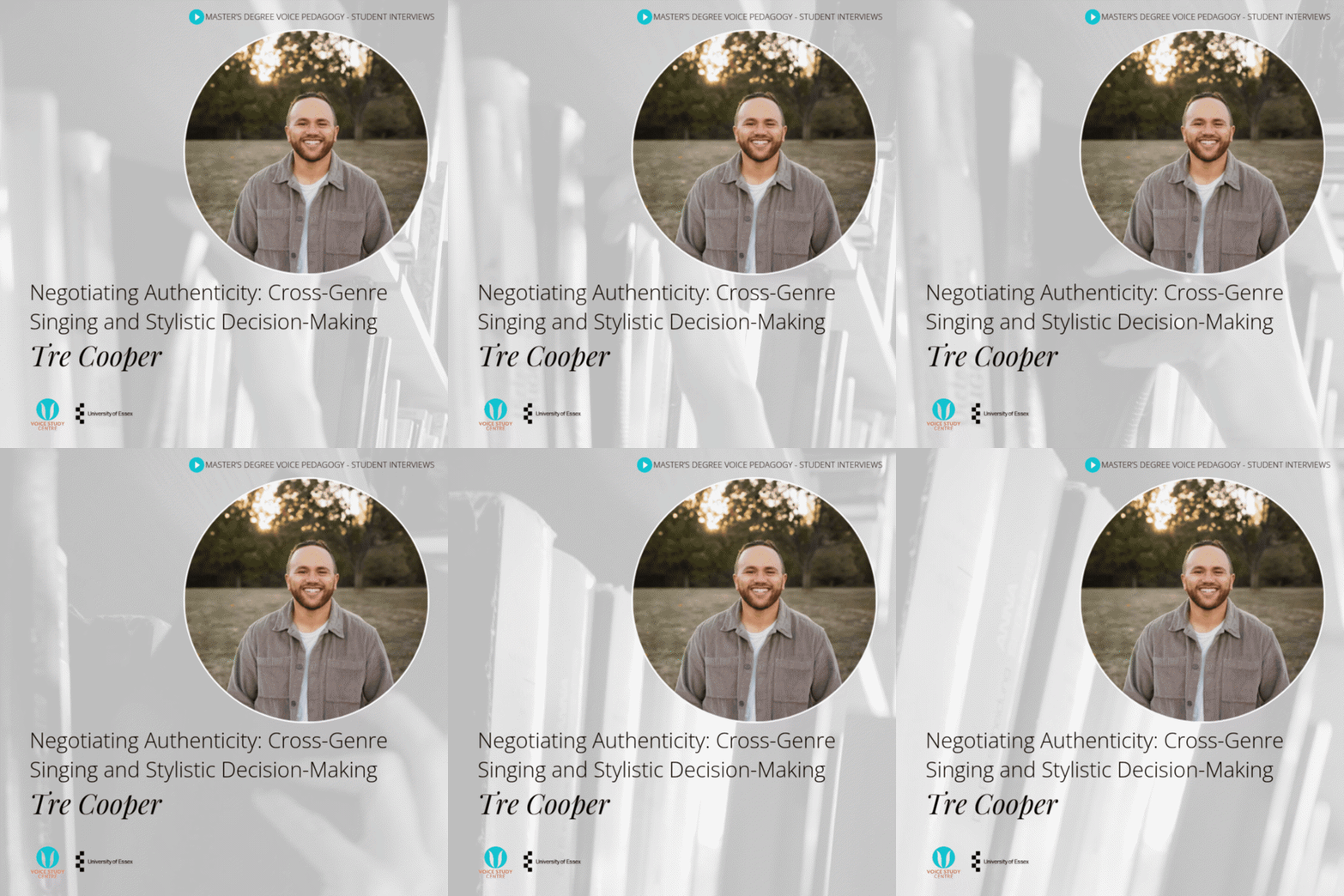
Student Interviews
Negotiating Authenticity: Tre Cooper Explores Cross-Genre Singing and Stylistic Decision-Making
Voice Study Centre
Friday 23rd October 2026What does it mean for a singer to sound authentic when performing in a genre outside their usual style? And how can voice teachers help singers develop stylistic versatility without losing their individual artistic identity?
Read More...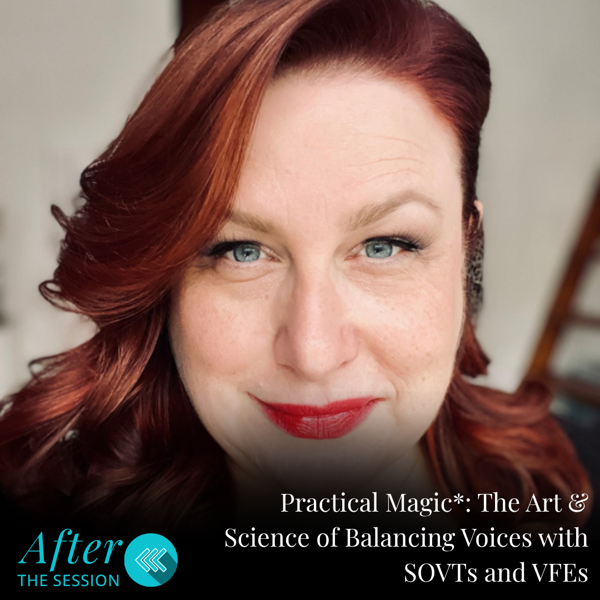
After The Session
After The Session: Practical Magic*: The Art & Science of Balancing Voices with SOVTs and VFEs with Melanie Tapson
Voice Study Centre
Thursday 22nd October 2026What makes a vocal exercise effective? Is it the tool itself, the way we use it, or our understanding of what happens when we put it into practice? In Practical Magic: The Art & Science of Balancing Voices with SOVTs and VFEs, voice teacher and professional singer Melanie Tapson explored the science behind two widely used approaches to voice training: Semi-Occluded Vocal Tract Exercises (SOVTs) and Vocal Function Exercises (VFEs). Combining scientific explanations with practical demonstrations and interactive activities, the session examined how these techniques can support vocal efficiency, stamina and sustainable voice use. Rather than treating exercises as a one-size-fits-all solution, Melanie encouraged participants to understand what each exercise does, how individual voices respond and how to adapt techniques to achieve meaningful results.
Read More...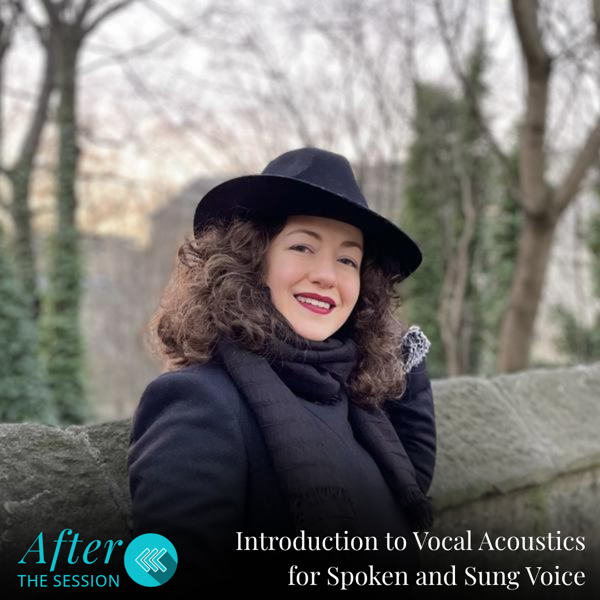
After The Session
After The Session: Introduction to Vocal Acoustics for Spoken and Sung Voice with Gökçe Kutsal
Voice Study Centre
Wednesday 21st October 2026How can understanding the science of sound help us become more effective voice teachers, singers and researchers? In our recent two-part course, Introduction to Vocal Acoustics for Spoken and Sung Voice, Gökçe Kutsal explored the fascinating relationship between the physics of sound and the way we produce, hear and understand the human voice.
Read More...