After the Session: Working with Muscle Tension Dysphonia with Dr Claire Thomas
Monday 5th October 2026
Voice Study Centre
How can singing teachers support singers experiencing muscle tension dysphonia (MTD), particularly when they are returning to singing after voice therapy? In this practical short course, Dr Claire Thomas explored how teachers can help singers rebuild efficient vocal coordination, return to performance demands and reduce the risk of recurring difficulties.
Rather than focusing solely on the clinical aspects of MTD, the session centred on a key question for singing teachers: what can we do to support the singer in front of us?
Understanding our role as singing teachers
A central theme of the session was the importance of recognising professional boundaries. Singing teachers are not responsible for diagnosing or treating voice disorders, but they play a valuable role in noticing changes in vocal function, supporting efficient singing behaviours and recognising when clinical input may be needed.
Dr Thomas emphasised that symptoms such as vocal fatigue, loss of range, unreliable register transitions, discomfort and reduced stamina should not automatically be attributed to MTD. Persistent or worsening difficulties may require further assessment, and collaboration with speech and language therapists and other clinical professionals can help teachers support singers safely and effectively.
From voice therapy back to singing
For singers who have received clinical treatment, returning to performance can involve much more than regaining a comfortable speaking voice. They may still need to rebuild their upper range, registration, sustained phrases, vocal stamina and ability to meet the demands of repertoire, acting and movement.
Dr Thomas introduced a gradual, singer-centred approach: reduce unnecessary effort, establish reliable coordination, rebuild singing tasks and progressively increase performance demands. Rather than applying a universal sequence of exercises, teachers should observe how each singer responds and adapt their approach accordingly.
Practical strategies for the voice studio
Throughout the session, participants explored practical ways to assess vocal effort and encourage more efficient coordination. These included gentle body-awareness activities, breath work, semi-occluded vocal tract exercises (SOVTs), humming and glides, alongside strategies for gradually reintroducing pitch, vowels, lyrics and repertoire.
An important takeaway was the need to assess not only how a voice sounds, but also how much effort it takes to produce that sound. A singer may appear to be performing successfully while experiencing considerable discomfort or fatigue. By checking in with the singer and testing how an exercise transfers into actual singing, teachers can make more informed decisions about what is helping.
Dr Thomas also highlighted the importance of managing vocal load. Rehearsal schedules, repeated full-voice singing, speaking demands, insufficient recovery and the physical demands of performance can all influence vocal function. Strategies such as marking during rehearsals, pacing vocal use and allowing adequate recovery can help singers manage these demands more sustainably.
Building confidence through informed choices
The session reinforced that supporting a singer with MTD is not about finding one perfect exercise or encouraging them to push through difficulty. It is about understanding the individual, recognising when something changes, identifying the point at which a task becomes more demanding and returning to the last comfortable, successful step when necessary.
By combining careful observation, collaboration with clinical professionals and gradual, evidence-informed teaching strategies, singing teachers can play an important role in helping singers rebuild confidence and return to the demands of performance.
Explore upcoming short courses with Voice Study Centre to continue developing your knowledge and practice in voice pedagogy.

Dr Claire Thomas
Claire is a singer, singing teacher and voice researcher. She currently lectures in singing on the Musical Theatre programmes at The Royal Conservatoire of Scotland and runs a private singing studio just outside Edinburgh.
Recent Posts
Student Interviews
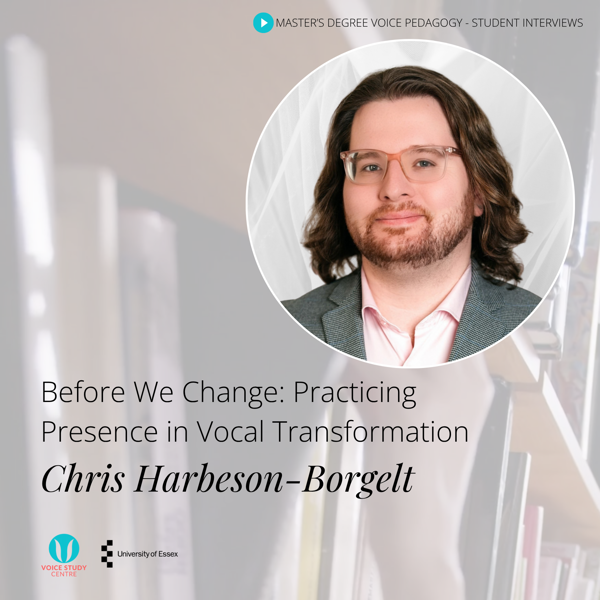
Before We Change: Practicing Presence in Vocal Transformation
Voice Study Centre
Wednesday 14th October 2026Just because we can change a singer’s voice doesn’t necessarily mean we should. For Voice Study Centre MA student Chris Harbison Borgelt, meaningful voice teaching begins with a different question: who is the change really for?
Read More...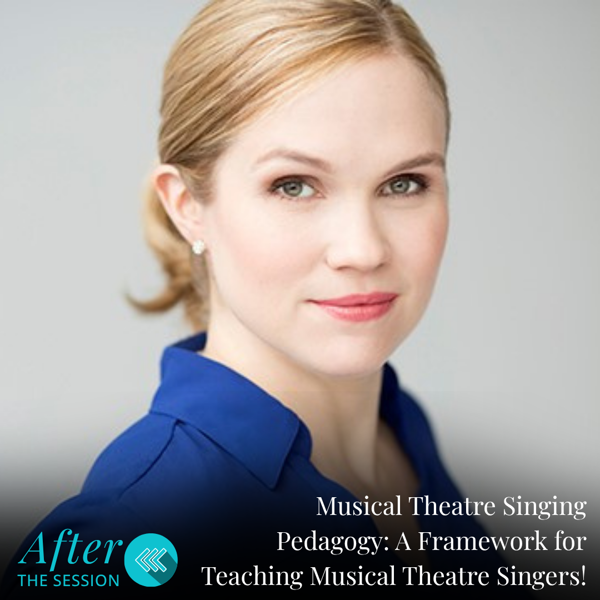
After The Session
After the Session: Musical Theatre Singing Pedagogy with Amanda Flynn
Voice Study Centre
Wednesday 14th October 2026What makes musical theatre singing different from other forms of vocal performance? And how can teachers help singers develop the flexibility, efficiency and stylistic versatility needed for a demanding professional career?
Read More...
After The Session
After The Session: Inspired Not Bound: The Promise of Science-Informed Voice Pedagogy
Voice Study Centre
Wednesday 7th October 2026Yesterday, Voice Study Centre hosted Lynn Helding, Professor of Practice in Vocal Arts and Opera and Coordinator of Vocology and Voice Pedagogy at the USC Thornton School of Music. Her presentation was a compelling exploration into the relationship between voice science and vocal art. Titled "Inspired Not Bound: The Promise of Science-Informed Voice Pedagogy," the session tackled a question that has lingered for over 170 years: If voice science is so rich and transformative, why hasn't it been more fully adopted across all voice studios?
Read More...