After The Session: Acoustics in the Voice Studio with Gökçe Kutsal
Wednesday 1st November 2023
Voice Study Centre
Gökçe Kutsal’s ‘Acoustics in the Voice Studio’ course aimed to make acoustics “fascinating not intimidating” by eliminating jargon and offering accessible content to a wide range of voice practitioners. Her warm, friendly tone was complemented by user-friendly examples and analogies throughout.
Gökçe began by posing questions such as ‘what is acoustics?’ and ‘what is sound?’ and answering them using simple definitions. She outlined the differences between sound and noise (all noise is sound but not all sound is noise). As acoustics represents such a broad field, she also presented reasons of its relevance to voice practitioners such as allowing practitioners to explain, visualise and correct issues relating to pitch, resonance, and tone quality.
The specific properties and patterns of different types of sound waves – transverse and longitudinal – were discussed and demonstrated via video clip examples, including one of a smartphone placed inside a guitar. A graph showed one complete cycle of a sound wave (period (T)) and how amplitude comes into play (taller curve = louder sound; shorter curve = softer sound). Gökçe also explained the notion of frequency – the number of cycles per second (f = 1/T) – as measured in Hertz (Hz), its relationship with pitch, and the frequency range of the human ear. She then went on to share a useful diagram displaying the frequency ranges of different instruments and common voice types.
After detailing the differences between pure tone and complex sounds using signal wave and spectrogram graphs, the frequencies of vowels and consonants in speech were discussed (consonants are quicker and of higher frequency, not ‘voiced’; vowels of lower frequency, and more understandable and unique). Gökçe showed the first, second and third formants for each vowel sound (e.g. heed/hid/hood), before moving on to talk about the speed of sound and calculating wavelengths using this and frequencies.
Next, she showed the different things that may happen when a sound wave interacts with a boundary – reflection, absorption or transmission – and linked this to why singing in the shower is a lot different to singing in a large open concert hall! This led nicely on to explaining the concepts of the ‘fundamental frequency’ – the lowest pitch of the sound which is created by vibration of the vocal folds; ‘harmonics’ – higher-pitched frequencies that are multiples of the fundamental frequency; and ‘formants’ – frequencies that the vocal tract ‘likes’ and amplifies. Diagrams showing the differences between harmonics and formants were also explained.
Gökçe outlined the basic anatomy of the human ear and the roles of different parts in allowing sound to reach the brain – this is when we start to add meaning and subjectivity. She shared a graph showing sensitivity to sound and went on to describe decibels and the varying decibel (intensity) levels of a variety of familiar noises.
But how can we visualise and analyse sound? There are many different spectrum analyser software applications (either computer or mobile) that can be used. These include SpectrumView for iOS (Free), Spectroid for Android (Free) and VoceVista Video Pro for Apple & Windows (Paid). Gökçe shared a sample screen from a spectrogram and broke it down into its different components, then a sample screen from VoceVista Video Pro. An audio clip of a student singing displayed all the composite elements in action.
The second half of the course began with Gökçe experimenting using her Digital Audio Workstation (DAW) software. She used it to play a ‘Test Oscillator’ followed by different notes from a glockenspiel, classic marimba and e-piano, and explored applying filters to alter the frequency, after which she noted the different qualities and properties of each different resulting sound. An audio clip of Adele was also played to highlight the complexity of singing in comparison to instruments, before Gökçe experimented with her own voice to compare frequencies of different vowels and consonants.
Following some further spectrogram analysis of her earlier student singing clip, Gökçe rounded off her introductory course with some very useful acoustical considerations for research and voice studio application. These ranged from selecting the relevant acoustic analysis software (such as Praat or VoceVista Video) to equipment recommendations (for microphones, cables and audio interfaces) to different environmental factors to take into account (such as background noise, room acoustics or electrical interference).
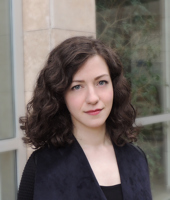
Gokce Kutsal
Gokce Kutsal is an experienced interior architect, acoustics designer and musician; her blended background has provided Gökçe with high proficiency as an acoustician...
Recent Posts
Student Interviews
Negotiating Authenticity: Tre Cooper Explores Cross-Genre Singing and Stylistic Decision-Making
Voice Study Centre
Friday 23rd October 2026What does it mean for a singer to sound authentic when performing in a genre outside their usual style? And how can voice teachers help singers develop stylistic versatility without losing their individual artistic identity?
Read More...
After The Session
After The Session: Practical Magic*: The Art & Science of Balancing Voices with SOVTs and VFEs with Melanie Tapson
Voice Study Centre
Thursday 22nd October 2026What makes a vocal exercise effective? Is it the tool itself, the way we use it, or our understanding of what happens when we put it into practice? In Practical Magic: The Art & Science of Balancing Voices with SOVTs and VFEs, voice teacher and professional singer Melanie Tapson explored the science behind two widely used approaches to voice training: Semi-Occluded Vocal Tract Exercises (SOVTs) and Vocal Function Exercises (VFEs). Combining scientific explanations with practical demonstrations and interactive activities, the session examined how these techniques can support vocal efficiency, stamina and sustainable voice use. Rather than treating exercises as a one-size-fits-all solution, Melanie encouraged participants to understand what each exercise does, how individual voices respond and how to adapt techniques to achieve meaningful results.
Read More...
After The Session
After The Session: Introduction to Vocal Acoustics for Spoken and Sung Voice with Gökçe Kutsal
Voice Study Centre
Wednesday 21st October 2026How can understanding the science of sound help us become more effective voice teachers, singers and researchers? In our recent two-part course, Introduction to Vocal Acoustics for Spoken and Sung Voice, Gökçe Kutsal explored the fascinating relationship between the physics of sound and the way we produce, hear and understand the human voice.
Read More...