After The Session: Singing With Your Whole Self - An Introduction to Feldenkrais Awareness Through Movement with Elizabeth Blades
Friday 21st July 2023
Voice Study Centre
The multi-talented Elizabeth Blades gave an interactive, experiential short course featuring a number of ‘lessons’ affiliated to the Feldenkrais Method® and its notion of Awareness Through Movement® (ATM). The participants were initially asked to stand and ‘tune inward’, taking note of where their weight is distributed and where their breath is moving, before being asked to go for a walk in their rooms while singing an excerpt, and to be aware of their movements as well as the differences between standing still and moving around.
Elizabeth introduced her book: Singing with Your Whole Self: A Singer's Guide to Feldenkrais Awareness through Movement (Second Edition), which would go on to provide the Feldenkrais lessons and overall subject matter of the course, and drew attention to the importance of pausing, smiling/laughing (low intensity) and being gentle with yourself during the lessons.
The first lesson was titled ‘Freeing the neck to turn easily’ (which can be done while standing or sitting) and involved slow and smooth head movements to the left and right, plus some variations including the shoulders and eyes. Participants were asked to sing before and after the movements and see if they experienced or felt any differences.
The second lesson was longer and to be performed while seated. It focused more on kinaesthetic awareness and imagination and featured raising each arm (separately) and then extending it back behind the body as far as it would go; this was followed by slow movements of the arm back and forth in front of the chest. The participants were then asked to perform slight variations, including with the head and eyes following the movement, and also continuing to perform the movements in the imagination only (Was it the same? Was anything left out? Did changes occur from imagining things or actually doing them?). The original arm extensions were included at various points to check on the progress. Elizabeth used the pauses in this lesson as an opportunity to interweave Moshe Feldenkrais’ history (childhood, education, etc.) with the practical elements of the course.
To begin the second half of the course, there were some similar ATM arm exercises using a combination of imagining and doing, plus more of the Feldenkrais story. Next was the ‘Broken Wing’ lesson which involved criss-crossing with the head and arm going in separate directions, after which the participants were again asked to check how far their arms would extend backwards compared to the first time they did it, and then asked to sing once more. Some time was set aside for discussion and reflection about what has changed so far.
The Feldenkrais story continued to the point in the 1950s in which the Feldenkrais Method® originated and the first group of certified Feldenkrais practitioners were trained. Then the final lesson combined movements such as tilting the head up and down, rocking the pelvis forward and back, arching and rounding the back, and raising each hip. Participants were asked questions relating to which body part leads each movement, how weight is transferred through the movements and what happens to the chest/breathing when each movement is made. There was a final process of singing (and reflecting on the course as a whole), before Elizabeth opened it up to the floor for the opportunity of a ‘mini-lesson’ that would be relevant to that person (or their student).
Elizabeth Blades’ next short course – ‘May the Ease Be with You: Taming Tension and Performance Anxiety with Feldenkrais Awareness Through Movement’ – will run on Thursday 28th September 2023 from 5:00pm – 7:00pm (UK time) – find out more here.
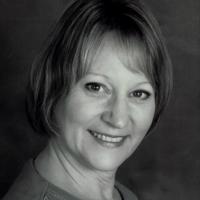
Elizabeth Blades
Elizabeth Blades holds both Doctor of Musical Arts and Masters of Music Degrees from the
Eastman School of Music in Rochester, NY...
Recent Posts
After The Session
After The Session: Thinking Outside the Voice Box: Adolescent Female Voice Change
Voice Study Centre
Thursday 15th October 2026In our recent short course, Thinking Outside the Voice Box: Adolescent Female Voice Change, Dr Bridget Sweet-Manternach explored how voice teachers can better understand and support singers experiencing the changes of adolescence. Adolescence is a period of significant physical, psychological and emotional development. However, voice change is not always straightforward, and the experiences of singers whose voices are often overlooked in traditional discussions of puberty deserve greater attention.
Read More...
Student Interviews
Before We Change: Practicing Presence in Vocal Transformation
Voice Study Centre
Wednesday 14th October 2026Just because we can change a singer’s voice doesn’t necessarily mean we should. For Voice Study Centre MA student Chris Harbison Borgelt, meaningful voice teaching begins with a different question: who is the change really for?
Read More...
After The Session
After the Session: Musical Theatre Singing Pedagogy with Amanda Flynn
Voice Study Centre
Wednesday 14th October 2026What makes musical theatre singing different from other forms of vocal performance? And how can teachers help singers develop the flexibility, efficiency and stylistic versatility needed for a demanding professional career?
Read More...