
- Know your strengths
Your strengths are your selling point. If you are unsure about your strengths, reach out to your students and ask them to write you a testimonial. You are sure to find common themes, and they are your strengths!
Niching down is one way of positioning yourself as the expert in ‘the thing that is your strength’ in your geographical area. Of course, if you teach online, then the world is your oyster.

- Make it your business to know the market rate
Setting your fees can be tricky. How many years of experience you have had, your student’s success rate and how much you have invested in your continued professional development all play a part in how much you can charge.
If you teach in person, ensure you consider the market rate. If you undercut other teachers, raising your rates can be extremely difficult, and you will end up working more hours than you need to (which doesn’t serve you or your clients well).
You may choose to have a discount for those who aren’t earning. This may include students; however, if your target market is undergraduates, that will mean that you are working at a reduced rate all the time.

- Use Social Media
Social media is a great way to attract a following, but sometimes, it can be difficult to turn followers into students. Maintain an active social media presence; potential clients may be discouraged by a social media page that was last updated 6 months ago! You should aim to post at least once a week (minimum) with a maximum of one post daily.
Vary your content, demonstrate your teaching style, knowledge of the voice, and your own talents by posting photos and videos of yourself and/or your students during lessons. Praise your current students’ achievements on social media (parents/older students may share your posts to increase your reach). Please be mindful that when posting about younger students or vulnerable adults, you must always consider safeguarding practices.
More social media post ideas:
- Post a photo of your voice studio
- Recent student performances
- Exam achievements
- A new song that a student has learnt
- Remind page followers of your business info ‘book here’…
Remember in every post to always link to a booking system or remind people that they can book by emailing/calling you.
Consider Your Audience
If you teach younger students, the guardian of those students will be your target audience. Posts may perform better if they are aimed with guardians in mind; for example, you might write, ‘Does your child love to sing?’.
If your voice studio focuses on adult singers, you may consider wording posts directly to them, ‘Do you love to sing’.

- Keep Your Website Up to Date
Your landing page is the first page you see when you open a website link, and it is vital that you tailor it to attract future clients. Ensure the landing page is appropriate for wherever you have shared the link. For example, if you post about an upcoming concert that your voice studio is hosting, link to a page where customers can reserve tickets directly.
If you teach singing face-to-face, ensure your Google Business Profile is properly optimised, so potential customers can find you easily/see where you are based on google maps.
Do not underestimate the power of word of mouth! Display all testimonials on your website. You might want to consider asking some of your students to do a video testimonial, which can be quite a powerful way to let others know about you and your work.

- Continued Professional Development (CPD)
Teachers of voice are passionate about their profession and spend hundreds – if not thousands – of pounds upskilling. They often rather cleverly shout about it on their social media accounts, reaching their immediate community and sometimes far beyond. The trick that people miss is uploading their CPD onto the website for all the world to see.
A list of the most recent CPD you have undertaken displayed on your website can prove useful because your interests will align with your future ideal client. Additionally, unlike osteopaths and other practitioners who also work with people’s bodies, there is no overseeing body for singing teachers; therefore, displaying your commitment to developing your practice is vital for proving your worth.

Our CPD Scheme acknowledges your commitments to further training and development.
You will be awarded badges and certificates in relation to the hours you spend partaking in CPD events ran by the Voice Study Centre.
You will benefit from a reduced cost to attend our Online Short Courses, when purchasing a bundle of 5, 10 or 15 courses.
Recent Posts
After The Session
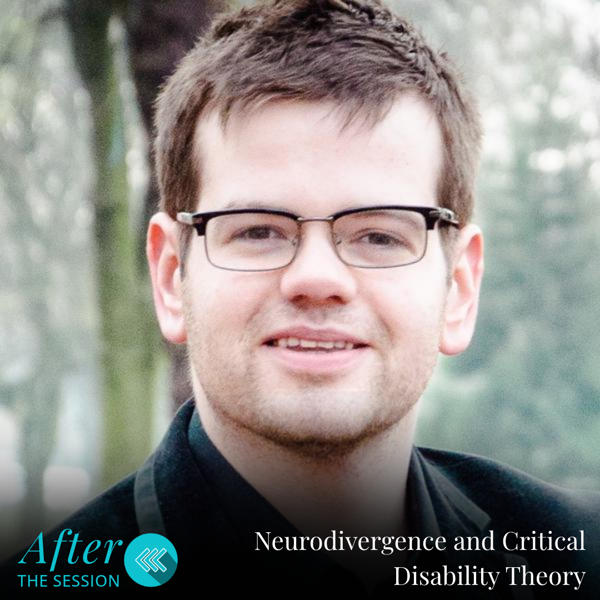
After The Session: Neurodivergence and Critical Disability Theory with Dr David Cane

Voice Study Centre
Monday 9th November 2026A recap of our session with Dr David Cane, Senior Lecturer on the Voice Study Centre MA in Voice Pedagogy, on disability and neurodivergence within the voice teaching studio. When we talk about disability and neurodivergence in voice teaching, the first thing that comes to mind is often a single question: what do I do if a disabled or neurodivergent student walks into my studio? In this session, Dr David Cane invited us to think much bigger. The teacher might be disabled or neurodivergent. So might a choir director or a colleague. The songs we teach may depict or use disability as a metaphor. Even the foundational texts of voice pedagogy carry assumptions about bodies and voices. This was a densely theoretical tour, and David was open about that. His argument was that the most important work is not a checklist of practical tips, but a rethink of what we believe teaching is for. Here are the main threads.
Read More...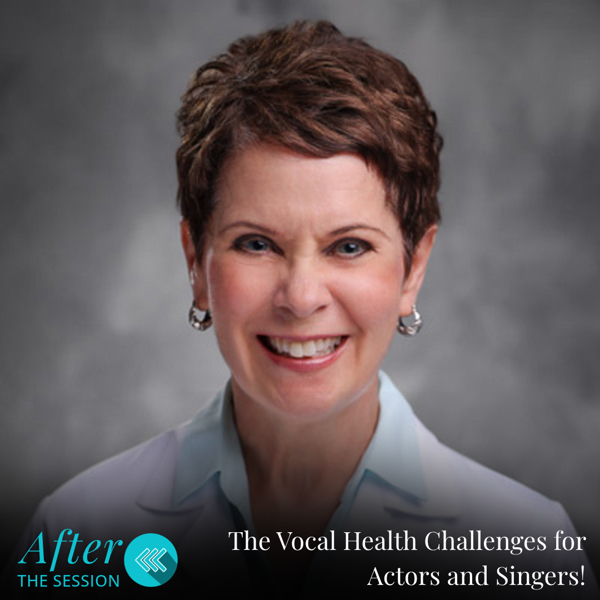
After The Session
After The Session: The Vocal Health Challenges for Actors and Singers with Leda Scearce
Voice Study Centre
Wednesday 4th November 2026A recap of our two-part course with Leda Scearce, singing voice specialist and speech-language pathologist at Duke Voice Care Center in North Carolina. Over two afternoons, Leda Scearce took our community on a deep dive into the voice as a high-performance instrument. A former professional opera singer who taught at several universities before retraining as a speech-language pathologist, Leda now works with singers and other performers who have voice injuries. Her message across both days was clear: singers and actors are vocal athletes, and voice teachers are on the front lines of their vocal health. Here are the highlights from both sessions. Please note that this is a summary of a teaching session, not medical advice. If you or a student have a voice concern, see a qualified voice specialist.
Read More...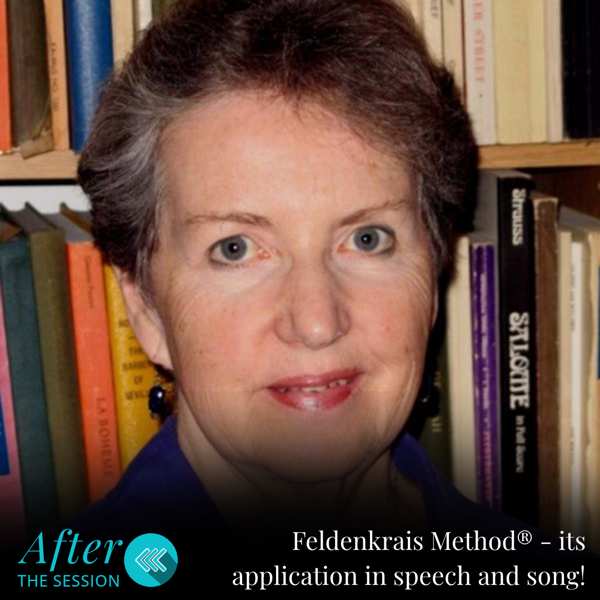
After The Session
After The Session: Feldenkrais Method® - its application in speech and song! with Marina Gilman
Voice Study Centre
Monday 2nd November 2026A recap of our session with Marina Gilman, Guild Certified Feldenkrais Practitioner, singing teacher, performer and licensed speech pathologist specialising in voice. How do we change vocal habits we don't know we have? That was the question at the heart of our latest session with Marina Gilman, and her answer was equal parts science, storytelling and gentle movement. Rather than lecturing from the front, Marina had the whole room (and everyone watching online) moving, sensing and humming along from their chairs. If you joined us, here is a reminder of what we explored. If you missed it, here is a taste of why this method has so many voice teachers talking.
Read More...