Teaching singing is an unregulated profession and therefore there are no specific singing teacher qualifications required. However, many modern singing teachers and vocal coaches partake in Continuing Professional Development (CPD) courses to expand their knowledge of voice pedagogy, which aids in developing their teaching skills and in turn benefits their students.
Voice pedagogy (or vocal pedagogy) is the term used for the study of singing. It covers the physical aspects of singing (e.g. anatomy of the vocal folds, posture/alignment, breathing) and its artistic features (e.g. vocal styles, vocal registration, voice classification), as well as many other interesting topics. As a singing teacher, it is important to understand the varying knowledge needed to teach different genres and/or styles of singing and, with this in mind, it is deemed essential for a prospective singing teacher to have a solid comprehension of voice pedagogy.
In a competitive industry, CPD training gives the teacher the opportunity to establish themselves and differentiate from their peers. For example, singing teachers may develop a specific method of teaching and/or choose to train a selective group of students (classical singers, musical theatre performers, etc.). Some professional voice users and vocal coaches may also wish to develop a specialist understanding of areas such as performance coaching, singing for health or vocal health (including voice disorders related to singing).
Voice Study Centre offers a wide range of online courses to aid CPD and facilitate voice pedagogy learning. There are immersive weekly short courses as well as some even more in-depth longer courses and certificates which are accredited by The Institute of Training and Occupational Learning (ITOL). We even operate our own Voice Professional Training CPD Award Scheme – find out more here.

MA Voice Pedagogy 🎓
To stand out in a crowded market, voice teachers are increasingly turning to specialised postgraduate research. Our master's programme (in conjunction with the University of Essex), lets you tailor your studies to your specific niche - whether that’s vocal habilitation, neuroscience, or genre-specific coaching - giving you a distinct competitive edge. Our fully online MA is available as a part-time (2-year) or full-time (1-year) course, and is tailored to allow busy professionals to study around existing work commitments.
In conclusion, although there are no set qualifications required in order to begin your career as a singing teacher, a strong understanding of voice pedagogy (and its many elements) should be regarded as necessary.
Recent Posts
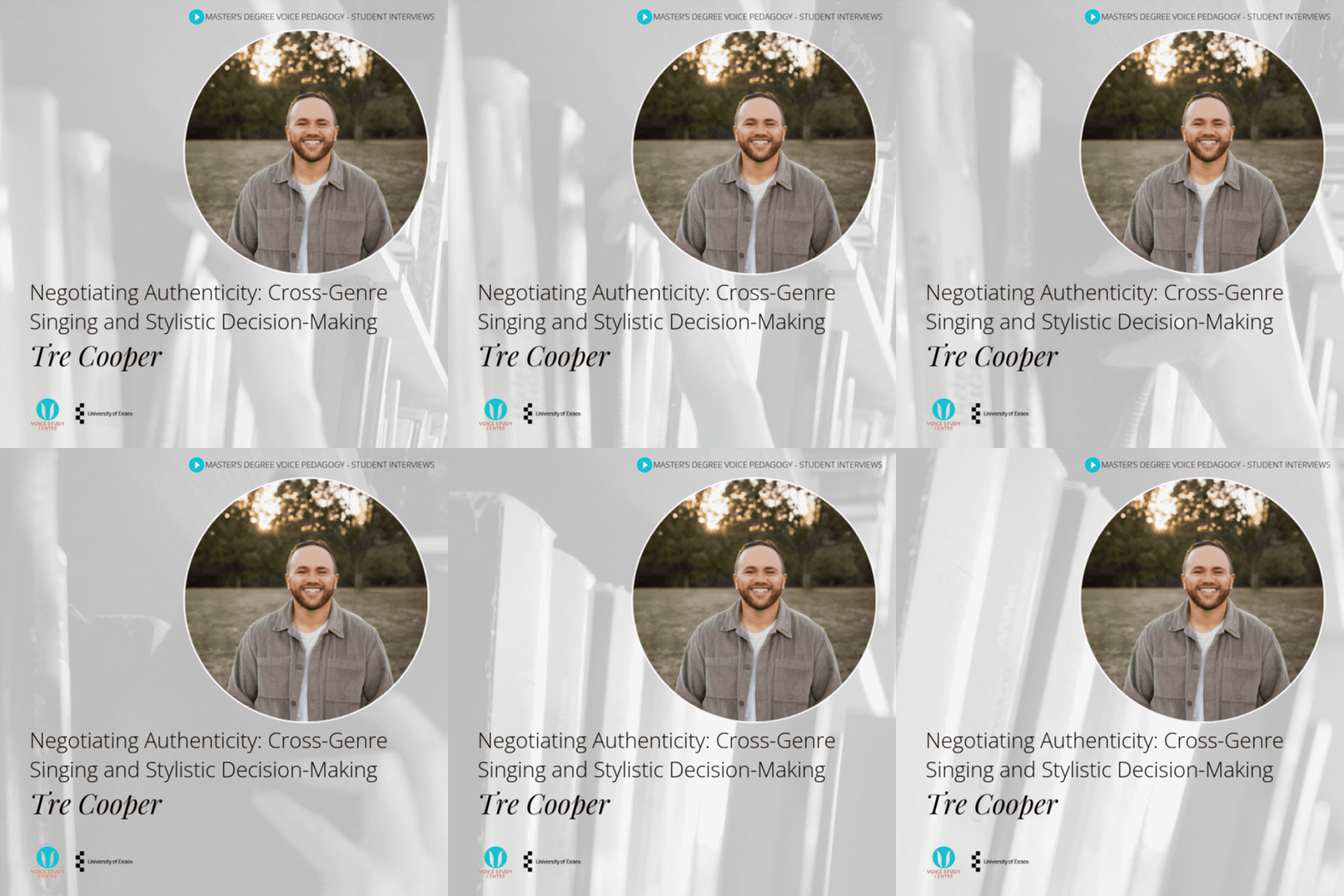
Student Interviews
Negotiating Authenticity: Tre Cooper Explores Cross-Genre Singing and Stylistic Decision-Making

Voice Study Centre
Friday 23rd October 2026What does it mean for a singer to sound authentic when performing in a genre outside their usual style? And how can voice teachers help singers develop stylistic versatility without losing their individual artistic identity?
Read More...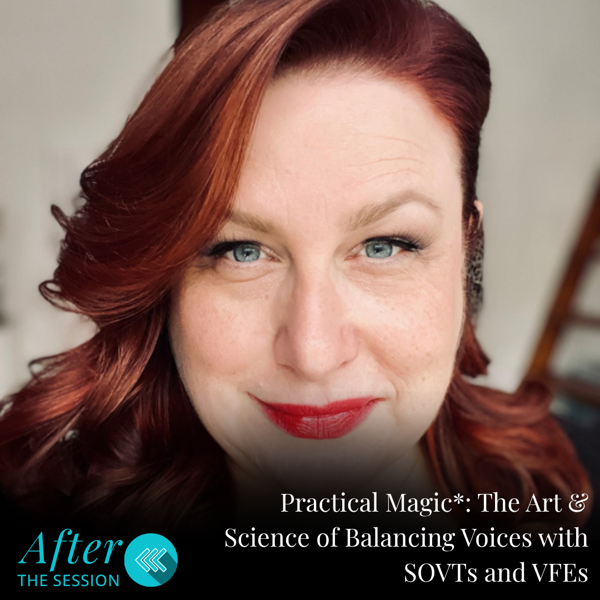
After The Session
After The Session: Practical Magic*: The Art & Science of Balancing Voices with SOVTs and VFEs with Melanie Tapson
Voice Study Centre
Thursday 22nd October 2026What makes a vocal exercise effective? Is it the tool itself, the way we use it, or our understanding of what happens when we put it into practice? In Practical Magic: The Art & Science of Balancing Voices with SOVTs and VFEs, voice teacher and professional singer Melanie Tapson explored the science behind two widely used approaches to voice training: Semi-Occluded Vocal Tract Exercises (SOVTs) and Vocal Function Exercises (VFEs). Combining scientific explanations with practical demonstrations and interactive activities, the session examined how these techniques can support vocal efficiency, stamina and sustainable voice use. Rather than treating exercises as a one-size-fits-all solution, Melanie encouraged participants to understand what each exercise does, how individual voices respond and how to adapt techniques to achieve meaningful results.
Read More...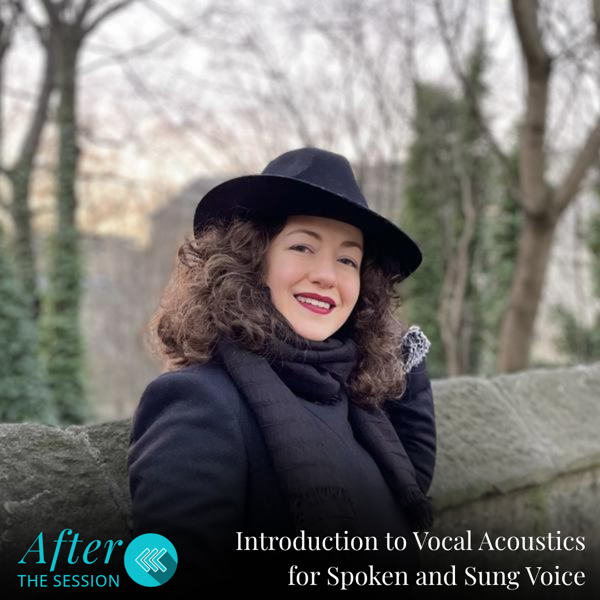
After The Session
After The Session: Introduction to Vocal Acoustics for Spoken and Sung Voice with Gökçe Kutsal
Voice Study Centre
Wednesday 21st October 2026How can understanding the science of sound help us become more effective voice teachers, singers and researchers? In our recent two-part course, Introduction to Vocal Acoustics for Spoken and Sung Voice, Gökçe Kutsal explored the fascinating relationship between the physics of sound and the way we produce, hear and understand the human voice.
Read More...