Introduction to Marking Technique for the Teacher and Performer!
Wednesday 25th March 2026, 5:00 PM - 7:00 PM (London Time)
This short course explores marking technique in singing—a vocal conservation strategy used by singers during rehearsals and extended performance periods. Marking involves singing at reduced vocal intensity, altered pitch, or modified vocal quality to preserve vocal health while maintaining musical and dramatic engagement.
The course begins with the historical context of marking, tracing its evolution from informal practice among opera singers to its current recognition as an essential vocal health strategy across multiple performance genres. The concept of marking extends beyond singing—in ballet, dancers use marking to perform attenuated versions of choreography during rehearsal, and research has demonstrated that this practice confers cognitive benefits beyond simply conserving physical energy. Additionally, in the military, the term "marking time" similarly refers to marching in place without forward movement—maintaining rhythm and engagement while conserving effort.
Current knowledge about marking in singing is explored through recent survey research investigating marking practices in clinical, studio, and performance settings. This investigation represents one of the first formal examinations of how singers, voice teachers, and voice care professionals understand and implement marking strategies. The course reviews findings on when singers choose to mark, what vocal parameters they modify, and how marking decisions are influenced by rehearsal context, performance demands, and vocal health status.
Principles of voice science underlying effective marking are examined, drawing on research comparing operatic, Broadway, and contemporary commercial music styles, we analyze how vocal tract configuration, subglottal pressure, glottal closure patterns, and resonance strategies differ between full voice and marking. Participants learn how these physiological adjustments can be strategically modified to reduce vocal load while maintaining artistic integrity.
Practical marking strategies are presented for diverse singing styles, from Western classical to contemporary commercial music. The course addresses style-specific considerations including how to maintain appropriate vocal tract resonance, preserve stylistic authenticity, and communicate musical intentions while marking. Recommendations are provided for determining when marking is appropriate, how to communicate marking intentions to collaborators, and how to transition effectively between marking and full voice.
Participants will gain practical tools for implementing marking in their own practice, teaching, or clinical work, supported by current research and voice science principles.
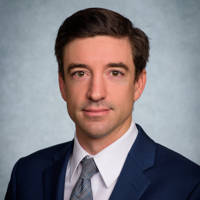
Jacob Wright
Jacob Wright, M.M., M.A., CCC-SLP, is a voice and upper airway–specialized speech-language pathologist at the UAB Voice Center, where he works in close collaboration with laryngologists and interdisciplinary partners to assess and treat complex voice and upper airway disorders. He holds multiple advanced degrees in singing and vocal pedagogy, bringing a deep understanding of vocal function, performance demands, and training methodology to his clinical work.
Attend this course for as little as £22 as part of the Voice Professional Training CPD Award Scheme.
Learn More