Living At The Centre Of Your Potential As A Vocalist: Finding Our Place In The Vocal Practice Eco-System
Thursday 15th June 2023, 5:00 PM - 7:00 PM (London Time)
What does it mean to be a vocal practitioner in today’s world?
Join this dynamic workshop, where we will use a range of thinking tools to consider our potential and place in the vocal practice eco-system.
Drawing on ideas from philosophy, psychology, leadership development and research into mental models, this workshop will explore how we perceive ourselves and our practice in the many contexts we work in.
We will reflect on the experience of working alone, of working with groups, of bringing our practice to challenging settings and more.
We know that singing is essential to people, especially during challenging times, and we will consider how we can best anchor our authentic selves in and through our vocal practice, whilst adapting to changing circumstances, spotting potential opportunities, creating meaningful work and helping to develop the field.
As a vocalist or singing teacher/leader, you are always in growth and on the move, and this session will help you develop your capacity in a whole new light, harnessing the powerful connection between mind, body, spirit, heart and brain.

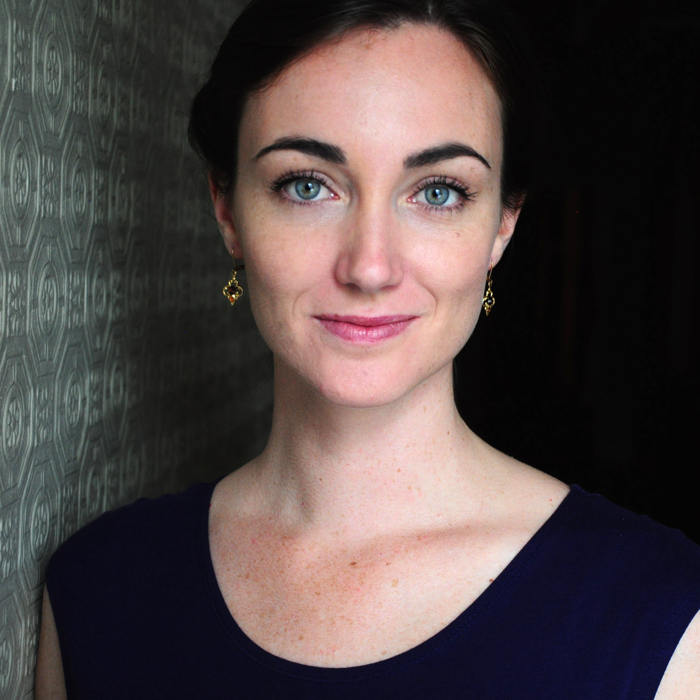
Katherine Zeserson
Katherine Zeserson is a musician (vocalist, choir leader, arranger, composer), coach, facilitator and strategic thinker with over 40 years’ experience in vocal performance, community music, music education and arts leadership.

Attend this course for as little as £22 as part of the Voice Professional Training CPD Award Scheme.
Learn MoreSorry, this is an archived short course...
We have plenty of upcoming short courses coming soon. See details of some of them below or look at the full list of short courses.


Tuesday 24th November 2026
5:00 PM - 7:00 PM
(London Time)
The Lemma Dilemma: Teaching Voice and Speech through a Linguistic Lens!

Ashleigh Reade
For voice and speech teachers, the importance of “the thought” is almost a given. Text comes to life when it is fueled by an external stimulus; we breathe in response to an image, a concept, a need we wish to express, then transmit that to our listener on the voice. In psycholinguistic models of speech processing and production, the lemma is the mental representation of a concept that contains both semantic and syntactic meaning, linking an idea to the sounds needed to express the idea. Join Ashleigh Reade as explores how to bridge the gap between actor and text, examining how psycholinguistics can support our voice and speech teaching.
Monday 30th November 2026
6:00 PM - 8:00 PM
(London Time)
Bringing Colour Theory into IPA Vowels!

Siobhan Doherty Buffett
Step into a multi-sensory approach to phonetics with Siobhan Doherty Buffett, certified teacher of Knight-Thompson Speechwork™. In this engaging session, Siobhan introduces a new Colour Theory Map of the International Phonetic Alphabet (IPA) Vowel Chart - a visual tool designed to demystify complex phonetic concepts, deepen anatomical awareness, and transform how we teach and practice narrow transcription. Whether you are a voice teacher, speech-language pathologist, linguist, or performer, this interactive exploration offers a fresh, intuitive lens to help both you and your students visualize the subtle mechanics of vowel production!
Thursday 3rd December 2026
5:00 PM - 7:00 PM
(London Time)
Singing and Parkinson’s Disease: Overview of the Evidence to Date

Dr Abigail Webb
Parkinson’s Disease is a progressive neurological disorder affecting around 166,000 people in the UK. It is characterised by a significant reduction in dopamine production that in turn causes impairments across several motor and non-motor functioning. A 2025 review indicated that singing may benefit certain aspects of speech production in those affected, and in the last decade, a collection of research studies has explored the role of singing specifically in symptom management of Parkinson’s. Join Dr Abigail Webb, as she brings together evidence to date of the impact of singing for people living with Parkinson’s.