After The Session: Can Artificial Intelligence (AI) help with Voice Training and Business Development?
Friday 21st August 2026
Voice Study Centre
AI-Assisted Voice Training & Business Development: Key Takeaways from Our Session with John Henny
Artificial Intelligence continues to provoke lively debate across performing arts and higher education. Yesterday, the Voice Study Centre had the pleasure of welcoming back voice teacher John Henny for an illuminating session on how vocal educators can responsibly and effectively harness AI tools - such as Claude and ChatGPT - to streamline studio operations, refine pedagogic messaging, and elevate student learning.
With over 25 years of experience teaching thousands of singers - including Grammy winners and Broadway performers - John brought a deeply pragmatic perspective to a topic that often evokes anxiety. Rather than framing AI as a threat, Henny introduced a balanced paradigm: viewing AI as a brilliant, highly capable assistant that nevertheless requires strict human project management to avoid generic "AI slop".
Here is a summary of the key concepts and actionable takeaways shared during the presentation:
-
Grounding AI in Your Authentic Voice & Pedagogy
A central takeaway from yesterday's presentation was the importance of training AI models on your personal teaching philosophy and style. Left on default settings, AI tends to output bland, corporate, or overly agreeable text. To overcome this, John recommended:
- Building Custom Style Guides: Feed transcripts of your own teaching, articles, or audio dictations into AI project folders. Prompt the model to analyze - not just summarize - your vocabulary, sentence rhythm, and core pedagogic beliefs.
- Enforcing Boundary Controls: Explicitly instruct the AI on what not to do. For instance, John strictly prohibits his AI assistants from using aggressive, competitor-bashing marketing tactics.
- Protecting Studio Privacy: Always turn off global model training in settings so private studio notes, client details, and custom materials remain strictly confidential.
Golden Rule - "Use AI to Use AI": You don't need to spend hours learning code or watching tutorials. Ask the AI model to write its own prompts, markdown files, and custom workflows for your studio needs.
-
AI as a Critical Sparring Partner & Business Coach
Henny highlighted one of the most transformative uses of AI: acting as an objective sparring partner to test pedagogic assumptions and business strategies.
- Testing Pedagogic Concepts: By prompting AI to play "devil's advocate," educators can submit an argument or lesson plan and ask the model to identify weak points, point out outdated assumptions, or check against recent peer-reviewed voice science.
- Virtual Business Coaching: By feeding the AI specific studio targets (such as teaching capacity, fixed expenses, target student demographics, and local postcodes), teachers can receive tailored guidance on studio management, fee structures, and focused marketing campaigns.
-
Streamlining Operations & Building Digital Tools
Yesterday's masterclass demonstrated how agentic AI workflows can execute practical, time-saving tasks across studio administration:
- Branded Studio Documents: Generating complete student welcome packs, studio policy documents, and vocal health guides styled in your studio’s exact brand colors and typography.
- Drafting Communications: Sorting through common student email queries and drafting thoughtful responses for final teacher approval.
- Building Bespoke Learning Apps: John showcased a custom web application he built using Claude - an interactive pitch-matching and ear-training app designed to help singers develop pitch ideation. Educators can build similar student intake forms or practice timers in just a few hours.
-
What AI Can (and Cannot) Replace in Voice Pedagogy
Addressing the existential question - "Will AI replace voice teachers?" - John offered clear reassurance. While AI can analyze pitch accuracy, vibrato rates, or formant tuning, and act as a 24/7 vocal acoustics tutor, it lacks human perception and empathy:
"This is the human voice. The human voice is a huge part of our identity... You need someone who can connect at a human level and guide people through this." - John Henny
AI cannot hear or feel the physiological or emotional causes behind vocal tension, nor can it observe subtle physical body alignments in real-time.
Final Thoughts
AI is ultimately a digital employee designed to shoulder administrative burdens so educators can dedicate more time and energy to their students. By maintaining strong oversight, checking AI references against source studies, and prioritizing human connection, vocal teachers can navigate the digital future with confidence.
A huge thank you to John Henny for another inspiring session! Voice Study Centre students can access the full recording and transcript in their course portal.
Recent Posts

After The Session
After The Session: Inspired Not Bound: The Promise of Science-Informed Voice Pedagogy
Voice Study Centre
Wednesday 7th October 2026Yesterday, Voice Study Centre hosted Lynn Helding, Professor of Practice in Vocal Arts and Opera and Coordinator of Vocology and Voice Pedagogy at the USC Thornton School of Music. Her presentation was a compelling exploration into the relationship between voice science and vocal art. Titled "Inspired Not Bound: The Promise of Science-Informed Voice Pedagogy," the session tackled a question that has lingered for over 170 years: If voice science is so rich and transformative, why hasn't it been more fully adopted across all voice studios?
Read More...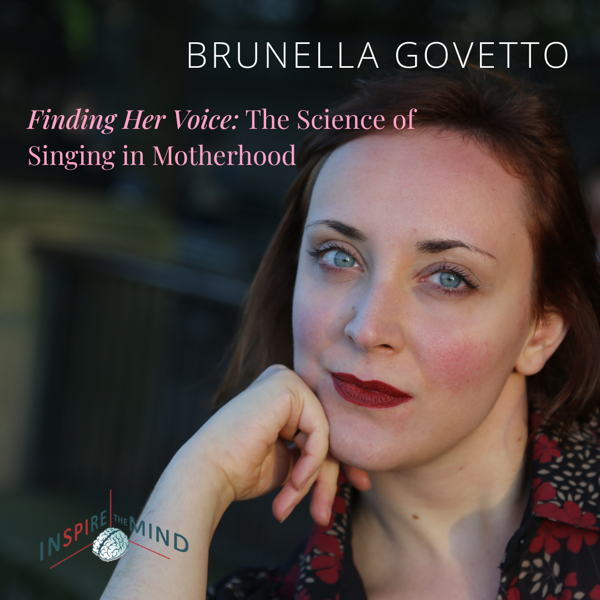
Student & Alumni News
Alumna Brunella Govetto Writes for Inspire the Mind on Singing and Motherhood
Voice Study Centre
Monday 28th September 2026Voice Study Centre alumna Brunella Govetto has written a new article for the Inspire the Mind blog, drawing on her thesis work and experience of working with singing and mothers.
Read More...
After The Session
After The Session: Doubles and Stacks, Reverbs and Effects: Teaching Vocal Production Skills
Voice Study Centre
Wednesday 23rd September 2026For many vocalists and voice teachers, the world of digital audio workstations (DAWs), hardware, and studio processing can feel like forbidden territory. Yesterday, Voice Study Centre hosted a hands-on, practical short course led by Kelly Hoppenjans (voice teacher, and PhD candidate in musicology at the University of Michigan), designed specifically to break down these technological barriers and empower singers to approach vocal production creatively, playfully, and confidently - so what did we learn?
Read More...