MA Voice Pedagogy student May Oskan presents twice at APME online conference
Friday 26th January 2024
Voice Study Centre
It is with great delight that we can announce that current MA Voice Pedagogy student May Oskan recently presented not one but two papers at the Association for Popular Music Education’s (APME) 3rd Annual Graduate Student Conference, which took place online on 19th and 20th January 2024.
May’s first paper – Fear No Sound: Exploring Pedagogies for Rough Vocal Effects (RVEs) in Popular Music – offers a working model for teaching rough vocal effects (such as screaming, growling and vocal distortion), integrating current research, video resources and firsthand training experience.
May’s second paper – Vocal training experiences and perceptions among adult Professional Contemporary Gig Singers (PCGS) – features a mixed methods study examining the self-reported experiences, needs and perceptions of gig singers in order to explore the question of how voice teachers can best support working and aspiring professionals.
Our warmest congratulations, May!
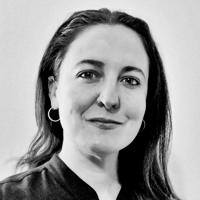
May Oskan
May Oskan teaches voice, musicianship, and songwriting from her private studio in Oakland, California and has designed curriculum and workshops for several other vocal studios as well...
Recent Posts
After The Session
After The Session: A (Very) Brief Course in Linguistics! with Miranda Guettlein
Voice Study Centre
Wednesday 18th November 2026A recap of our introductory linguistics course for voice teachers, speech practitioners, actors and dialect coaches, led by Miranda Guettlein, linguist, dialect coach and editor of the Voice and Speech Review.
Read More...
After The Session
After The Session: Neurodivergence and Critical Disability Theory with Dr David Cane
Voice Study Centre
Monday 9th November 2026A recap of our session with Dr David Cane, Senior Lecturer on the Voice Study Centre MA in Voice Pedagogy, on disability and neurodivergence within the voice teaching studio. When we talk about disability and neurodivergence in voice teaching, the first thing that comes to mind is often a single question: what do I do if a disabled or neurodivergent student walks into my studio? In this session, Dr David Cane invited us to think much bigger. The teacher might be disabled or neurodivergent. So might a choir director or a colleague. The songs we teach may depict or use disability as a metaphor. Even the foundational texts of voice pedagogy carry assumptions about bodies and voices. This was a densely theoretical tour, and David was open about that. His argument was that the most important work is not a checklist of practical tips, but a rethink of what we believe teaching is for. Here are the main threads.
Read More...
After The Session
After The Session: The Vocal Health Challenges for Actors and Singers with Leda Scearce
Voice Study Centre
Wednesday 4th November 2026A recap of our two-part course with Leda Scearce, singing voice specialist and speech-language pathologist at Duke Voice Care Center in North Carolina. Over two afternoons, Leda Scearce took our community on a deep dive into the voice as a high-performance instrument. A former professional opera singer who taught at several universities before retraining as a speech-language pathologist, Leda now works with singers and other performers who have voice injuries. Her message across both days was clear: singers and actors are vocal athletes, and voice teachers are on the front lines of their vocal health. Here are the highlights from both sessions. Please note that this is a summary of a teaching session, not medical advice. If you or a student have a voice concern, see a qualified voice specialist.
Read More...