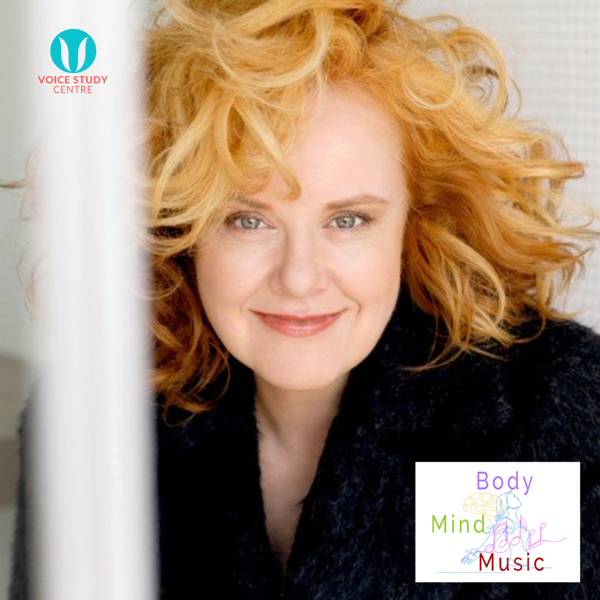
Renowned Wagner interpreter Petra Lang has captivated audiences worldwide with her wide-ranging concert repertoire. A studied violinist and committed music teacher, she accompanied colleagues during vocal and professional crises while she was still an active singer. She recognised the need for a holistic approach early on and attended extra occupational training and courses in areas such as pedagogy, mental training, sound massage and nutrition.
In this blog, Petra outlines the thought-provoking lecture she will be presenting at the Mind, Body & Music Symposium:
By invitation from ÖGfMM, I will give a lecture at the International Symposium "Body-Mind-Music" in April 2024 in Vienna on “the view on the health of singers through the lens of the biopsychosocial model” from the perspective of a singer with 34 years of stage, teaching and coaching experience.
I gave a lecture with the same title but a different focus at the NATS International Region Conference in February 2024.
In Vienna, the focus is on working out the possible proportions of physical, mental and environmental parameters and their influence on the health of "classical" singers.
Addressing the body-mind question goes back to antiquity and the philosophical discussions in the 1970s inspired the American psychiatrist George Engel (1913-1999) to write a groundbreaking article published in the international journal "Science" (1977 Science: "The Need for a New Medical Model: A Challenge to Biomedicine").
Engel criticized the reductionist biomedical view in medicine and psychiatry. Thanks to the success of his publications (1977-1980), the biopsychosocial model was able to gain a foothold in the medical and general professional debate.
He proposed finding pathways to health by incorporating physical, psychological and environmentally defined parameters, which contrasted with the biomedical approach that deals with the lowest levels from organs to cells and molecules. His biopsychosocial approach relates many more levels on a continuum, serves to strengthen the patient's self-awareness, which should be viewed by the therapist in the context of the patient’s life circumstances, which in turn enables a possibly multidimensional therapy.
There have been major developments since the 1970/80s. The successes of research in the natural sciences, such as genetics, histopathology, biochemistry, neuroradiology and especially psychoneuroimmunology, help to explain physical and psychological symptoms and greatly facilitate their treatment. Environmental awareness has increased significantly and the coronavirus pandemic has highlighted the importance of interpersonal relationships.
When considering the singer under the mutually dependent poles of biological, mental, and social aspects, the first step is to look at the initial conditions, followed by possible disturbances or problems that can always occur in the course of a singer's life and the search for solutions with possible coping strategies that also help the singer to make his choice and find his own team. The members of this team can come from friends or family. Singing teachers, coaches, doctors and therapists could be part of the “team” put together by the singer.
The most important point seems to me to be the perception of one's own singing status quo and the acceptance of the fact that as singers we learn, study and train very hard in order to be prepared to present our abilities in the best possible way, without knowing whether we will ever get the chance to do this presentation and without knowing whether we will ever earn money from singing. Singers need a lot of will, energy and health to "live" for their singing.
Petra Lang
Petra Lang is considered one of the most renowned Wagner interpreters. She performed her legendary Ortrud all over the world. After starting out as a lyric mezzo, she is known for her portrayals of Wagner's heroines...
Recent Posts
Course Reviews
Redefining Ethical Practice in Voice Teaching

Voice Study Centre
Wednesday 12th August 2026When we think about ethics in voice teaching, our minds often jump to extreme scenarios - policy violations, conflicts of interest, or misconduct. But as Dr. Justin John Moniz (Associate Director of Vocal Performance and Coordinator of Vocal Pedagogy at NYU Steinhardt, and Vocal Arts Faculty at Manhattan School of Music) explained in last night's session, every single voice lesson is filled with subtle ethical decision-making... So what did we learn?
Read More...
Student & Alumni News
Grad Stories: Emily DenBleyker 🎓

Emily DenBleyker
Monday 10th August 2026One of our recent graduates Emily DenBleyker shares her journey with the Voice Study Centre, where she reflects on how the MA enabled her to pursue her own research interests and develop her practice as a voice teacher by exploring new approaches to supporting adult beginner singers.
Read More...
Course Reviews
Sex Hormones & Voice: From Puberty to Gender-Affirming Therapy with Dr Silvia Ciancia
Voice Study Centre
Friday 7th August 2026This week, the Voice Study Centre was delighted to host paediatric endocrinologist and researcher Dr Silvia Ciancia for an illuminating short course presentation entitled "Sex Hormones & Voice: From Puberty to Gender-Affirming Therapy." Welcoming an international audience of speech-language therapists, vocal coaches, singing teachers, and researchers, the session delivered a rich, medical-to-pedagogical bridge explaining how sex hormones act on laryngeal tissues across life stages, with a dedicated focus on adolescent gender-affirming healthcare and its vocal outcomes.
Read More...