How British Conversation is Changing: Resonance, Engagement, and Social Class!
Tuesday 30th September 2025, 2:00 PM - 4:00 PM (London Time)
This short course explores how British people’s everyday conversations are shifting — and why it matters! Drawing on findings from the British National Corpora (1994 vs. 2014) and my recent study British Conversation is Changing (Applied Linguistics, 2024), we will look at how people re-use and acknowledge each other’s words, a process called resonance. Resonance is a powerful marker of verbal engagement: when it’s present, speakers treat one another’s talk as meaningful; when it’s absent, conversations can feel flat or disconnected.
We will discuss how resonance has increased among middle- and upper-class speakers, especially in professions tied to education, politics, and corporate life, while it has remained stable among working-class speakers. This reflects broader societal changes linked to ideologies of inclusivity, equality, and engagement in the workplace.
The course combines accessible explanations with real conversational examples, showing how shifts in interaction style can reveal changing social values. Participants will gain tools to analyze everyday dialogue, reflect on their own conversational habits, and understand how language change is not only about new words, but about how we connect with one another.
🏷️ Price £30 (UK VAT inclusive)
🎥 Recording automatically sent to all who book (even if you cannot attend live)
▶️ Rewatch as many times as you like
📜 Certificate of attendance available

Dr Vittorio Tantucci
Vittorio Tantucci is Senior Lecturer in Linguistics at Lancaster University and world-leading scholar in the field of Pragmatics, the study of verbal behaviour in context. His research focuses on cross-cultural and cognitive approaches to dialogue, with particular emphasis on intersubjectivity, resonance, (im)politeness, and reciprocity. He specializes in corpus-based methods and computational approaches to large datasets of real conversations to reveal how interaction changes across time, social groups, and languages.
Attend this course for as little as £22 as part of the Voice Professional Training CPD Award Scheme.
Learn MoreSorry, this is an archived short course...
We have plenty of upcoming short courses coming soon. See details of some of them below or look at the full list of short courses.


Monday 19th October 2026
2:00 PM - 4:00 PM
Tuesday 20th October 2026
2:00 PM - 4:00 PM
(London Time)
Introduction to Vocal Acoustics for Spoken and Sung Voice

Gökçe Kutsal
This course is designed to break down the fundamentals of acoustics for both spoken and sung voice in a beginner-friendly, accessible way — so you can easily understand and apply these concepts to your teaching or research.

Tuesday 20th October 2026
5:00 PM - 7:00 PM
(London Time)
Practical Magic*: The Art & Science of Balancing Voices with SOVTs and VFEs

Melanie Tapson
Through live demonstrations, group practice, and peer coaching, you’ll learn how to teach SOVTs and VFEs with clarity and precision, integrate their principles to support vocal health, recovery, and stylistic flexibility and troubleshoot challenges and adapt exercises for individualized results.
Tuesday 27th October 2026
5:00 PM - 7:00 PM
(London Time)
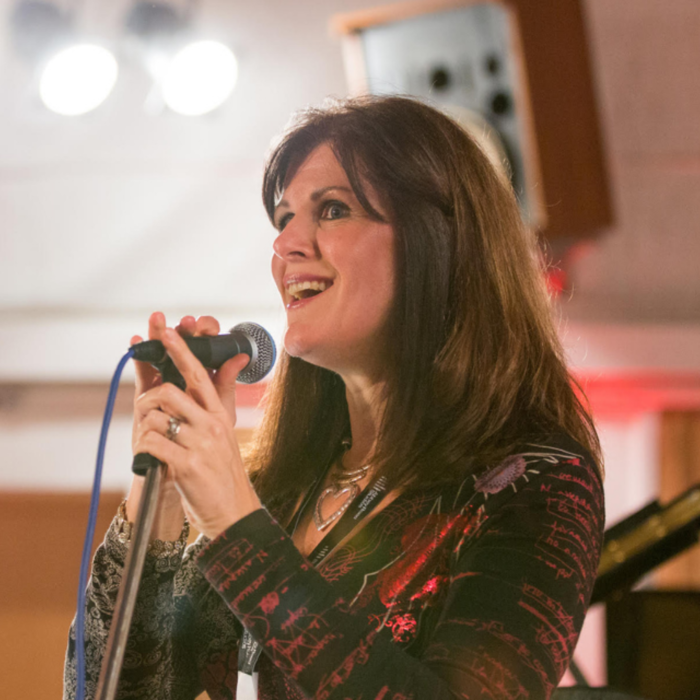
Pop Pedagogy - an Overview

Kim Chandler
Some successful pop stars are celebrating career lengths of over sixty years, having been around since the 1950s when pop music emerged and diversified from jazz, so pop singing has been in existence sufficiently long now that, for teaching purposes, we can observe and analyse what type of approach serves it best.