Improving Lyric Italian Diction for Classical Singers
Thursday 18th December 2025, 3:00 PM - 5:00 PM (London Time)
This course offers an in-depth exploration of the most frequent pronunciation errors made by classical singers in Italian lyric diction. Designed for both emerging and advanced singers, the course provides a structured and practical approach to mastering Italian pronunciation as used in opera, oratorio, and art song. The course’s principles and exercises are universally applicable to non-native Italian speakers striving for accuracy, elegance, and expressive nuance in performance.
Drawing on my research into common diction pitfalls, participants will engage with the ten most frequent errors identified through qualitative study, professional observation, and collaboration with Italian language experts. These include the mispronunciation of double and single consonants, aspirated “t” and “q” sounds, incorrect formation of l and ʎ, inconsistent use of the International Phonetic Alphabet (IPA), and confusion between open and closed vowels (e/ɛ and o/ɔ). The course will also unpack the finer linguistic principles of raddoppiamento sintattico, assimilation, and syllabic stress, helping singers understand how these affect meaning, rhythm, and legato phrasing in Italian text setting.
Through guided IPA training, listening exercises, and coached performance practice, students will learn to diagnose and correct diction errors typical of English and other language backgrounds. Each session integrates live vocal examples drawn from operatic and song repertoire—including works by Mozart, Verdi, Puccini, Caldara, and Caccini—linking theory directly to performance.
By the end of the course, participants will:
- Demonstrate accurate pronunciation of Italian vowels and consonants in sung contexts.
- Apply IPA as a reliable tool for analysing and correcting diction.
- Understand the relationship between phonetics, musical phrasing, and textual meaning.
Ultimately, this course equips singers to approach Italian repertoire with linguistic confidence and artistic authenticity!
🏷️ Price £30 (UK VAT inclusive)
🎥 Recording automatically sent to all who book (even if you cannot attend live)
▶️ Rewatch as many times as you like
📜 Certificate of attendance available
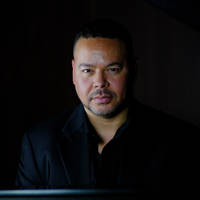
Professor Conroy Cupido
Prof Conroy Cupido completed a BMus at Stellenbosch University, an MMus and Artist Certificate at Southern Methodist University (Dallas, Texas), and became the first South African to earn a Doctorate in Vocal Performance from the University of North Texas (2009). In 2024, he obtained an MA in Positive Psychology from North-West University with distinction.
Attend this course for as little as £22 as part of the Voice Professional Training CPD Award Scheme.
Learn MoreSorry, this is an archived short course...
We have plenty of upcoming short courses coming soon. See details of some of them below or look at the full list of short courses.


Monday 19th October 2026
2:00 PM - 4:00 PM
Tuesday 20th October 2026
2:00 PM - 4:00 PM
(London Time)
Introduction to Vocal Acoustics for Spoken and Sung Voice

Gökçe Kutsal
This course is designed to break down the fundamentals of acoustics for both spoken and sung voice in a beginner-friendly, accessible way — so you can easily understand and apply these concepts to your teaching or research.

Tuesday 20th October 2026
5:00 PM - 7:00 PM
(London Time)
Practical Magic*: The Art & Science of Balancing Voices with SOVTs and VFEs

Melanie Tapson
Through live demonstrations, group practice, and peer coaching, you’ll learn how to teach SOVTs and VFEs with clarity and precision, integrate their principles to support vocal health, recovery, and stylistic flexibility and troubleshoot challenges and adapt exercises for individualized results.
Tuesday 27th October 2026
5:00 PM - 7:00 PM
(London Time)
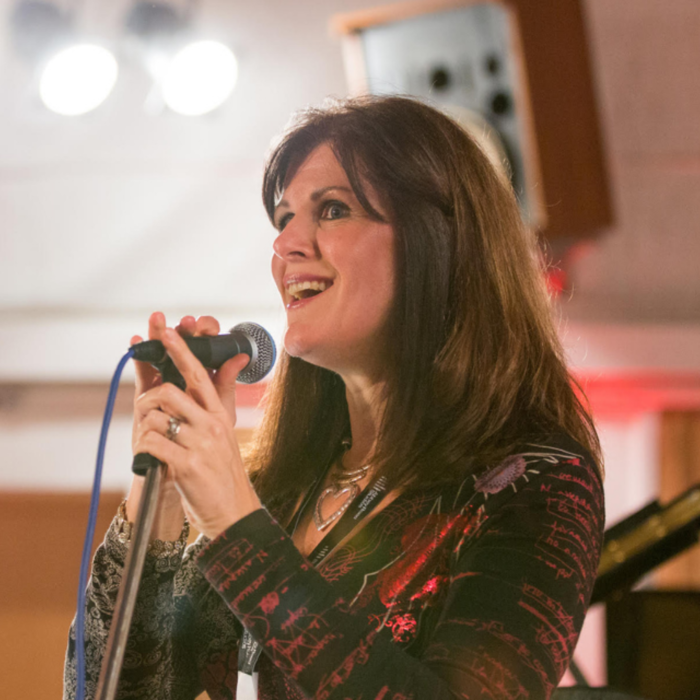
Pop Pedagogy - an Overview

Kim Chandler
Some successful pop stars are celebrating career lengths of over sixty years, having been around since the 1950s when pop music emerged and diversified from jazz, so pop singing has been in existence sufficiently long now that, for teaching purposes, we can observe and analyse what type of approach serves it best.