Janice Chapman In Conversation With James Platt: Honing Your Pedagogical Skills
Thursday 21st October 2021, 5:00 PM - 7:00 PM (London Time)
Anticipating the upcoming release of the fourth edition of Janice Chapman’s Singing and Singing Teaching: A Holistic Approach to Classical Voice (Plural Publishing) later this year, authors and editors of the book Janice and James Platt discuss the updated approaches, new information and “sharpened” pedagogical tools outlined in the new and greatly expanded edition.
This workshop is designed primarily for teachers and singers of classical voice and will introduce the following concepts with in-depth discussions, practical examples and Q&A’s.
- Primal Sound & Current Neurology
- Primal sound or voluntary emotional vocalisation as the bedrock of elite classical singing
- Using emotional triggers to shape the voice in a holistic manner
- From Pure Accent Method into Supported Singing
- An updated palpation protocol to identify the correct muscle support junctions and their engagement for efficient exhalation/support for classical singing
- The SPLAT Inhalation and its variants
- Assessment and remediation of common breath management faults including epigastric locking and the mismanagement of the abdominal wall and ribcage
- The Advanced “Dial-A-Vowel” Exercise
- Locating the best gross oral posture of the tongue for maximal classical resonance
- The advanced use of the American Retroflex “R” to help locate a singer’s resonant sweet spot
- Managing consonants without compromising optimal resonance
- Redefining the Open Throat
- Collar Connection and the lower larynx
- The Pre-Yawn Gesture
- The combination of a wide pharynx and a raised tongue
- The high soft palate (velum)
- Maintaining pharyngeal width
- Deconstricting the false vocal folds
- Relaxing extraneous pharyngeal tension
- The role of optimal breath management in maintaining the open throat
- The open throat in combination with appropriate pharyngeal tuning
- Collar Connection and the lower larynx
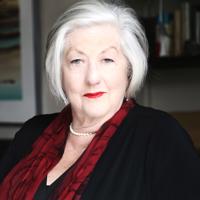
Professor Janice Chapman
Professor Janice L. Chapman, A.U.A., F.G.S., O.A.M. is a singing teacher of world renown. Born and educated in Australia, she won a number of major competitions...
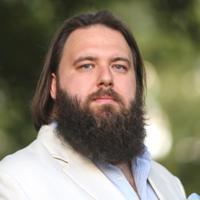
James Platt
James has been a professional soloist, singing teacher, vocal pedagogy lecturer and consultant for over 15 years. He is currently undertaking his PhD...
Sorry, this is an archived short course...
We have plenty of upcoming short courses coming soon. See details of some of them below or look at the full list of short courses.

Monday 19th October 2026
2:00 PM - 4:00 PM
Tuesday 20th October 2026
2:00 PM - 4:00 PM
(London Time)
Introduction to Vocal Acoustics for Spoken and Sung Voice

Gökçe Kutsal
This course is designed to break down the fundamentals of acoustics for both spoken and sung voice in a beginner-friendly, accessible way — so you can easily understand and apply these concepts to your teaching or research.
Tuesday 20th October 2026
5:00 PM - 7:00 PM
(London Time)
Practical Magic*: The Art & Science of Balancing Voices with SOVTs and VFEs

Melanie Tapson
Through live demonstrations, group practice, and peer coaching, you’ll learn how to teach SOVTs and VFEs with clarity and precision, integrate their principles to support vocal health, recovery, and stylistic flexibility and troubleshoot challenges and adapt exercises for individualized results.
Tuesday 27th October 2026
5:00 PM - 7:00 PM
(London Time)
Pop Pedagogy - an Overview

Kim Chandler
Some successful pop stars are celebrating career lengths of over sixty years, having been around since the 1950s when pop music emerged and diversified from jazz, so pop singing has been in existence sufficiently long now that, for teaching purposes, we can observe and analyse what type of approach serves it best.