Picking Up Good Vibrations: Pedagogical and Clinical Voice Analysis!
Thursday 11th December 2025, 8:00 AM - 10:00 AM (London Time)
Voice teachers and clinicians strongly rely on auditory perceptual modes of voice evaluation. These are considered the gold standard for assessing voice quality and training effects (e.g., a singer’s progress from lesson to lesson or across voice therapy). While this means of voice analysis is crucial, using instrumental (quantitative) metrics to support pedagogical and clinical decision-making can be an invaluable way to ensure that singers are receiving individualised and evidence-based voice training and care.
Instrumental voice analysis is standard within speech science and speech-language therapy practice, but recommendations for singing-voice analysis for assessing training and treatment outcomes are sparse. Although there is a vast array of instrumental voice metrics available, few have been specifically tested to use with the singing voice. In this short course, techniques for instrumentally analysing the singing voice will be explored.
Specific considerations for the challenges of obtaining reliable, robust, and comparable data will be presented, and practical recommendations for recording and analysing the singing voice in pedagogical and clinical contexts will be made.
A particular focus will be placed on practical and accessible methods for voice analysis, and on metrics with clear physiological correlates. Information will be presented with a particular focus on the associations between physiology (vocal function), vocal health, and acoustic metrics.
🏷️ Price £30 (UK VAT inclusive)
🎥 Recording automatically sent to all who book (even if you cannot attend live)
▶️ Rewatch as many times as you like
📜 Certificate of attendance available
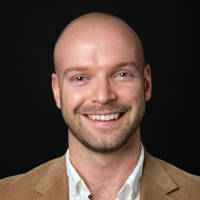
Dr Calvin Baker
Dr Calvin Peter Baker is a Research Fellow and Lecturer at the University of Auckland, working between Speech Science (School of Psychology) and the School of Music (Voice discipline). He completed a Bachelor of Music in classical voice performance and has first-class honours and master's degrees in the specialisation of studio pedagogy. Calvin conducted his interdisciplinary doctoral research (PhD, Speech Science) at the University of Auckland.
Attend this course for as little as £22 as part of the Voice Professional Training CPD Award Scheme.
Learn MoreSorry, this is an archived short course...
We have plenty of upcoming short courses coming soon. See details of some of them below or look at the full list of short courses.


Monday 19th October 2026
2:00 PM - 4:00 PM
Tuesday 20th October 2026
2:00 PM - 4:00 PM
(London Time)
Introduction to Vocal Acoustics for Spoken and Sung Voice

Gökçe Kutsal
This course is designed to break down the fundamentals of acoustics for both spoken and sung voice in a beginner-friendly, accessible way — so you can easily understand and apply these concepts to your teaching or research.

Tuesday 20th October 2026
5:00 PM - 7:00 PM
(London Time)
Practical Magic*: The Art & Science of Balancing Voices with SOVTs and VFEs

Melanie Tapson
Through live demonstrations, group practice, and peer coaching, you’ll learn how to teach SOVTs and VFEs with clarity and precision, integrate their principles to support vocal health, recovery, and stylistic flexibility and troubleshoot challenges and adapt exercises for individualized results.
Tuesday 27th October 2026
5:00 PM - 7:00 PM
(London Time)
Pop Pedagogy - an Overview

Kim Chandler
Some successful pop stars are celebrating career lengths of over sixty years, having been around since the 1950s when pop music emerged and diversified from jazz, so pop singing has been in existence sufficiently long now that, for teaching purposes, we can observe and analyse what type of approach serves it best.