Stretching for the singer: Moving beyond routines
Thursday 1st August 2024, 5:00 PM - 7:00 PM (London Time)
Exercises and stretches for the singer/performer can easily be found online, many of which seem to conflict with or contradict others. Does this dilemma make one model wrong or another model better? Join me as we unpack these and other issues.
With full disclosure, I am not a singer or teacher of voice. I’m a physical therapist who teaches manual therapy and related exercises to speech therapists, voice professionals, and other clinicians working with the performing populations. So, with such little direct exposure to your target audience, what can I contribute? Personalization of the stretches/exercise.
In my nearly 40 years as a physical therapist, I’ve seen much in the way of claims of superior models and methods, though seldom is evidence-based proof provided to bolster such claims. After much exploration, I’ve noticed a few elements missing from those models and sought to include them in how I work with clients and teach my work to others. Separating myself from the traditional perspective where the clinician/teacher/coach is viewed as the expert, capable of deciding on the proper intervention, I began empowering my clients to become their own experts. This empowerment is the basis for my presentation for the Voice Study Centre.
Spend a few hours with me looking deeply into limitations in the clinician/teacher-as-expert model and how we can balance out power towards the values and preferences of the individual client/student. Even a concept seemingly as simple as exercise and stretching can be made more person-centered by applying a few core principles. You will come away with knowledge of beneficial stretches and exercises to enhance performance and remediate problems, and you’ll also leave the talk with a deeper understanding of shared decision-making, the foundation of my work.
Please be prepared to apply this work to yourself or a companion. I would advise that you refrain from wearing any facial/neck lotion or makeup and have a small piece of cloth handy for some of the mouth-based work.
🏷️ Price £30 (UK VAT inclusive)
🎥 Recording automatically sent to all who book (even if you cannot attend live)
▶️ Rewatch as many times as you like
📜 Certificate of attendance available
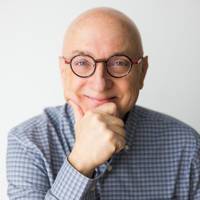
Walt Fritz
Walt Fritz, PT, has evolved traditionally taught tissue-based approaches into a unique interpretation of manual therapy. This approach advances views of causation and impact from historical tissue-specific models into a multifactorial narrative, leaning heavily on biopsychosocial influences.
Attend this course for as little as £22 as part of the Voice Professional Training CPD Award Scheme.
Learn MoreSorry, this is an archived short course...
We have plenty of upcoming short courses coming soon. See details of some of them below or look at the full list of short courses.

Tuesday 27th October 2026
5:00 PM - 7:00 PM
(London Time)
Pop Pedagogy - an Overview

Kim Chandler
Some successful pop stars are celebrating career lengths of over sixty years, having been around since the 1950s when pop music emerged and diversified from jazz, so pop singing has been in existence sufficiently long now that, for teaching purposes, we can observe and analyse what type of approach serves it best.
Friday 30th October 2026
3:00 PM - 5:00 PM
(London Time)
Feldenkrais Method® - its application in speech and song!

Marina Gilman
The Feldenkrais Method® is a form of somatic education that uses gentle movement and directed attention to improve physical and mental functioning, including singing and speaking. Since we are not always aware of the source of tension or discoordination, it is difficult to make the necessary adjustments to ensure optimal use of the voice!

Monday 2nd November 2026
5:00 PM - 7:00 PM
Tuesday 3rd November 2026
5:00 PM - 7:00 PM
(London Time)
The Vocal Health Challenges for Actors and Singers!

Leda Scearce
Two part course! Vocal health principles are inextricably and symbiotically linked with singing and acting voice pedagogy: Good vocal health allows the singer and actor to more easily and effectively achieve their technical and artistic goals, and good teaching reinforces vocal technique that diminishes the risk of vocal injury. We now also recognize the necessity for singers and actors to understand how their instruments work, how to take care of their voices, and what to do when something goes wrong. Singing and acting teachers are indeed on the front lines of vocal health!