After The Session: Diagnosis and Treatment of 4 Professional Performers Attending a Specialist SLT-Led Performers’ Voice Clinic at a Tertiary Level London Hospital with Tori Burnay
Friday 14th July 2023
Voice Study Centre
This fascinating short course began with Tori giving an overview of her job role and the South London Voice, Airway & Swallow Centre (SOLVAS) team in which she works. She talked through the function of the Voice Specialist Speech and Language Therapist and the aim of an SLT intervention, and made her intro very relevant to singers and performers despite SLTs’ primary focus usually being on the speaking voice.
Tori explained the types of voice disorders that she comes across (reduced vocal ability due to misuse, trauma, emotional stress, etc.), as well as common triggers for voice issues (bacterial infection, lung conditions, vocal overload, etc.). She outlined her Performer Specialist SLT-led Voice Clinic featured in the case studies and some of the key questions that occur in different cases (e.g. Constant or intermittent? Current teacher/coach? What makes voice better/worse?). This was accompanied by a discussion of her subjective and objective evaluations and some common things that are reported by her patients (e.g. loss of vocal power, sore feeling in the larynx).
The first case study followed a 28-year-old female professional contemporary Christian music (CCM) singer with persistent dysphonia (following 12 months of intermittence) as a result of a hectic schedule of travelling and singing. Endoscopy footage showed swelling in vocal folds and vocal qualities such as ‘breathy’, ‘strained’ and ‘weak’ were observed. Tori talked through treatment choices for vocal fold nodules, then a 1999 study from Carding et al (1999) highlighted some of the direct treatment (e.g. diaphragmatic breathing) and indirect treatment (e.g. vocal rest programme) techniques recommended to the client.
After six sessions of therapy and a period of vocal rest, a further video clip showed improvements. Nine sessions of post-operative therapy included different activities from week one to week four, concluding in normal speaking use and SOVT exercises for range. A third clip (6 weeks post-op) showed the client at the point of being ready to work with a vocal coach again, and a fourth clip showed the client’s singing in action (4 months post-op). Tori’s reflections were that there is no consensus yet as to which techniques are most effective or how long therapy should last for, plus care should be taken when determining which patients are selected for primary voice therapy and which would benefit from surgery.
The second case study featured a 33-year-old classically trained male professional singer with a severe upper respiratory tract infection (URTI) and associated symptoms, including a dysphonic voice which had shown improvements over nine months. He had appeared at the clinic in July 2021 and was evaluated as having some hard glottal attack in speech, mildly breathy quality and deviation of the tongue to the left on protrusion. The initial endoscopy showed one of the vocal folds to be yellowish in appearance as a result of a haematoma. Tori discussed haematoma management, including stretch and release, accent method exercises and no steam inhalations.
An initial endoscopy review two weeks later showed that something was not quite symmetrical, despite some improvements, and the vocal folds seemed thin. Tori’s hypothesis was that the patient had suffered hypoglossal neuropathy, possibly as a result of COVID-19. Three months (seven sessions) of therapy began with reducing performance load to twice weekly and concluded with modified vocal function exercises and some work with a vocal rehab coach (VRC). Post-therapy and post-treatment endoscopy clips with singing displayed symmetry and recovery in the vocal folds, however the latest status (October 2022) indicated onset of new symptoms and an initial assessment for Postural Orthostatic Tachycardia Syndrome (POTS) was carried out. The patient will be referred to a local ‘long COVID’ clinic for follow-up.
The third case study involved a 41-year-old female classical soprano with a longstanding thyroid goitre and previous history including a vocal fold oedema in March 2001 and a left hemi-thyroidectomy for papillary carcinoma in 2015 – this had resulted in a choking/gagging sensation when singing very high. Revision surgery had been carried out in June 2020 to remove the right lobe of the thyroid. An initial SLT session revealed upper pitch range issues as well as life stresses and pressures in the background. The patient was peri-menopausal too.
An endoscopy clip showed a little bit of soft vocal fold oedema and some closure/symmetry issues. Tori explored the thyroid gland and neck muscles in general, and then shared a randomised clinical trial from Kletzien et al (2018) that evaluated voice changes in the first year after a thyroidectomy. Her methodical approach for therapy based on assessment findings from six sessions included postural alignment, fine motor training and modified vocal function exercises. A further clip from a joint clinic session (including the patient’s singing coach as well) showed the vocal folds looking a little bit healthier. Tori’s reflections placed value in understanding surgical procedures, liaising with surgeons and a pre-operative assessment before thyroid surgery. She also recommended physiotherapy to reduce adhesion formation and achieve optimal post-operative range of movement.
The final case study followed a 45-year-old female professional CCM singer (and singing teacher) in a tribute band who was pregnant at the time and had had a five-year history of onset after an URTI. Her vibrato had become unstable and she’d tried a lot of sessions with different coaches and therapists. Previous diagnoses had included nodules, a vocal fold scar and muscle tension dysphonia. An initial endoscopy clip showed a few vocal fold issues including a scar. She had a normal speaking voice yet singing was really difficult.
Five sessions of voice therapy intervention aimed to introduce stability in singing tone as well as enable the ability to teach again, then a post-pandemic review in July 2021 (jointly with experienced vocal coach Dr Gillyanne Kayes) brought about a strong agreement on a ‘neurological misfiring’ that was causing the issues. Tori described the literature on ‘Task-Specific Singing Dystonia’ and detailed a four-session programme of voice therapy (direct therapy) for speaking dystonia. A new diagnosis for ‘Singer’s dystonia’ was proposed and the patient underwent a trial of injections of Botox (thyrohyoid approach); and the next audio clip of singing showed a ‘life-changing improvement’. The course concluded with Tori reflecting on this new diagnosis of a rare voice disorder while raising awareness for future diagnoses.
Tori Burnay
Tori Burnay is a Voice Specialist Speech and Language Therapist who works extensively with singers and professional voice users...
Recent Posts
After The Session
After The Session: Inspired Not Bound: The Promise of Science-Informed Voice Pedagogy
Voice Study Centre
Wednesday 7th October 2026Yesterday, Voice Study Centre hosted Lynn Helding, Professor of Practice in Vocal Arts and Opera and Coordinator of Vocology and Voice Pedagogy at the USC Thornton School of Music. Her presentation was a compelling exploration into the relationship between voice science and vocal art. Titled "Inspired Not Bound: The Promise of Science-Informed Voice Pedagogy," the session tackled a question that has lingered for over 170 years: If voice science is so rich and transformative, why hasn't it been more fully adopted across all voice studios?
Read More...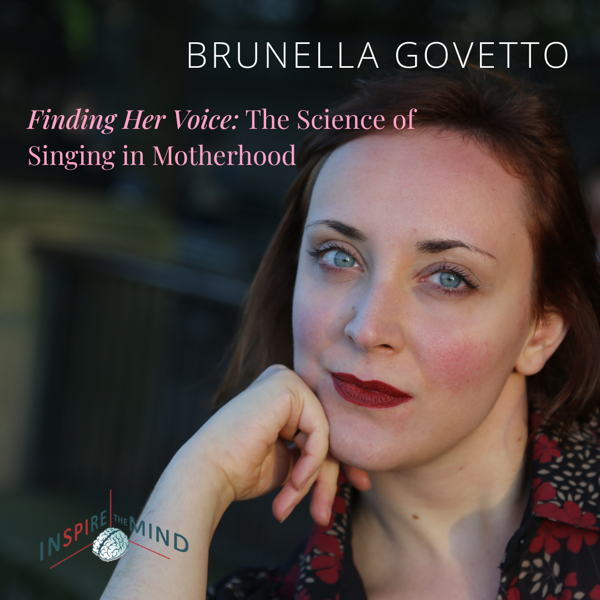
Student & Alumni News
Alumna Brunella Govetto Writes for Inspire the Mind on Singing and Motherhood
Voice Study Centre
Monday 28th September 2026Voice Study Centre alumna Brunella Govetto has written a new article for the Inspire the Mind blog, drawing on her thesis work and experience of working with singing and mothers.
Read More...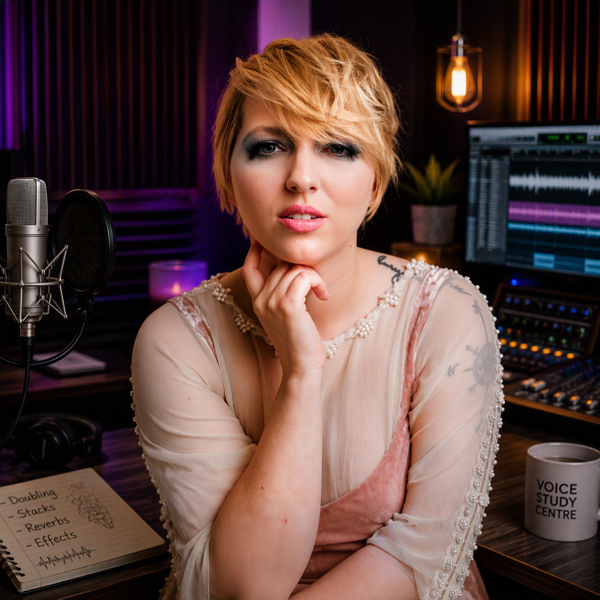
After The Session
After The Session: Doubles and Stacks, Reverbs and Effects: Teaching Vocal Production Skills
Voice Study Centre
Wednesday 23rd September 2026For many vocalists and voice teachers, the world of digital audio workstations (DAWs), hardware, and studio processing can feel like forbidden territory. Yesterday, Voice Study Centre hosted a hands-on, practical short course led by Kelly Hoppenjans (voice teacher, and PhD candidate in musicology at the University of Michigan), designed specifically to break down these technological barriers and empower singers to approach vocal production creatively, playfully, and confidently - so what did we learn?
Read More...