After The Session: Progressive Procedures - Applying the Alexander Technique to the Voice from Release to Re-engagement with Michele Capalbo
Friday 4th August 2023
Voice Study Centre
So, who exactly was F.M. Alexander? Michele Capalbo started her practical Alexander Technique (AT) workshop by answering this question and describing the ‘breathing man’ behind the technique in a little more detail. She then went on to discuss the relevance of the AT, as well as kinaesthetic learning (the absence of touch), Alexander’s concept of ‘constructive conscious control’ (consciously making changes to everyday activities, becoming aware of inefficient or injurious habits, etc.), and prioritising ‘process over result’ (‘How’ NOT ‘What’).
Throughout, Michele encouraged participants not to be too judgemental on themselves and to simply enjoy experimenting, ask questions around what they are experiencing, and take things slowly. The purpose of the workshop was to be ‘progressive and iterative’, encouraging exploration and avoiding ‘end-gaining’ (rushing towards a goal without attention to how the activity is achieved). Shared, varied and randomised explorations were recommended to enhance learning.
The first AT procedure was called ‘Semi-supine’ and involved laying down with the head raised (supported by books) and the knees bent pointing towards the ceiling. Participants were directed to sequentially allow the neck to release into optimal length, allow the head to balance on the spine, allow the entire torso (front and back) to lengthen and widen, and allow the legs to unstiffen and the hips, knees and ankles release and bend easily. The first variation was to introduce ‘autonomic breathing’ (letting the air out and letting it rebound in through the nose; not ‘taking’ a breath); the second variation involved kinaesthetic memory (imagining singing something specific from a first-person perspective).
The second AT procedure was the ‘Monkey’, used for re-toning and re-integrating the deep extensor (slow twitch) muscles of the spine and the active restoration of the head/spine relationship. This procedure required a chair with a flat bottom and a horizontal surface (e.g. desk, music stand). The ‘Seated Monkey’ involved balancing on the sit bones and bending forward at the hip while maintaining the integrity of the head, neck and back. Michele then introduced the concept of ‘hands like feet’ – which involved extending the hands and placing them on a surface at about elbow height – and demonstrated the position on her screen. Hands should be active and ‘softened’ (not too tense and not collapsed).
After an autonomic breathing exercise, the ‘Standing Monkey’ was explored, and this played around with the flexibility of the legs. Michele encouraged variation and experimentation such as adding ‘hands like feet’, including autonomic breathing, or re-engaging in a different position if something isn’t working. An exploration of the ‘Monkey’ included choosing a note or short phrase that can be easily vocalised. Michele concluded that this procedure is the ‘foundation for better posture’ as it strengthens the deep postural muscles.
The third AT procedure explored was the ‘Whispered “Ah”’, a respiration and phonation exercise that’s often beneficial to singers/actors who tend to ‘push’ the voice. This examined the ‘critical moment of phonation’ (i.e. just before we sing/speak) and can be combined with any of the other procedures featured in the workshop. Michele guided participants through the preparatory stages (including brightening the eyes and smile and bringing the teeth into the ‘bite’ position), before executing the procedure and then varying it with Semi Occluded Vocal Tract (SOVT) exercises using voiced and unvoiced consonants.
The fourth and final AT procedure was titled ‘Hands on the Back of a Chair’ – it’s helpful for noticing how the whole torso supports phonation and useful for exploring periods of increased effort, including higher frequencies and greater amplitude. The procedure began in a ‘Seated Monkey’ position and incorporated ‘hands like feet’ as introduced earlier. Michele talked through some different explorations; these involved singing a single note or extended spoken word (in easy/low part of range), and then increasing pitch (but not volume) through ascending glides, ascending leaps and crescendo while playing with the pull in the arms. It was concluded that ‘Hands on the Back of a Chair’ identifies the most efficient way to use physical tension to benefit vocalists.
This short workshop was rounded off with a framework for re-education (based on Carson and Collins’ ‘Five-A Model’ – Analysis, Awareness, Adjustment, Automation, Assurance), together with practice and feedback tips to enhance (re-)learning. Michele then summarised her previous ethos that it is the ‘How’ NOT ‘What’ that is vitally important in learning and teaching the Alexander Technique.
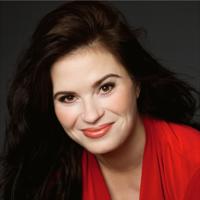
Michele Capalbo
Michele Capalbo is a Canadian singer, voice teacher and adjudicator currently based in the United States. Specialising in the music of Verdi and Puccini, she has performed internationally for over 20 years in principle operatic roles...
Recent Posts

After The Session
After The Session: Inspired Not Bound: The Promise of Science-Informed Voice Pedagogy
Voice Study Centre
Wednesday 7th October 2026Yesterday, Voice Study Centre hosted Lynn Helding, Professor of Practice in Vocal Arts and Opera and Coordinator of Vocology and Voice Pedagogy at the USC Thornton School of Music. Her presentation was a compelling exploration into the relationship between voice science and vocal art. Titled "Inspired Not Bound: The Promise of Science-Informed Voice Pedagogy," the session tackled a question that has lingered for over 170 years: If voice science is so rich and transformative, why hasn't it been more fully adopted across all voice studios?
Read More...
Student & Alumni News
Alumna Brunella Govetto Writes for Inspire the Mind on Singing and Motherhood
Voice Study Centre
Monday 28th September 2026Voice Study Centre alumna Brunella Govetto has written a new article for the Inspire the Mind blog, drawing on her thesis work and experience of working with singing and mothers.
Read More...
After The Session
After The Session: Doubles and Stacks, Reverbs and Effects: Teaching Vocal Production Skills
Voice Study Centre
Wednesday 23rd September 2026For many vocalists and voice teachers, the world of digital audio workstations (DAWs), hardware, and studio processing can feel like forbidden territory. Yesterday, Voice Study Centre hosted a hands-on, practical short course led by Kelly Hoppenjans (voice teacher, and PhD candidate in musicology at the University of Michigan), designed specifically to break down these technological barriers and empower singers to approach vocal production creatively, playfully, and confidently - so what did we learn?
Read More...