In April 2021, Canadian soprano Karen Wierzba was diagnosed with laryngeal dystonia (LD), which inspired her to apply for the Voice Study Centre’s MA Voice Pedagogy programme and continue her learning. Two and a half years later, she has just presented at the 11th International Auriculotherapy Symposium in Copenhagen, Denmark (you can read the full article here), and is currently working on the final module of her Master’s degree.
Karen grew up in a musical family and household, singing and playing piano from an early age. Since graduating from the University of Toronto aged 23, she has travelled to sing classically with major symphonic orchestras and opera houses around the world. She has also had extensive experience teaching both singing and piano, has written many scenarios and screenplays, and currently directs a community choir of 60 people.
Karen’s life began to change at the start of 2019 when she started suffering from shingles on the right side of her face, not to mention some traumatic events in her personal life. Having normally been able to sing whatever, whenever with her agile soprano voice, it was in January 2020 when further problems started to arise.
During rehearsals for Ligeti’s Lux Aeterna at Radio France, Karen noticed her voice trembling and starting to make bleating noises, and she broke into a sweat trying to stay straight toned during performance. Following a period of COVID-19 restrictions, later that year Karen heard the bleat again and hastily made an ENT appointment, during which she was diagnosed with vocal tetany. A week later, she caught COVID-19.
Soon after, Karen began exploring a wide range of therapies, including educational psychotherapy, sophrology, postural therapy with an osteopath, speech and singing pathology therapy, and even medicinal therapy from time to time. This combination helped her to decipher what she could and couldn’t achieve, singing-wise, without spasms. Karen began to develop a stronger relationship with her lower range, where the shaking was less perceptible.
A diagnosis of laryngeal dystonia (LD) in 2021 was borne out of existing nerve issues in combination with long-COVID symptoms, and her self-confidence and emotions were at an all-time low. So, she began to ponder pedagogical options in order to remain functional and visible in some type of music teaching profession – and little did she know that she would love research so much. The Voice Study Centre appeared on Karen’s horizon through an advertisement on the Voice Geek Group on Facebook. She applied and was accepted for her MA merely a week after her diagnosis. Without the support of her proud family, she wouldn’t have got this far.
When asked about her Voice Study Centre MA experience to date, Karen says that it “provides answers to all my questions related to the voice”. She paid tribute to her tutors for their “unfailing positivity” and for being “extremely generous with active encouragement”. Karen says she has “thoroughly enjoyed watching live webinars by deeply knowledgeable scientists and researchers all over the globe” and has also enjoyed applying her MA research both in her teaching studio and as a choir director.
Spurred on by a French neurologist’s previous recommendation for treating her daughter’s severe ADHD, Karen’s battle with LD has led her to start auriculotherapy this year. Karen has undergone five treatments so far and, combined with psycho-education, voice rehabilitation (through movement reduction exercises) and voice research with the Voice Study Centre, this has built back up her confidence and her mental and physical health.
For those that are also facing laryngeal dystonia, Karen recommends taking time and listening to your inner self, learning about polyvagal theory, keeping a journal of any kind, seeking any therapy that makes some sort of sense to you, respecting your voice and simply doing what feels good: “new, unknown paths can bring so much joy ahead”.
Karen is now a fully functioning singer once again (albeit her range has changed) and, as a result of LD research during her MA, is now delving into intradisciplinary work to help other singers suffering with the condition. She’s already intending to complete a doctorate in LD research, too.
Karen plans to keep singing forever and do some more conducting, plus she’s currently co-writing a show about grief – which will be performed in Canada soon – and is involved in the initial planning for a music school in conjunction with an existing Parisian music festival. Watch this space!
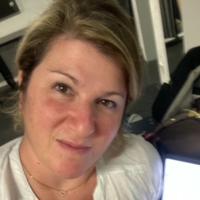
Karen Wierzba
Karen Wierzba is a Canadian soprano who has had an engaging solo classical singing career over the last 30 years since graduating from the University of Toronto’s Music Performance programme, with a focus in voice pedagogy.
Recent Posts
Student & Alumni News
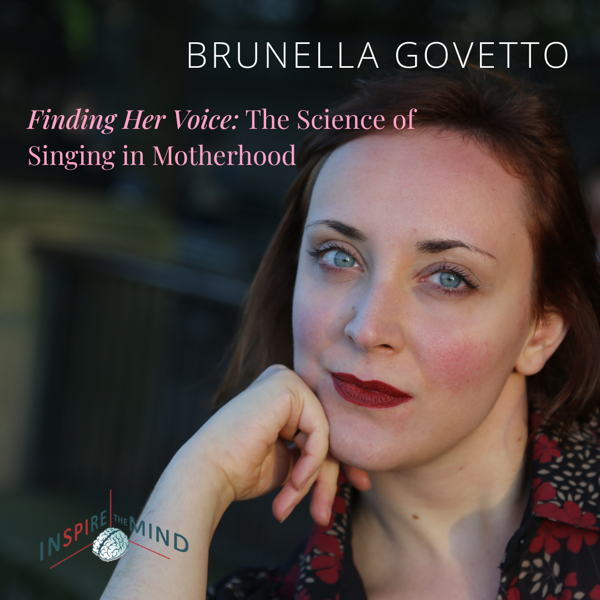
Alumna Brunella Govetto Writes for Inspire the Mind on Singing and Motherhood

Voice Study Centre
Monday 28th September 2026Voice Study Centre alumna Brunella Govetto has written a new article for the Inspire the Mind blog, drawing on her thesis work and experience of working with singing and mothers.
Read More...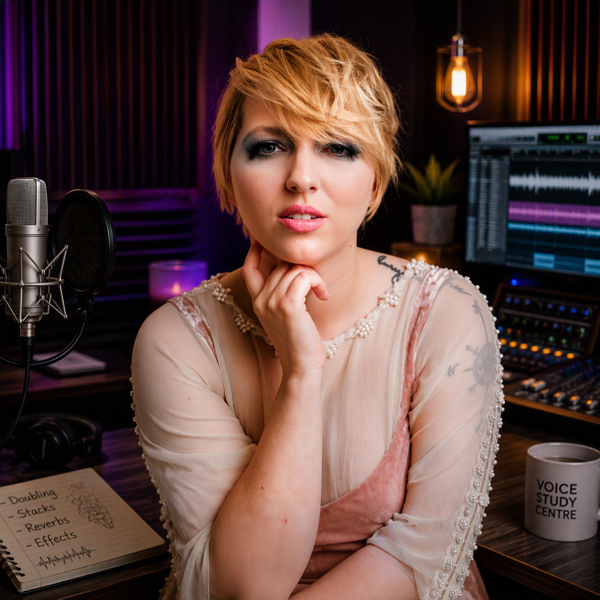
After The Session
After The Session: Doubles and Stacks, Reverbs and Effects: Teaching Vocal Production Skills
Voice Study Centre
Wednesday 23rd September 2026For many vocalists and voice teachers, the world of digital audio workstations (DAWs), hardware, and studio processing can feel like forbidden territory. Yesterday, Voice Study Centre hosted a hands-on, practical short course led by Kelly Hoppenjans (voice teacher, and PhD candidate in musicology at the University of Michigan), designed specifically to break down these technological barriers and empower singers to approach vocal production creatively, playfully, and confidently - so what did we learn?
Read More...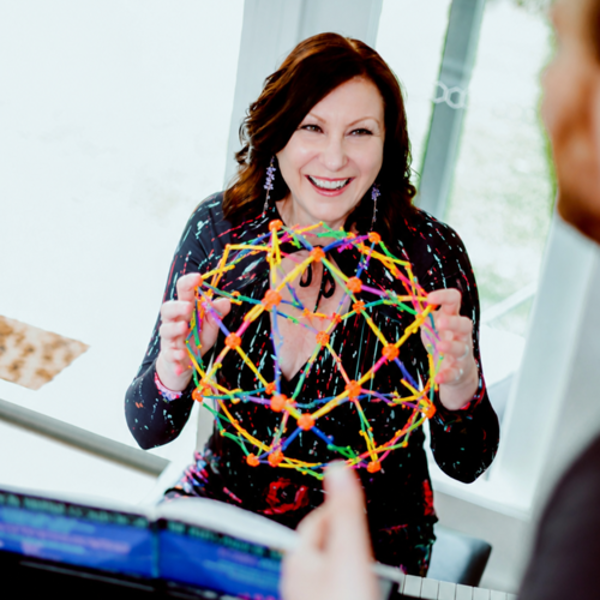
After The Session
After The Session: Games & Gadgets: Unlocking Vocal Skills Through Movement and Play🎤✨
Voice Study Centre
Tuesday 15th September 2026Vocal technique isn't just about standing still in front of a piano and doing scales - it's an interactive, whole-body experience! In a fantastic workshop hosted by the Voice Study Centre today, Naomi Lewandoski (Northside Voice Studio, Australia) led us through an engaging session on how physical movement, somatic awareness, and everyday "gadgets" can transform vocal training.
Read More...