Susan McPhail: Championing Inclusivity in Music
Monday 23rd September 2024
Voice Study Centre
A choir where music isn’t just heard – it’s seen and felt. This is the vision of our student Susan, a passionate choir director from South Queensferry, just outside Edinburgh, who is transforming her performances by introducing sign language into her choir.
As a singing teacher for the National Youth Choir of Scotland (NYCOS) and a community choir director, Susan works with both children and adults. She especially enjoys teaching adults who have been discouraged from singing at some point in their lives, believing that singing together is one of the oldest aspects of human culture. With a focus on inclusivity, she is adding a whole new layer of depth to her performances by exploring signed singing with her choirs.
Her journey into British Sign Language (BSL) signed singing began during the pandemic, when Paul Whittaker OBE - an inspirational speaker, musician, performer and workshop leader who is profoundly deaf - delivered an online session for NYCOS. Reflecting on this, Susan says, “I loved the whole idea from the beginning. I'm interested in ways of making music more inclusive, and Paul's very musical and rhythmic interpretations add an extra dimension to songs I thought I knew well”.
Wanting to learn more, Susan joined one of Paul’s online singing choirs. When Paul chose a song that she had previously performed with her own community choir, Ferry Blend, it was the perfect opportunity to bring signed singing into her local group.
Last October, Paul visited a Ferry Blend rehearsal to help the choir members learn the signs to their song. Performing while both singing and signing brought unique challenges. “There are challenges to doing both together” Susan explains, “particularly when the order of the signs doesn’t exactly align with the sung lyrics. BSL grammar works slightly differently from spoken English in order for the signs to best make sense”. Despite these difficulties, Susan was thrilled by the outcome. “I am convinced that once we managed to combine the signs and the singing, we performed better, and the choir made a lovely sound”.
More recently, Ferry Blend enjoyed a full-day workshop with Paul, ending their term on a high note. The choir has fully embraced this new way of performing, and Susan is already excited to incorporate one of the songs from Paul’s workshop into next year’s repertoire. You can view some of the highlights from the workshop below.
Looking ahead, Susan is eager to continue her mission of making music accessible to all. As she delves deeper into her MA studies, she hopes to explore the benefits of signed singing on performance, like what she experienced with her own choir.
Ferry Blend workshop with Paul Whittaker - signed singing compilation
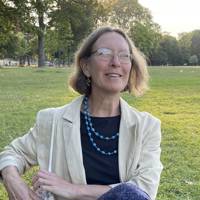
Susan McPhail
Susan is a singing teacher and community choir director based in South Queensferry, just outside Edinburgh. She works with primary and secondary children for the National Youth Choir of Scotland and has benefited from their training in Kodaly methodology and musicianship.
Recent Posts
After The Session
After The Session: A (Very) Brief Course in Linguistics! with Miranda Guettlein
Voice Study Centre
Wednesday 18th November 2026A recap of our introductory linguistics course for voice teachers, speech practitioners, actors and dialect coaches, led by Miranda Guettlein, linguist, dialect coach and editor of the Voice and Speech Review.
Read More...
After The Session
After The Session: Neurodivergence and Critical Disability Theory with Dr David Cane
Voice Study Centre
Monday 9th November 2026A recap of our session with Dr David Cane, Senior Lecturer on the Voice Study Centre MA in Voice Pedagogy, on disability and neurodivergence within the voice teaching studio. When we talk about disability and neurodivergence in voice teaching, the first thing that comes to mind is often a single question: what do I do if a disabled or neurodivergent student walks into my studio? In this session, Dr David Cane invited us to think much bigger. The teacher might be disabled or neurodivergent. So might a choir director or a colleague. The songs we teach may depict or use disability as a metaphor. Even the foundational texts of voice pedagogy carry assumptions about bodies and voices. This was a densely theoretical tour, and David was open about that. His argument was that the most important work is not a checklist of practical tips, but a rethink of what we believe teaching is for. Here are the main threads.
Read More...
After The Session
After The Session: The Vocal Health Challenges for Actors and Singers with Leda Scearce
Voice Study Centre
Wednesday 4th November 2026A recap of our two-part course with Leda Scearce, singing voice specialist and speech-language pathologist at Duke Voice Care Center in North Carolina. Over two afternoons, Leda Scearce took our community on a deep dive into the voice as a high-performance instrument. A former professional opera singer who taught at several universities before retraining as a speech-language pathologist, Leda now works with singers and other performers who have voice injuries. Her message across both days was clear: singers and actors are vocal athletes, and voice teachers are on the front lines of their vocal health. Here are the highlights from both sessions. Please note that this is a summary of a teaching session, not medical advice. If you or a student have a voice concern, see a qualified voice specialist.
Read More...