Using Acoustic Registration to Train Range, Laryngeal Registration, and Passaggi
Friday 17th October 2025, 5:00 PM - 7:00 PM (London Time)
There are acoustic vocal registers as well as laryngeal registers. Acoustic registers correspond to the historic Italian categories translated by this author as: voce chiusa (close timbre), voce aperta (open timbre), and voce piena di testa (roughly equivalent to whoop timbre). There are additional, lower levels of acoustic registration within open timbre. The physical mechanism of acoustic registers is based on the relationship between the inherent harmonic set of the sung pitch and the first resonance of the vowel being sung. Since first resonances lie from just below the bottom to the top of the treble clef and vary per vowel by as much as an octave, the locations of acoustic register transitions also vary per vowel by as much as an octave. Fortunately, acoustic register locations and migrations are predictable by vowel and voice type. Vowel tone color, auditory roughness (buzziness), and locational somatosense necessarily migrate across range, especially at acoustic register transitions. Knowledge and awareness of the timbral and somatosensory migrations of vowels at each acoustic register change is useful in training efficient range negotiation and forms a productive basis for strategies that address transitions through passaggi. Levels of registration that occur within open timbre lie in the bass clef and provide useful “training wheels” experiences at easier pitches for non-treble voices, preparing them for the more challenging, higher transitions from open (aperta) to close (chiusa) timbre that lie between the clefs. Clarifying the sound and sensation migrations of the transition from close timbre into whoop timbre, most of which occur in the top half of the treble clef, is similarly useful for training upper range success of treble voices. This talk will chart, describe, and play examples of these transitions, and offer pedagogic approaches that facilitate their training. (Given the complexity of this topic and the need for multiple video examples, this is best done with a 45-minute slot in order to include a longer Q & A).
🏷️ Price £30 (UK VAT inclusive)
🎥 Recording automatically sent to all who book (even if you cannot attend live)
▶️ Rewatch as many times as you like
📜 Certificate of attendance available
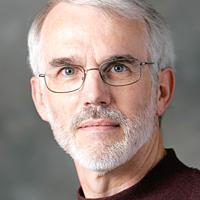
Ken Bozeman
Kenneth Bozeman, BM, MM,Professor Emeritus of Music, taught at Lawrence University for 42 years where he chaired the voice department and from...
Attend this course for as little as £22 as part of the Voice Professional Training CPD Award Scheme.
Learn MoreSorry, this is an archived short course...
We have plenty of upcoming short courses coming soon. See details of some of them below or look at the full list of short courses.

Monday 20th April 2026
12:00 PM - 1:30 PM
Tuesday 21st April 2026
12:00 PM - 1:30 PM
Wednesday 22nd April 2026
12:00 PM - 1:30 PM
Thursday 23rd April 2026
12:00 PM - 1:30 PM
(London Time)
Certificate in Acting Approaches for Singing Teachers

Louisa Morgan
Are you a singing teacher looking to elevate your students’ performance? This 4-part course is perfect for those who want to help their singers connect deeply with the character and the story behind the song. Many singing teachers have lots of brilliant ideas about coaching vocal performance but often don’t have a background in acting. Learning more about acting techniques can build structure into your performance-focused lessons and add depth to the song. Gain practical tools and techniques that you can apply to your teaching.
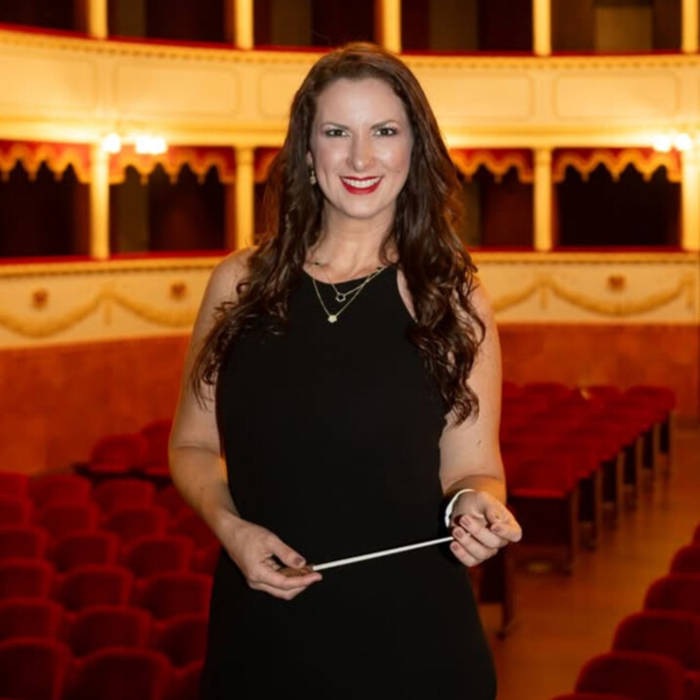

Tuesday 21st April 2026
5:00 PM - 7:00 PM
(London Time)
Understanding the How and Why of Vocal Dosimetry in Musical Theatre and Contemporary Singing

Dr Ana Flavia Zuim
Vocal dosimetry has emerged as an important tool for understanding the physiological demands placed on singers in contemporary musical theatre and commercial singing styles. Join Ana Flavia Zuim as she explores the principles behind vocal dosimetry and how objective measurements of vocal use such as time dose, cycle dose, distance dose, and sound pressure level can help quantify the vocal load experienced by performers during rehearsals and performances.
Thursday 23rd April 2026
2:00 PM - 4:00 PM
Friday 24th April 2026
2:00 PM - 4:00 PM
(London Time)
Singing and the Brain: A Harmonious Connection!

Dr Patricia Izbicki
Unlock the transformative power of music with our two-part lecture series that delves deep into the fascinating intersection of neuroscience, music education, and music therapy.