The delicate structures of the vocal folds require regular attention, or hygiene, to remain well. Vocal hygiene refers to the daily practices conducive to maintaining vocal health. Today we will focus on hydration.

The vocal folds, and the body for that matter, require fluids to function optimally. The fluids a person drinks do not touch the vocal folds but instead enter the esophagus, directly behind the larynx. During swallowing the larynx lifts and tilts forward to open the esophagus and prevent foods and liquids from entering the airway. The vocal folds play an important role in this protective act and signal a person to cough when liquids or foods slip down the ‘wrong pipe.’ Hydration of the voice requires taking in fluids or fluid-rich foods and allowing them to reach the stomach and intestines for absorption by the body. Fluids are processed by the kidneys approximately 90 minutes after consumption. Another 30 minutes is needed for the bladder to empty whatever is not absorbed before fluids are available for the body to distribute. It may be beneficial to drink a few large glasses of water 2-3 hours before a performance but is even more helpful to hydrate consistently in the days leading up to a performance.
Hydration of the voice occurs in two ways. There are mucous-secreting glands in the area above the vocal fold. These glands secrete mucus within a few hours of consuming liquids. Mucus lubricates the surface of the vocal folds and provides some level of protection against the heat and friction of the vibrating vocal folds. The more a person is hydrated, the thinner their secretions will be.
The presence of thickened secretions may indicate a need for better hydration. Superficial lubrication does not extend below the surface of the vocal folds. The vocal folds are made of layers. The superficial layer of the lamina propria lies just below the epithelium, or ‘skin’ of the vocal folds. This layer includes tiny capillaries, loosely bound tissue fibers, and glands with ducts secreting mucus and serum. When these ducts are activated, they supply this region with a gooey substance that helps cushion the vocal folds. Unlike the superficial lubrication that occurs within a few hours of taking in fluids, the fluids in this layer of the vocal folds require more consistent hydration. Once water is absorbed into this layer it becomes bound to a protein molecule and is no longer “free” to be absorbed or depleted quickly. The fluid in the superficial layer of the lamina propria is not replenished daily but requires a more consistent dedication to hydration over weeks and months.

How much water is enough?
We’ve all heard that people should drink 6-8 cups of water per day but there are many other factors to consider when deciding how much water is enough. People with larger body sizes require more water as do people who exercise regularly. Several medications are known to have drying side effects. These drying effects can also dry the vocal folds, creating a condition called laryngeal sicca. The more medications a person is on, the more likely they are to have this. If a person lives in a drier climate or flies frequently, they may need more fluids. One of the best ways to assess hydration is by the condition of the oral cavity. If the mouth is dry, the voice probably is too. My recommendation is to start with 6-8 cups of water per day and to adjust that amount as needed.
I’m raising a glass to your vocal health!

Want to learn more about the voice?
Join Kerrie Obert's live online Certificate in Vocal Pedagogy course!
Recent Posts
Director & Team News
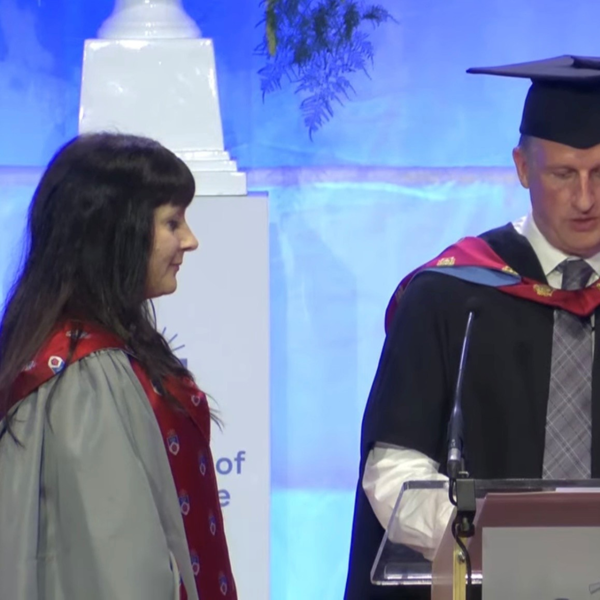
Congratulations to Dr Claire Thomas on Graduating with Her Professional Doctorate! 🎓

Voice Study Centre
Wednesday 15th July 2026Congratulations to Dr Claire Thomas on graduating with her Professional Doctorate in Elite Performance. We celebrate this significant milestone and recognise her dedication to voice research, vocal pedagogy, and higher education.
Read More...
Voice Study Centre Graduation 2026
Voice Study Centre
Friday 10th July 2026Voice Study Centre Graduation 2026! View all the photos from the day...
Read More...
Course Reviews
Unclenching the Jaw: Key Takeaways from Our Short Course with Walt Fritz
Voice Study Centre
Friday 10th July 2026We recently welcomed back international manual therapy expert Walt Fritz, PT, for an insightful short course exploring jaw tension through a modern physiotherapy lens. Attended by a diverse group of vocal coaches, singing teachers and SLPs, the session challenged traditional, purely physical models of tension and offered a more holistic, client-centred approach. Whether you missed the live event or want a quick refresher, here are the core themes and practical strategies from the course.
Read More...