After The Session: Redefining Ethical Practice in Voice Teaching
Wednesday 12th August 2026
Voice Study Centre
Redefining Ethical Practice in Voice Teaching: A 5-Part Paradigm for Sustainable Pedagogy
A recap of last night’s Voice Study Centre short course session led by Dr. Justin John Moniz.
Introduction: Ethics Beyond the Code of Conduct
When we think about ethics in voice teaching, our minds often jump to extreme scenarios -policy violations, conflicts of interest, or misconduct. But as Dr. Justin John Moniz (Associate Director of Vocal Performance and Coordinator of Vocal Pedagogy at NYU Steinhardt, and Vocal Arts Faculty at Manhattan School of Music) explained in last night's session, every single voice lesson is filled with subtle ethical decision-making.
From managing vocal load to choosing repertoire, knowing when to push a student or when to pull back, and recognizing where our scope of practice ends, pedagogical choices are inherently ethical choices.
Because voice teaching lacks universal licensing requirements, the responsibility for self-regulation falls directly on the practitioner. Grounded in his publication for the Journal of Singing, Dr. Moniz presented a practical Five-Part Paradigm for Sustainable Pedagogy designed to bring ethical values like honesty, integrity, and respect into daily studio practice.
Key Pillars of the 5-Part Paradigm
1. Cultivating Intellectual Curiosity
-
Dependency vs. Independence: If a singer can only perform effectively when the teacher is in the room, we have created dependency rather than a self-sustaining artist.
-
Moving Beyond "Inherited Language": Instructions like "support from below" or "place it here" must be backed up critically. Explain the why (acoustical, functional, or stylistic) behind instructions.
-
Practical Studio Tip: Reframe instructions as questions. Instead of saying "That sound is wrong," ask "Which strategy gives you the desired acoustic result with the least amount of effort?"
2. Creating Appropriately Challenging Environments
-
Resilience Over Rigor: Growth requires familiarity with managed discomfort and managed stress. However, challenge must be calibrated and recoverable.
-
The Athletic Training Model: Paralleling sports medicine (NASM model), adaptation follows a cycle: Demand → Managed Stress → Adaptation → Recovery.
-
Key Takeaway: Difficulty is not proof of quality, exhaustion is not proof of learning, and recovery must never be treated as optional.
3. Continuous Personal & Professional Development (Lifelong Learning)
-
Experience vs. Current Knowledge: Teaching for 20 years can easily become repeating one year of teaching 20 times if we don't stay current with evolving research.
-
Evidence-Informed Practice: Incorporate evidence from voice science, acoustics (e.g., Ken Bozeman), motor learning (e.g., Lynn Helding), and evidence-based voice pedagogy (e.g., Kari Ragan).
-
Professional Humility: Be willing to model appropriate uncertainty with one of the most ethical phrases a teacher can use: "I don't know, but let's find out together."
4. Collaborative Practice & Scope Boundary Awareness
-
Observation vs. Diagnosis: A voice teacher’s extensive anatomical knowledge expands their ability to observe, but does not expand their legal scope of practice.
-
Referring Out as an Intervention: Referring a student to a laryngologist, speech-language pathologist, or mental health professional is not a sign of limited knowledge, but one of the most sophisticated pedagogical actions available.
5. Integration with Community
-
Developing Citizens of the Profession: Ethical voice teaching asks not only "What kind of singer am I developing?" but "What kind of citizen of the profession am I sending into the world?"
-
Broader Impact: Artistry should extend beyond personal achievement to civic engagement, service learning, and community communication.
Practical Case Studies Discussed
-
Persistent Vocal Fatigue vs. Impending Auditions:
-
Scenario: A student experiences persistent vocal fatigue before a major opportunity and insists on singing at 100% full voice.
-
Resolution: Begin with observation rather than diagnosis. Teach the student how to mark healthfully, adjust vocal dosage, and refer out to a specialist for proper evaluation.
-
-
High-Risk Repertoire Demands:
-
Scenario: A student demands to prepare a role beyond their current technical stability (e.g., high-range demands in Dear Evan Hansen).
-
Resolution: Respect student autonomy without surrendering professional judgment. Practice calculated risk-taking, offer transparent information on vocal strain, and modify dosage or timelines.
-
-
Conflicting Feedback from External Coaches/Teachers:
-
Scenario: A student reports another teacher said their technique was "unhealthy" and needed to be completely rebuilt.
-
Resolution: De-escalate negative/dramatic framing, dissect what the colleague may have heard, and guide the student constructively without engaging in ego battles.
-
The 5-Step Ethical Decision Filter
Before acting in gray-area studio scenarios, run through this mental checklist:
-
What do I actually know? (Distinguish direct observation/evidence from assumptions)
-
What is within my scope of practice? (Competence to discuss vs. authority to diagnose/treat)
-
What does the student want? (Have I explicitly asked, and do they have full information?)
-
What are the foreseeable benefits and risks? (Consider long-term consequences)
-
Who else should be involved? (Consulting colleagues, mentors, or referring out)
Recent Posts

After The Session
After The Session: Inspired Not Bound: The Promise of Science-Informed Voice Pedagogy
Voice Study Centre
Wednesday 7th October 2026Yesterday, Voice Study Centre hosted Lynn Helding, Professor of Practice in Vocal Arts and Opera and Coordinator of Vocology and Voice Pedagogy at the USC Thornton School of Music. Her presentation was a compelling exploration into the relationship between voice science and vocal art. Titled "Inspired Not Bound: The Promise of Science-Informed Voice Pedagogy," the session tackled a question that has lingered for over 170 years: If voice science is so rich and transformative, why hasn't it been more fully adopted across all voice studios?
Read More...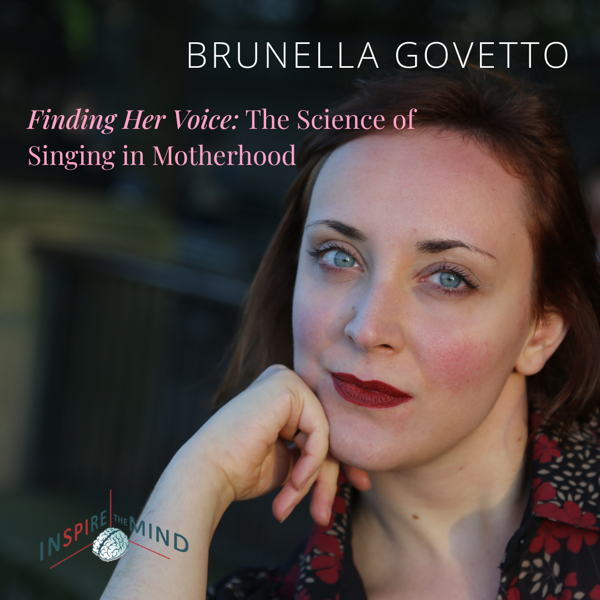
Student & Alumni News
Alumna Brunella Govetto Writes for Inspire the Mind on Singing and Motherhood
Voice Study Centre
Monday 28th September 2026Voice Study Centre alumna Brunella Govetto has written a new article for the Inspire the Mind blog, drawing on her thesis work and experience of working with singing and mothers.
Read More...
After The Session
After The Session: Doubles and Stacks, Reverbs and Effects: Teaching Vocal Production Skills
Voice Study Centre
Wednesday 23rd September 2026For many vocalists and voice teachers, the world of digital audio workstations (DAWs), hardware, and studio processing can feel like forbidden territory. Yesterday, Voice Study Centre hosted a hands-on, practical short course led by Kelly Hoppenjans (voice teacher, and PhD candidate in musicology at the University of Michigan), designed specifically to break down these technological barriers and empower singers to approach vocal production creatively, playfully, and confidently - so what did we learn?
Read More...