When people think of vocal coaching, they often picture scales, warm-ups, and performance prep. But behind the music lies a compelling truth: vocal coaching is not just an art, it’s a thriving business opportunity in one of the UK’s fastest-growing sectors.
-
The Arts Are an Economic Powerhouse
The UK’s creative industries contribute £124 billion in Gross Value Added (GVA) annually around 5.4% of the entire economy (business.gov.uk, 2023). Within this, the music industry alone generates £8 billion, supports 220,000 jobs, and drives £4.8 billion in exports (UK Music, 2025). Our creative industries outperform the STEM core sectors (IT & R&D), which contribute £91.6 billion GVA (~3.9% of the UK economy) (House of Lords Library, 2024). While engineering and business dominate overall, the arts are far from a fringe player; they’re a strategic economic asset.
-
Strong Earning Potential
Vocal coaching offers flexibility and financial viability:
- Freelance rates: £35–£60/hr, with the Musicians’ Union recommending £42.50/hr minimum
- Employed roles: Singing teachers earn £37k–£69k annually, with averages around £50,700 (Talent.com, 2025).
- Choir leaders: Salaries range from £29k–£61k, averaging £42,566 (Jooble, 2025)
Add workshops, online courses, and packages, and income can scale significantly. Additionally, a portfolio career enables vocal coaches to scale up earnings when they need to so by blending multiple contracts.
-
Growing Demand
- Hybrid learning and online coaching have expanded reach beyond local markets.
- Corporate voice training, accent work, and vocal health are booming niches.
- The music education sector continues to grow, with rising rates and strong job security (ISM Tuition Survey, 2024).
-
More Than Money: Impact and Fulfilment
As a vocal coach, you:
- Help clients unlock confidence and creativity.
- Support mental well-being through expressive arts.
- Contribute to a sector that fuels tourism, exports, and cultural identity.
-
Why Now?
The arts are resilient and expanding. Every pound invested in creative education returns multiple pounds in economic activity. Becoming a vocal coach means joining a sector that is financially rewarding, culturally vital, and personally fulfilling. If you’re passionate about voice and performance, this is more than a career—it’s a chance to combine artistry with entrepreneurship in a sector that matters economically and socially.
Bibliography
- business.gov.uk. (2023). Creative industries sector overview. Retrieved from business.gov.uk
- House of Lords Library. (2024). Science and technology’s contribution to the UK economy. Retrieved from lordslibrary.parliament.uk
- UK Music. (2025). This Is Music report. Retrieved from ukmusic.org
- Talent.com. (2025). Music Singing Teacher Salary in UK. Retrieved from talent.com
- Jooble. (2025). Choir leader salary statistics UK. Retrieved from jooble.org
Recent Posts
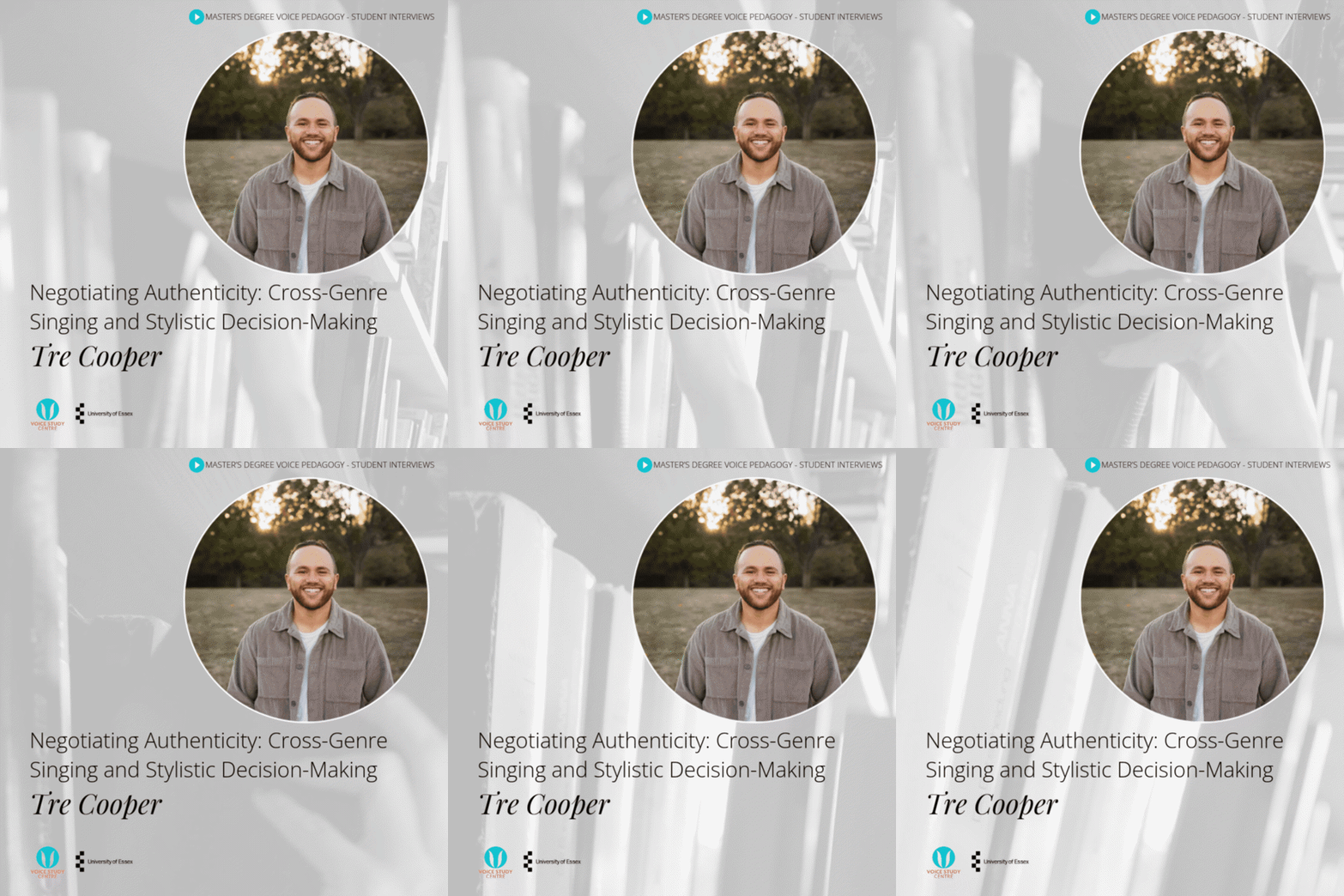
Student Interviews
Negotiating Authenticity: Tre Cooper Explores Cross-Genre Singing and Stylistic Decision-Making

Voice Study Centre
Friday 23rd October 2026What does it mean for a singer to sound authentic when performing in a genre outside their usual style? And how can voice teachers help singers develop stylistic versatility without losing their individual artistic identity?
Read More...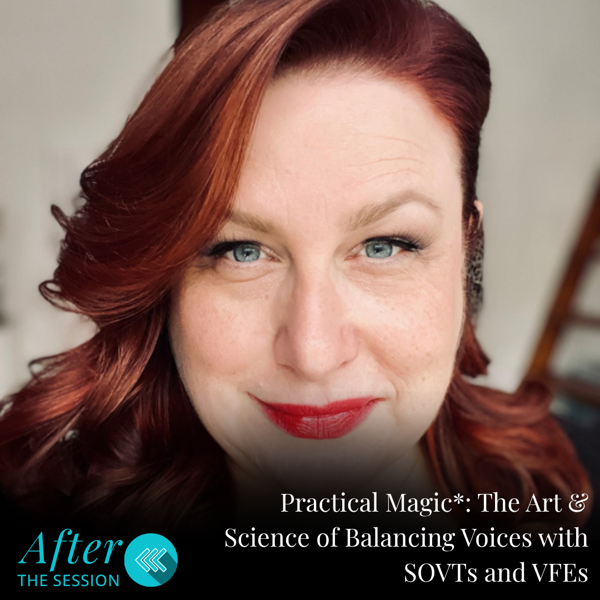
After The Session
After The Session: Practical Magic*: The Art & Science of Balancing Voices with SOVTs and VFEs with Melanie Tapson
Voice Study Centre
Thursday 22nd October 2026What makes a vocal exercise effective? Is it the tool itself, the way we use it, or our understanding of what happens when we put it into practice? In Practical Magic: The Art & Science of Balancing Voices with SOVTs and VFEs, voice teacher and professional singer Melanie Tapson explored the science behind two widely used approaches to voice training: Semi-Occluded Vocal Tract Exercises (SOVTs) and Vocal Function Exercises (VFEs). Combining scientific explanations with practical demonstrations and interactive activities, the session examined how these techniques can support vocal efficiency, stamina and sustainable voice use. Rather than treating exercises as a one-size-fits-all solution, Melanie encouraged participants to understand what each exercise does, how individual voices respond and how to adapt techniques to achieve meaningful results.
Read More...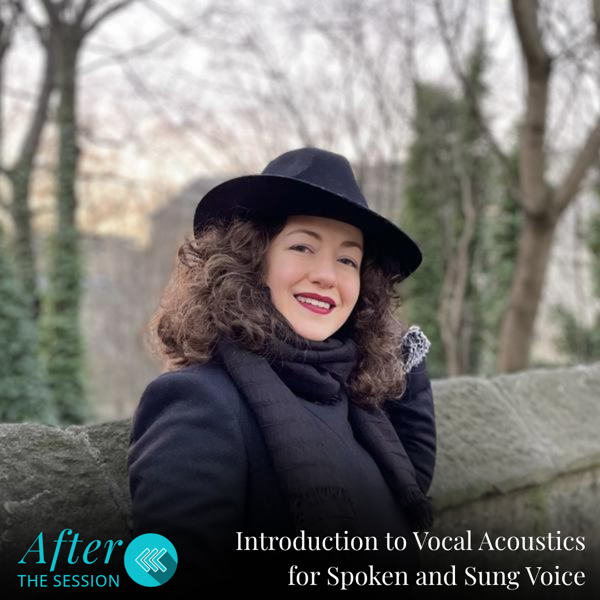
After The Session
After The Session: Introduction to Vocal Acoustics for Spoken and Sung Voice with Gökçe Kutsal
Voice Study Centre
Wednesday 21st October 2026How can understanding the science of sound help us become more effective voice teachers, singers and researchers? In our recent two-part course, Introduction to Vocal Acoustics for Spoken and Sung Voice, Gökçe Kutsal explored the fascinating relationship between the physics of sound and the way we produce, hear and understand the human voice.
Read More...